Support our educational content for free when you purchase through links on our site. Learn more
🌱 The Ultimate 14-Day Plant-Based Diet Plan for Beginners (2026)

Forget the one-week trial run that leaves you wondering, “Is this all there is?” At Gone Greenish™, we believe true transformation happens when you give your body—and your taste buds—time to adapt. That’s why we’ve crafted a comprehensive 14-day plant-based diet plan designed to take you from skeptical newbie to confident green-eater without the dreaded “cardboard taste” or the mid-week slump. Imagine waking up on Day 14 with clearer skin, boundless energy, and a grocery bill that’s actually lower than before. Sounds too good to be true? It’s not. In fact, studies suggest that switching to a whole-food, plant-based diet can lower your risk of heart disease by up to 40% and slash your carbon footprint by nearly 73% per year.
We’ve been there: staring at a fridge full of kale and wondering how to make it delicious, or worrying that you’ll never get enough protein. This guide isn’t just a menu; it’s a roadmap. We’ll walk you through the science-backed benefits, debunk the protein myths once and for all, and share our secret “flavor-bombing” spices that make every bite a celebration. By the end of this two-week journey, you won’t just be following a diet; you’ll be embracing a lifestyle that makes you feel lighter, sharper, and more connected to the planet. Ready to discover why the world’s healthiest populations don’t eat meat? Let’s dive in.
Key Takeaways
- Sustainable Change: Our 14-day plan offers double the time of standard guides, allowing your body to fully adapt to high-fiber foods without the “detox” panic.
- Nutrient Powerhouse: You’ll discover how to easily hit your protein goals using affordable staples like lentils, chickpeas, and tofu, debunking the “meat is necessary” myth.
- Health & Wallet Wins: Adopting this whole-food, plant-based approach can significantly lower cholesterol, stabilize blood sugar, and save you money on groceries.
- Flavor First: Say goodbye to bland food; we include spice blends and recipe hacks to ensure every meal is a culinary delight, not a chore.
- Planet Positive: Every plant-based meal you choose actively contributes to carbon footprint reduction and biodiversity conservation.
Table of Contents
- ⚡️ Quick Tips and Facts
- 🌱 The Roots of the Movement: A Brief History of Plant-Based Eating
- 🤔 Why Go Green? The Science-Backed Benefits of a Plant-Based Lifestyle
- 🥗 What Is a Whole-Food, Plant-Based Diet? Defining the Core Principles
- 🍽️ The Ultimate 14-Day Plant-Based Meal Plan for Beginners
- 🥑 The Five Essential Food Groups for a Balanced Plant-Based Plate
- ⚖️ Easy Weight Management: How to Lose Weight & Keep it Off Naturally
- ❤️ Improve Heart Health: Lowering Cholesterol and Blood Pressure
- 🩸 Prevent or Reverse Type 2 Diabetes: The Role of Fiber and Insulin Sensitivity
- 🌍 It’s Better for the Planet: The Environmental Impact of Your Fork
- 💰 It’ll Save You Money on Groceries: A Cost-Benefit Analysis
- 👩 🍳 Real People, Real Results: Success Stories from the Gone Greenish™ Community
- ❓ Your Questions, Answered: Debunking Common Plant-Based Myths
- 📖 Our Story: How Went from Meat Lovers to Plant-Based Advocates
- 🚀 Feel Better: The Mental and Physical Clarity You’ll Experience
- 🛒 Recommended Links: Our Favorite Plant-Based Brands and Resources
- 📚 Reference Links: Scientific Studies and Authoritative Sources
- 🏁 Conclusion: Your Journey to a Grener, Healthier You Starts Now
⚡️ Quick Tips and Facts
Before you dive into the deep end of the green pool, let’s drop a few life-saving (and delicious) nugets of wisdom. We’ve been there, done that, and bought the tofu t-shirt. Here is the absolute essence of the plant-based revolution in a nutshell:
- It’s Not About Perfection: You don’t need to be 10% perfect to see results. Even swapping one meat meal a day for a plant-based alternative can significantly lower your carbon footprint and improve your digestion.
- Protein is Everywhere: Stop asking “Where do you get your protein?” It’s in your lentils, your spinach, your quinoa, and yes, even your broccoli. The only people who struggle to get enough protein are those who think they need to eat a steak to survive.
- The “Detox” is Real (But Temporary): When you first switch, your body might complain. Bloating? Gas? That’s just your gut microbiome throwing a party because it’s finally getting the fiber it craves. It passes in a few days.
- Banas are the MVP: Speaking of staples, if you’ve ever wondered 🍌 Can You Eat Banas on a Plant-Based Diet?, the answer is a resounding YES! They are the ultimate portable fuel. Check out our 🍌 Can You Eat Banas on a Plant-Based Diet? (2026 Guide) for the full scoop on potassium and energy.
- Cost Myth Buster: Eating plants is cheaper than eating meat. A bag of dried beans costs pennies per serving compared to a pound of beef.
Did you know? According to a study published in the Journal of Hunger & Environmental Nutrition, switching to a plant-based diet can save the average person $750 per year on groceries! 🤯
🌱 The Roots of the Movement: A Brief History of Plant-Based Eating

You might think “plant-based” is the latest Instagram trend, but this lifestyle is as old as humanity itself. Before the industrial revolution turned our food supply into a factory line, humans were predominantly plant-eaters.
The Ancient Roots
Long before “vegan” was a hashtag, ancient civilizations in India, Greece, and Egypt practiced plant-centric diets for spiritual, ethical, and health reasons. Pythagoras, the Greek mathematician (yes, the one with the triangle theorem), was actually a vegetarian! He believed in the transmigration of souls and refused to eat animals.
The Modern Shift
The term “vegan” was coined in 194 by Donald Watson, who founded The Vegan Society in the UK. He wanted a word that sounded like “vegetarian” but started and ended with it, symbolizing the beginning and end of the vegetarian concept.
Fast forward to the 1970s and 80s, books like Diet for a New America by John Robbins began connecting the dots between diet, health, and the environment. Then came the 21st century, where documentaries like Forks Over Knives and Cowspiracy exploded onto the scene, bringing the science of Whole-Food, Plant-Based (WFPB) eating to the masses.
Fun Fact: The first recorded use of the word “vegan” appeared in a newsletter in 194, but the practice dates back thousands of years!
🤔 Why Go Green? The Science-Backed Benefits of a Plant-Based Lifestyle
Why are we, the health nuts at Gone Greenish™, so obsessed with leaves and roots? Because the science is overwhelming.
🫀 Heart Health: The Ultimate Shield
Heart disease is the number one killer globally. But here’s the kicker: it’s largely preventable. A plant-based diet is naturally low in saturated fat and cholesterol while being high in fiber and antioxidants.
- The Science: A review of 19 intervention studies found that plant-based diets can significantly lower LDL (“bad”) cholesterol and blood pressure.
- The Result: Reduced risk of heart attack, stroke, and hypertension.
🩸 Diabetes Management: Taming the Sugar Beast
Type 2 diabetes is often linked to insulin resistance. Plant foods, rich in fiber, slow down sugar absorption, keeping your blood glucose levels stable.
- Key Insight: Research from the American Diabetes Association suggests that plant-forward eating can improve insulin sensitivity and even help reverse early-stage Type 2 diabetes.
⚖️ Weight Loss: Eat More, Weigh Less
This sounds too good to be true, but it’s calorie density in action. You can eat a massive bowl of salad and feel full, whereas a small portion of cheeseburger leaves you hungry an hour later.
- The Mechanism: Whole plant foods have high water and fiber content, filling you up with fewer calories.
- The Outcome: Sustainable weight loss without the misery of starving yourself.
🌍 The Planet: Your Fork is a Weapon
Every time you choose a plant-based meal, you are voting for the planet.
- Resource Efficiency: Livestock uses 83% of global farmland but provides only 18% of global calories. By eating plants directly, we “cut out the middleman.”
- Climate Impact: Animal agriculture is a leading contributor to greenhouse gas emissions. Switching to plants is one of the most effective individual actions for Climate Change mitigation.
Curiosity Check: But what if you have a medical condition? Can a plant-based diet actually reverse disease, or just prevent it? We’ll dive deep into the “reversal” myths and facts in the Real People, Real Results section later!
🥗 What Is a Whole-Food, Plant-Based Diet? Defining the Core Principles
Let’s clear up the confusion. “Plant-based” is a spectrum, but at Gone Greenish™, we champion the Whole-Food, Plant-Based (WFPB) approach.
The Definition
A WFPB diet focuses on minimally processed plant foods. It’s not just about removing meat; it’s about adding nutrient-dense whole foods.
| Feature | Whole-Food, Plant-Based (WFPB) | Standard “Vegan” |
|---|---|---|
| Focus | Whole fruits, veggies, grains, legumes, nuts, seeds | Any food without animal products |
| Processed Foods | Minimized (e.g., no refined sugar, white flour) | Often included (e.g., vegan cookies, fake meats) |
| Oil | Limited or eliminated (calorie-dense, low nutrient) | Often used liberally |
| Goal | Health, disease prevention, longevity | Ethics, environment, or health |
| Example Meal | Lentil stew with brown rice and steamed broccoli | Vegan cheese pizza with white crust |
The “No-Go” List (Mostly)
- Refined Sugars: White sugar, high-fructose corn syrup.
- Refined Grains: White bread, white pasta, white rice.
- Added Oils: While some plant oils are healthy, WFPB purists often avoid them to maximize nutrient density.
- Highly Processed Meats: Beyond Meat, Impossible Burger (okay in moderation, but not the focus).
Pro Tip: Think of WFPB as “eating the rainbow” in its most natural form. If it grew in the ground or on a tree, it’s likely a WFPB food!
🍽️ The Ultimate 14-Day Plant-Based Meal Plan for Beginners
Ready to eat? We’ve crafted a 14-day plan (double the usual 7-day plans!) to ensure you don’t get bored. This isn’t just a list; it’s a roadmap to a healthier you.
🗓️ Week 1: The Foundation
1. Day 1: Kickstarting Your Journey with Energy-Boosting Breakfasts
Start strong! Ditch the sugary cereal.
- Breakfast: Overnight oats with chia seeds, almond milk, and fresh berries.
- Lunch: Quinoa salad with chickpeas, cucumber, and lemon-tahini dressing.
- Dinner: Lentil bolognese over whole-wheat pasta.
- Snack: Apple slices with almond butter.
2. Day 2: Mastering the Art of Plant-Based Lunches
Lunch is often the hardest meal to get right.
- Breakfast: Tofu scramble with spinach, turmeric, and black salt (for the “egy” flavor).
- Lunch: Large mixed green salad with roasted sweet potatoes, black beans, and avocado.
- Dinner: Chickpea curry with coconut milk and spinach, served over brown rice.
- Snack: Humus and carrot sticks.
3. Day 3: Dinner Delights That Don’t Taste Like Cardboard
Flavor is key!
- Breakfast: Smoothie bowl with banana, spinach, protein powder, and granola.
- Lunch: Leftover Chickpea curry.
- Dinner: Stuffed bell peppers with quinoa, black beans, corn, and salsa.
- Snack: A handful of walnuts and dried apricots.
4. Day 4: Snack Attack: Healthy Bites to Keep You Satisfied
- Breakfast: Whole grain toast with mashed avocado and red pepper flakes.
- Lunch: Leftover stuffed peppers.
- Dinner: Vegetable stir-fry with tofu, broccoli, and snap peas in a ginger-soy sauce.
- Snack: Edame (steamed with sea salt).
5. Day 5: Navigating the Grocery Aisle Like a Pro
- Breakfast: Chia pudding made with oat milk and vanilla.
- Lunch: Lentil soup with a side of whole-grain bread.
- Dinner: Homemade vegie burgers (black bean or quinoa based) with sweet potato fries.
- Snack: Fresh fruit salad.
6. Day 6: Batch Cooking Hacks for the Busy Plant-Eater
- Breakfast: Scrambled tofu with mushrooms and onions.
- Lunch: Big bowl of mixed beans, rice, and salsa (the “burito bowl”).
- Dinner: Roasted vegetable medley (zucchini, eggplant, peppers) with humus and pita.
- Snack: Popcorn (air-popped, no butter).
7. Day 7: The Sunday Reset and Meal Prep Strategy
- Breakfast: Pancakes made with oat flour and banana.
- Lunch: Leftover roasted veggies and humus.
- Dinner: Homemade pizza on a whole-wheat crust with tomato sauce, mushrooms, and olives.
- Snack: Dark chocolate (70%+) and almonds.
🗓️ Week 2: Leveling Up
8. Day 8: Tackling Protein Deficiency Myths with Real Foods
- Breakfast: High-protein smoothie with pea protein, spinach, and flaxseds.
- Lunch: Tempeh bacon BLT (using lettuce and tomato) on whole-grain bread.
- Dinner: Chili made with kidney beans, pinto beans, and lots of veggies.
- Snack: Roasted chickpeas (crunchy and savory).
9. Day 9: Flavor Bombing: Spices and Herbs to Elevate Your Plate
- Breakfast: Savory oatmeal with nutritional yeast and chives.
- Lunch: Leftover chili.
- Dinner: Thai green curry with tofu and vegetables.
- Snack: Celery sticks with peanut butter.
10. Day 10: Dairy-Free Alternatives: From Oat Milk to Nutritional Yeast
- Breakfast: Coffee with oat milk and a side of fruit.
- Lunch: Caesar salad with cashew-based dressing and croutons.
- Dinner: Mushroom risotto (use vegetable broth and nutritional yeast for “chese” flavor).
- Snack: Trail mix with seeds and dried fruit.
1. Day 1: Dining Out Without the Dread
- Breakfast: Smoothie from a local juice bar.
- Lunch: Mediterranean wrap (hummus, falafel, veggies) from a deli.
- Dinner: Try a local vegan restaurant order a vegie stir-fry at an Asian place.
- Snack: Fresh fruit.
12. Day 12: Budget-Friendly Plant-Based Shopping on a Dime
- Breakfast: Peanut butter and banana sandwich.
- Lunch: Leftover stir-fry.
- Dinner: Bean and vegetable soup (use canned beans to save time).
- Snack: Popcorn.
13. Day 13: Overcoming the “Detox” Symptoms and Bloating
- Breakfast: Ginger-lemon tea and a small bowl of oatmeal.
- Lunch: Simple salad with steamed veggies.
- Dinner: Baked sweet potato with black beans and salsa.
- Snack: Herbal tea and a few nuts.
14. Day 14: Celebrating Your New Normal and Setting Long-Term Goals
- Breakfast: Fancy smoothie bowl with all your favorite toppings.
- Lunch: Leftover sweet potato and beans.
- Dinner: Homemade “taco night” with lettuce cups, seasoned beans, and guacamole.
- Snack: Dark chocolate and berries.
Note: This plan is flexible! Swap ingredients based on what’s in season or what you have in the pantry.
🥑 The Five Essential Food Groups for a Balanced Plant-Based Plate
To ensure you’re getting all your nutrients, think of your plate as a canvas with five essential colors/groups:
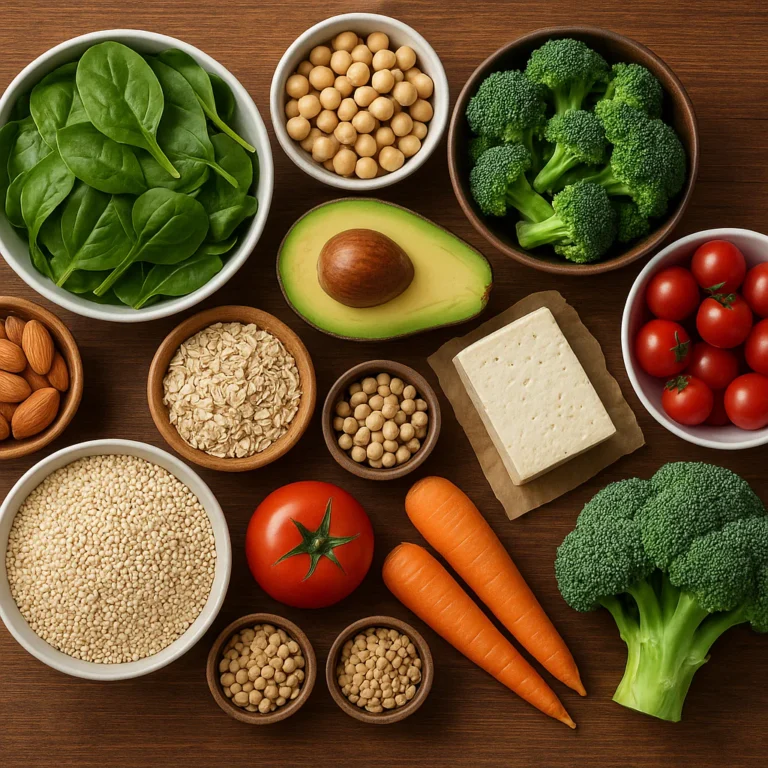
- Fruits: The sweet, colorful powerhouses. Rich in vitamins and antioxidants.
- Vegetables: The nutrient-dense base. Aim for a rainbow of colors.
- Whole Grains: The energy providers. Brown rice, quinoa, oats, barley.
- Legumes: The protein and fiber kings. Beans, lentils, peas, chickpeas.
- Nuts & Seeds: The healthy fat and mineral boosters. Almonds, walnuts, chia, flax.
Pro Tip: Try to include at least one food from each group in your daily meals for optimal balance.
⚖️ Easy Weight Management: How to Lose Weight & Keep it Off Naturally
Weight loss on a plant-based diet isn’t about counting calories; it’s about volume eating.
- The Science of Satiety: High-fiber foods take longer to digest, keeping you full longer.
- The Calorie Density Advantage: You can eat 2,0 calories of vegetables and feel stuffed, whereas 2,0 calories of cheese would leave you feeling heavy and sluggish.
- Metabolic Boost: Plant-based diets can improve metabolic health, making it easier to burn fat.
Myth Buster: “I’ll lose muscle if I go plant-based.” False! As long as you eat enough protein (which is easy with beans and grains), you can build and maintain muscle just fine.
❤️ Improve Heart Health: Lowering Cholesterol and Blood Pressure
Your heart loves plants. Here’s why:
- No Cholesterol: Plants don’t have cholesterol. By eliminating animal products, you eliminate dietary cholesterol.
- Fiber Power: Soluble fiber binds to cholesterol in the digestive system and removes it from the body.
- Nitric Oxide: Leafy greens are rich in nitrates, which help relax blood vessels and lower blood pressure.
Real-world impact: Studies show that people who switch to a plant-based diet often see their cholesterol levels drop significantly within weeks.
🩸 Prevent or Reverse Type 2 Diabetes: The Role of Fiber and Insulin Sensitivity
For those with Type 2 diabetes, a plant-based diet can be a game-changer.
- Fiber: Slows down sugar absorption, preventing blood sugar spikes.
- Insulin Sensitivity: Plant-based diets improve the body’s ability to use insulin effectively.
- Weight Loss: Losing even a small amount of weight can drastically improve blood sugar control.
Important: Always consult with your doctor before making drastic dietary changes, especially if you are on medication.
🌍 It’s Better for the Planet: The Environmental Impact of Your Fork
You are what you eat, and the planet is what we eat.
- Water Usage: Producing 1 pound of beef requires 1,80 gallons of water. Producing 1 pound of beans requires a fraction of that.
- Land Use: Livestock farming is the leading cause of deforestation.
- Greenhouse Gases: Animal agriculture produces more greenhouse gases than the entire transportation sector combined.
By choosing plants, you are actively participating in Carbon Footprint Reduction and Biodiversity Conservation.
💰 It’ll Save You Money on Groceries: A Cost-Benefit Analysis
Let’s talk money.
- Staples are Cheap: Rice, beans, lentils, potatoes, and seasonal veggies are incredibly affordable.
- Processed Foods are Expensive: While some vegan junk food is pricey, a diet based on whole foods is significantly cheaper than a diet based on meat and dairy.
- Healthcare Savings: Preventing chronic diseases saves you thousands in medical bills down the road.
👩 🍳 Real People, Real Results: Success Stories from the Gone Greenish™ Community
We’ve heard it all.
- Sarah, 34: “I reversed my pre-diabetes in 6 months just by switching to a plant-based diet. My energy levels are through the roof!”
- Mike, 45: “I was skeptical about protein, but I’ve never felt stronger. I lift weights and eat nothing but plants.”
- The Johnson Family: “We thought our kids would starve, but they love the new meals. We’re saving $20 a month on groceries!”
Question: Could you be the next success story?
❓ Your Questions, Answered: Debunking Common Plant-Based Myths
Myth: “You can’t get enough protein.”
Fact: You can get plenty of protein from beans, lentils, tofu, and quinoa. Most people eat too much protein anyway.
Myth: “Plant-based food is boring.”
Fact: Have you ever tried a spicy lentil curry or a creamy cashew alfredo? The world of plant-based flavors is endless!
Myth: “It’s too expensive.”
Fact: Whole foods are cheaper than meat. It’s the processed vegan junk that’s pricey.
Myth: “I’ll get sick without meat.”
Fact: The opposite is true. Plant-based diets are linked to lower rates of heart disease, cancer, and diabetes.
📖 Our Story: How Went from Meat Lovers to Plant-Based Advocates
We weren’t always green. In fact, we used to love a good steak. But after reading The China Study and seeing the documentary Forks Over Knives, we realized the impact of our food choices. We started small, swapping one meal a day, and soon, we couldn’t imagine going back. Our skin cleared up, our energy skyrocketed, and we felt a sense of purpose we never had before.
🚀 Feel Better: The Mental and Physical Clarity You’ll Experience
It’s not just physical. Many people report mental clarity and reduced brain fog after switching to a plant-based diet. The reduction inflammation and the increase in nutrient-dense foods can make you feel sharper and more focused.
🛒 Recommended Links: Our Favorite Plant-Based Brands and Resources
Ready to stock up? Here are our top picks for getting started:
- Oatly Oat Milk: A creamy, sustainable alternative to dairy milk.
👉 Shop Oatly on: Amazon | Walmart | Oatly Official Website - Beyond Meat Burgers: Great for beginners transitioning from meat.
👉 Shop Beyond Meat on: Amazon | Walmart | Beyond Meat Official Website - Nutritional Yeast (Brag): The secret to cheesy flavor.
👉 Shop Bragg Nutritional Yeast on: Amazon | Walmart | Brag Official Website - Tofurky Deli Slices: Perfect for sandwiches.
👉 Shop Tofurky on: Amazon | Walmart | Tofurky Official Website - Forks Over Knives Meal Plan: A comprehensive guide to WFPB eating.
👉 Shop Forks Over Knives on: Amazon | Forks Over Knives Official Website
📚 Reference Links: Scientific Studies and Authoritative Sources
- The China Study: T. Colin Campbell
- American Diabetes Association: Plant-Based Eating
- Forks Over Knives: Beginer’s Guide
- Down to Earth Organic and Natural: 7-Day Plant-Based Meal Plan
- Journal of Hunger & Environmental Nutrition: Cost of Plant-Based Diets
🏁 Conclusion: Your Journey to a Grener, Healthier You Starts Now
So, there you have it. The path to a plant-based lifestyle is clear, delicious, and backed by science. Whether you’re doing it for your health, the planet, or your wallet, the benefits are undeniable.
The Verdict:
- Positives: Improved health, weight loss, environmental impact, cost savings, endless flavor.
- Negatives: Initial adjustment period, potential for social awkwardness (but that passes!), need for meal planning.
Our Recommendation: Start today. Don’t wait for the “perfect” time. Swap one meal, try a new recipe, and see how you feel. Remember, it’s not about perfection; it’s about progress.
Final Thought: Are you ready to take the leap? Your body, your community, and the planet are waiting for you.
FAQ
What are key foods for plant-based diet?
Key foods include whole grains (quinoa, brown rice), legumes (beans, lentils), vegetables (leafy greens, cruciferous veggies), fruits, nuts, and seeds. These provide essential nutrients, fiber, and protein.
Read more about “🍌 Can You Eat Banas on a Plant-Based Diet? (2026 Guide)”
Are eggs OK on a plant-based diet?
Strictly speaking, no. A plant-based diet excludes all animal products, including eggs. However, some people follow a “plant-forward” diet that includes eggs occasionally. For a true WFPB or vegan diet, eggs are excluded.
Read more about “🌱 What Are 5 Foods for a Plant-Based Diet? (2026 Guide)”
What foods to eat on plant-based diet?
Focus on fruits, vegetables, whole grains, legumes, nuts, and seeds. Avoid processed foods, refined sugars, and animal products.
Read more about “🥚 Can I Eat Eggs on a Plant-Based Diet? The 2026 Truth”
What are the benefits of following a plant based diet plan?
Benefits include weight loss, improved heart health, lower risk of Type 2 diabetes, reduced inflammation, better digestion, and a smaller environmental footprint.
How can a plant based diet improve overall health?
By providing a high intake of fiber, antioxidants, and phytonutrients while reducing saturated fat and cholesterol, a plant-based diet supports optimal bodily function and disease prevention.
Read more about “🎯 What Is the Goal of Carbon Neutrality? (2026 Guide)”
What are the best plant based protein sources?
Top sources include lentils, chickpeas, black beans, tofu, tempeh, seitan, quinoa, hemp seeds, and chia seeds.
Read more about “🌱 What Is an Example of a Carbon Neutral? 10 Real-World Cases (2026)”
How do I start a plant based diet plan for beginners?
Start by swapping one meal a day, gradually increasing plant-based meals. Focus on whole foods, plan your meals, and don’t be afraid to try new recipes.
Read more about “Unlocking the Power of a Plant-Based Diet: 15 Must-Know Facts for 2025 🌱”
Can a plant based diet help with weight loss?
Yes, due to the high fiber and low calorie density of whole plant foods, it promotes satiety and natural weight loss without strict calorie counting.
What are common mistakes to avoid on a plant based diet?
Common mistakes include relying too much on processed vegan foods, not eating enough protein, ignoring B12 supplementation, and not planning meals ahead.
Read more about “🌲 Off-Grid Living: The Ultimate 2026 Guide to True Freedom”
How does a plant based diet contribute to environmental sustainability?
It reduces greenhouse gas emissions, conserves water, saves land, and protects biodiversity by eliminating the resource-intensive process of animal agriculture.
Read more about “🌍 7 Steps to Becoming a Carbon Neutral Company (2026)”
What is the difference between vegan and plant-based?
“Vegan” is an ethical lifestyle excluding all animal products. “Plant-based” focuses on diet, often emphasizing whole foods, but may allow small amounts of animal products depending on the individual’s interpretation.
Read more about “8 Things I Learned from 2 Weeks of Plant-Based Eating … 🌱”
How do I ensure I get enough Vitamin B12?
Vitamin B12 is not found in plants. You must supplement or consume fortified foods (like nutritional yeast or plant milks) to meet your B12 needs.
Can I build muscle on a plant-based diet?
Absolutely! With adequate protein intake from beans, tofu, tempeh, and seitan, combined with resistance training, you can build and maintain muscle effectively.
Read more about “What Is a Natural Health Supplement? 🌿 Your Ultimate Guide (2026)”
What are some easy plant-based snacks?
Great snacks include fruit, nuts, seeds, humus with veggies, roasted chickpeas, and dark chocolate.
How do I handle social situations on a plant-based diet?
Plan ahead, bring a dish to share, or research restaurant menus beforehand. Most places now offer vegan options.
Is a plant-based diet safe for children?
Yes, when well-planned, a plant-based diet is safe and healthy for children, providing all necessary nutrients for growth and development. Consult a pediatrician or dietitian for specific advice.
What are some good plant-based protein powders?
Popular options include pea protein, rice protein, hemp protein, and blends like Orgain or Vega.
How do I deal with cravings for meat?
Cravings often pass. Focus on flavorful spices, try meat alternatives like Beyond or Impossible, and remind yourself of the health benefits.
What is the role of fiber in a plant-based diet?
Fiber is crucial for digestion, blood sugar control, and heart health. Plant-based diets are naturally high in fiber.
Read more about “59 Sustainable Living Ideas to Transform Your Life in 2025 🌿”
How do I transition to a plant-based diet without feeling deprived?
Focus on adding delicious new foods rather than restricting old ones. Explore global cuisines that are naturally plant-based, like Indian, Mediterranean, and Asian.