Support our educational content for free when you purchase through links on our site. Learn more
🌿 12 Green Home Benefits for Your Health

Living in a green home can support cleaner breathing, better sleep, steadier temperatures, lower stress, and healthier daily habits while reducing your household’s environmental footprint. So, what are the benefits of living in a green home for my health and wellbeing? The answer starts with a home that controls moisture and pollutants, uses energy wisely, welcomes daylight and nature, and makes healthy choices easier.
Picture the difference between waking in a stuffy bedroom with condensation on the windows and waking in a quiet, well-ventilated room warmed by gentle morning light. That small daily contrast can influence comfort, sleep, concentration, and mood long before you think about solar panels or recycled countertops.
A green home is not automatically healthy, though. A tightly sealed building without proper ventilation can trap pollutants, while a “natural” product may still trigger sensitivities. The winning formula is evidence-based design: source control, fresh-air ventilation, moisture management, thermal comfort, low-emission materials, and access to greenery.
🌱 Key Takeaways
- Cleaner indoor air: Effective ventilation, filtration, and electric cooking can reduce smoke, particles, VOCs, and combustion pollutants.
- Better comfort and sleep: Insulation, shading, efficient heating and cooling, and reduced noise help create a calmer, more stable home.
- Lower mold and allergy risks: Moisture control, leak repairs, and healthy humidity levels discourage mold and dust mites.
- Improved mental wellbeing: Natural light, outdoor views, plants, quiet spaces, and nearby green areas can support stress recovery and mood.
- Healthier everyday habits: Walkable design, gardens, balconies, bike storage, and accessible outdoor spaces encourage movement and social connection.
- Safer materials and water: Low-emission products, responsible cleaning practices, and tested drinking water can reduce household exposures.
- Greater climate resilience: Efficient homes are better prepared for heatwaves, smoke events, energy disruptions, and extreme weather.
- Look beyond green labels: A healthy green home is defined by measured performance and proper maintenance, not a leafy logo or trendy eco claim.
Table of Contents
- ⚡️ Quick Tips and Facts: Green Homes at a Glance
- 🌿 What Is a Green Home? Defining Sustainable, Healthy Housing
- Energy-Efficient Design, Insulation, and Renewable Power
- Low-Toxicity Materials and Biophilic Interior Design
- Water Conservation, Waste Reduction, and Eco-Friendly Systems
- 🏡 How Green Homes Support Human Health and Wellbeing
- ✅ 12 Health Benefits of Living in a Green Home
- 1. Cleaner Indoor Air and Fewer Respiratory Irritants
- 2. Lower Exposure to Toxic Chemicals and VOCs
- 3. Better Temperature Control and Thermal Comfort
- 4. Improved Sleep Quality Through Light and Climate Management
- 5. Reduced Mold, Dampness, and Allergy Triggers
- 6. Quieter Rooms and Less Noise-Related Stress
- 7. More Natural Light and Healthier Circadian Rhythms
- 8. Greater Physical Activity Through Health-Conscious Design
- 9. Lower Stress and Better Mental Health
- 10. Stronger Connection With Nature and Biophilic Wellbeing
- 11. Safer Drinking Water and Reduced Household Contaminants
- 12. Greater Resilience During Heat, Smoke, and Extreme Weather
- 💚 Green Homes and Mental Health: Stress, Mood, and Emotional Resilience
- Indoor Nature, Plants, Views, and Restorative Spaces
- How Natural Light and Fresh Air Influence Wellbeing
- Designing a Calmer Home for Anxiety and Sensory Comfort
- 🫁 Indoor Air Quality: Ventilation, Filtration, and Pollutant Control
- Common Indoor Air Pollutants in Conventional Homes
- Mechanical Ventilation, Heat Recovery, and Air Purifiers
- Healthy Humidity Levels and Mold Prevention
- Carbon Monoxide, Radon, Smoke, and Combustion Safety
- 🌡️ Thermal Comfort and Energy Efficiency: Why a Stable Home Fels Better
- Insulation, Airtightness, Windows, and Passive Solar Design
- Heat Pumps, Smart Thermostats, and Efficient Heating and Cooling
- Preventing Overheating in Hot Weather
- 💧 Water Quality, Plumbing, and Healthy Household Habits
- Lead, PFAS, Microplastics, and Other Drinking Water Concerns
- Water-Efficient Fixtures and Safer Cleaning Practices
- 🌱 Biophilic Design and the Wellbeing Benefits of Nature at Home
- Houseplants, Green Walls, Natural Materials, and Outdoor Views
- Balconies, Gardens, Courtyards, and Usable Outdoor Space
- Biodiversity, Pollinators, and Wildlife-Friendly Landscaping
- 🚶 Green Homes, Active Living, and Healthy Neighborhood Connections
- Walkability, Cycling, Parks, and Everyday Physical Activity
- Social Connection, Community Design, and Loneliness Reduction
- Green Space Access and Health Equity
- ♻️ Sustainable Materials and Safer Home Products
- Low-VOC Paints, Flooring, Furniture, and Adhesives
- Formaldehyde, Flame Retardants, PFAS, and Fragrance Chemicals
- Durable, Repairable, Recycled, and Responsibly Sourced Materials
- 👨 👩 👧 Green Homes for Children, Older Adults, and Sensitive Households
- Asthma, Allergies, and Respiratory Health
- Pregnancy, Infants, and Early Childhood Development
- Aging in Place, Mobility, and Universal Design
- 💰 Financial, Social, and Environmental Advantages of Green Housing
- Lower Energy Bills and More Predictable Household Costs
- Reduced Carbon Emissions and Climate Benefits
- Property Value, Durability, and Long-Term Maintenance
- 🛠️ How to Make Your Existing Home Grener and Healthier
- Low-Cost Changes With Immediate Health Benefits
- Medium- and Long-Term Green Home Improvements
- A Room-by-Room Healthy Home Checklist
- Bedroom: Sleep, Lighting, and Air Quality
- Kitchen: Ventilation, Water, and Safer Materials
- Bathroom: Moisture, Mold, and Efficient Water Use
- Living Areas: Comfort, Noise, and Natural Light
- Garden and Outdoor Areas: Shade, Soil, and Biodiversity
- 🔍 Green Building Certifications and Healthy Home Standards
- ENERGY STAR, LED, Passive House, and WELL
- Indoor airPLUS, Healthy Building Network, and Local Standards
- How to Compare Certifications Without Getting Lost in Alphabet Soup
- ⚠️ Potential Drawbacks, Trade-Offs, and Greenwashing Red Flags
- Upfront Costs, Renovation Disruption, and Payback Periods
- When Energy Efficiency Can Affect Ventilation
- How to Spot Vague Eco Claims and Misleading Product Labels
- 📊 What Does the Research Say About Green Homes and Health?
- Evidence for Indoor Air Quality, Comfort, and Respiratory Outcomes
- Evidence for Mental Health, Physical Activity, and Social Wellbeing
- Research Gaps, Confounding Factors, and Practical Limits
- ✅ Green Home Action Plan: Your Next 30 Days
- Week 1: Test Air, Moisture, Light, and Energy Use
- Week 2: Remove Pollutants and Improve Ventilation
- Week 3: Add Nature, Shade, and Restorative Design
- Week 4: Plan High-Impact Upgrades
- ❓ Frequently Asked Questions About Green Home Health Benefits
- Are green homes healthier than conventional homes?
- Can a green home help with asthma and allergies?
- Do houseplants really improve indoor air quality?
- What is the most important green home upgrade for health?
- Can green homes improve sleep and reduce stress?
- Are green homes better for children and older adults?
- How can renters create a healthier green home?
- 🏁 Conclusion
- 🔗 Recommended Links
- 📚 Reference Links
If you’re wondering what a green home really means, here’s the short version: it should make the planet’s health and your body’s health pull in the same direction. Better ventilation, fewer toxic materials, steady temperatures, natural light, efficient appliances, and nearby nature can all contribute to a healthier home.
But there’s a small catch hiding under the welcome mat: a home is not automatically healthy just because it has solar panels or a leafy marketing brochure. A tightly sealed building without adequate ventilation can trap pollutants. A “natural” product can still irritate sensitive people. A beautiful garden may be inaccessible, unsafe, or too far away to use regularly.
Here’s our Gone Greenish™ cheat sheet:
| Green-home feature | Potential health and wellbeing benefit | Watch-out |
|---|---|---|
| Balanced mechanical ventilation | Removes moisture, odors, carbon dioxide, and indoor pollutants | Filters and ducts need maintenance |
| Low-VOC paint and flooring | Reduces exposure to irritating chemical emissions | “Low-VOC” does not mean chemical-free |
| High-performance insulation | Improves thermal comfort and reduces heat stress | Poor installation can create moisture problems |
| Efficient induction cooking | Avoids combustion pollutants from gas cooking | Requires suitable cookware and electrical capacity |
| Natural light and outdoor views | Supports mood, alertness, and circadian rhythms | Glare and overheating need control |
| Heat pump heating and cooling | Efficient, consistent temperature control | Incorrect sizing can reduce comfort |
| Water-saving fixtures | Conserves water and may reduce household costs | Low flow should not mean poor usability |
| Garden, balcony, or nearby park | Encourages restoration, movement, and social connection | Benefits depend on safety, access, and actual use |
| Shade trees and native planting | Helps reduce heat and supports biodiversity | Poor plant choices can worsen allergies |
| Renewable energy | Cuts household emissions and improves energy resilience | Batteries and equipment require safe installation |
🌿 What Is a Green Home? Defining Sustainable, Healthy Housing
A green home is designed, built, renovated, and operated to reduce environmental impact while supporting human health. That usually means less energy and water waste, fewer harmful emissions, more durable materials, better indoor air quality, and thoughtful connections to daylight, greenery, and the outdoors.
The U.S. Environmental Protection Agency’s indoor air quality guidance emphasizes source control, ventilation, and filtration. Those three ideas are the backbone of a genuinely healthy home:
- Control pollutants at the source.
- Ventilate with clean outdoor air.
- Filter particles when ventilation alone is not enough.
A green home can be a newly built Passive House, a modest apartment with good windows and a portable air purifier, or a rented townhouse where you improve moisture control, lighting, and cleaning habits. You do not need a bamboo mansion with a living roof and a goat named Kevin.
Energy-Efficient Design, Insulation, and Renewable Power
Energy efficiency is not only about carbon emissions or utility bills. A well-insulated, airtight home can maintain a more stable indoor temperature, which matters during heatwaves, cold snaps, and smoky outdoor-air events.
Common features include:
- High-quality insulation in roofs, walls, and floors.
- Airtight construction with controlled ventilation.
- Double- or triple-glazed windows.
- Exterior shading and solar-control glass.
- Heat pumps instead of inefficient fossil-fuel heating.
- ENERGY STAR-rated appliances.
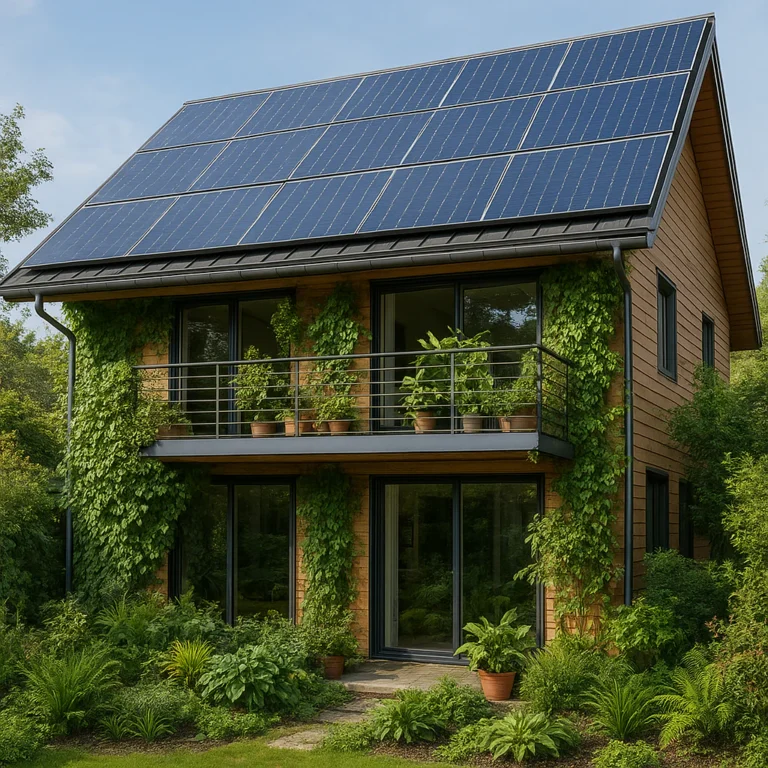
- Solar photovoltaic panels and battery storage.
- Smart controls that prevent unnecessary heating and cooling.
The U.S. Department of Energy explains that insulation slows heat transfer, helping homes stay cooler in summer and warmer in winter. Yet insulation is not a magical blanket. If water leaks into a wall or roof, a highly insulated cavity can still become a mold-friendly science experiment.
Low-Toxicity Materials and Biophilic Interior Design
A healthy green home limits unnecessary exposure to formaldehyde, solvents, flame retardants, PFAS, pesticides, and fragrance chemicals.
Look for:
- Low-emitting paints, sealants, and adhesives.
- Solid wood or certified wood furniture.
- Flooring with verified emissions testing.
- Washable, durable surfaces.
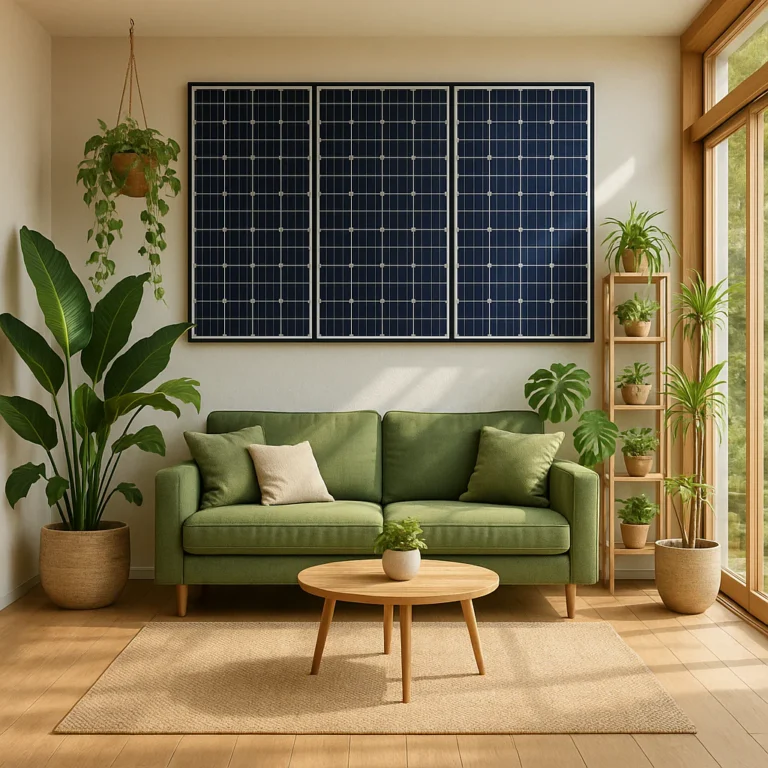
- Natural daylight and views of plants.
- Operable windows where outdoor air quality permits.
- Materials with transparent ingredient and emissions information.
Natural does not automatically mean non-toxic. Essential oils, unfinished wood treatments, wool, latex, and plant-based cleaners can still trigger allergies or sensitivities. The California Department of Public Health’s building emissions standard offers one example of a more useful approach: evaluate what materials emit indoors rather than trusting vague words such as “green” or “eco.”
Water Conservation, Waste Reduction, and Eco-Friendly Systems
Water-saving fixtures, efficient hot-water systems, rainwater management, composting, and recycling reduce environmental pressure. They can also improve everyday wellbeing by making the home more functional and less wasteful.
Useful systems include:
- Low-flow showerheads and faucets.
- Dual-flush toilets.
- Heat-pump water heaters.
- Leak detection devices.
- Rain gardens and permeable paving.
- Food-scrap composting.
- Repairable appliances.
- Refillable cleaning systems.
For practical household ideas, see our Conservation Tips category. The healthiest system is the one you can operate correctly. A complicated greywater setup that nobody maintains is less appealing than a simple leak detector that actually works.
Green homes can support health through several overlapping pathways:
- Physical: cleaner air, fewer combustion pollutants, safer temperatures, better moisture control.
- Psychological: less noise, more daylight, natural views, and spaces for recovery.
- Behavioral: easier walking, cooking, sleeping, gardening, and outdoor time.
- Social: shared courtyards, welcoming entrances, balconies, gardens, and neighborhood greenery.
- Environmental: less pollution, lower emissions, reduced heat, and better stormwater management.
A review in Environmental Research describes three major pathways linking urban greenery with health: physical activity, psychological restoration, and social contact. Those pathways apply surprisingly well to residential design. A home does not need to be a forest cabin; it needs to make healthy behavior easier.
Imagine two homes:
| Feature | Home A | Home B |
|---|---|---|
| Air | Gas stove, poor bathroom extraction | Induction cooktop, effective exhaust |
| Temperature | Drafty in winter, overheated upstairs | Insulated envelope and zoned heat pump |
| Light | Blinds closed all day | Daylight with glare and heat control |
| Nature | Decorative plastic plants | Operable balcony with native planters |
| Movement | Dark, inconvenient stairs | Safe stairs and walkable outdoor connection |
| Moisture | Damp bathroom corners | Exhaust fan, dry surfaces, leak monitoring |
Home B does not merely “look greener.” It quietly nudges daily life toward better breathing, better sleep, more movement, and less stress. But which upgrades matter most? We’ll rank them as we go.
1. Cleaner Indoor Air and Fewer Respiratory Irritants
Indoor air can contain particles, allergens, combustion gases, volatile organic compounds, mold spores, and excess carbon dioxide. The World Health Organization links household air pollution with respiratory and cardiovascular disease, particularly where solid fuels or poorly vented combustion are used.
A healthier green home:
- Vents cooking fumes outdoors.
- Avoids indoor smoking and burning candles.
- Uses filtration suited to particle pollution.
- Controls dampness.
- Stores chemicals safely.
- Maintains heating and cooling equipment.
- Uses fresh outdoor air when outdoor pollution is low.
A simple air-quality routine
- Run the range hood during cooking and for several minutes afterward.
- Use bathroom exhaust during showers and afterward.
- Keep filters clean and replace them according to manufacturer guidance.
- Check for musty odors, condensation, and visible mold.
- Test for radon where local guidance recommends it.
- Install carbon monoxide alarms near sleeping areas.
- Avoid relying on scent to judge cleanliness. Lemon fragrance is not a ventilation strategy.
The American Lung Association provides a useful overview of indoor pollutants and ways to reduce exposure.
2. Lower Exposure to Toxic Chemicals and VOCs
Volatile organic compounds, or VOCs, evaporate from products such as paint, flooring, furniture, cleaning products, adhesives, and air fresheners. Some cause eye, nose, and throat irritation; others can affect the nervous system or contribute to longer-term risks.
Prioritize:
- Fragrance-free products for sensitive households.
- Water-based paints with credible emissions testing.
- Furniture made without added formaldehyde where possible.
- Ventilation during and after renovations.
- Outdoor off-gassing of new furniture when practical.
- Fewer aerosol sprays and solvent-heavy products.
The EPA’s guidance on VOCs makes a key point: products can continue emitting VOCs after installation. “New carpet smell” is not your home congratulating you. It is chemistry asking for ventilation.
3. Better Temperature Control and Thermal Comfort
Thermal discomfort can disturb sleep, increase fatigue, and add physical strain. Extreme heat is especially dangerous for older adults, infants, and people with cardiovascular or respiratory conditions. The CDC’s heat-health guidance recommends cooling strategies and checking on vulnerable people during hot weather.
Green-home features that help:
- Roof and wall insulation.
- External shading.
- Efficient windows.
- Ceiling fans.
- Heat pumps.
- Thermal zoning.
- Cool roofs and reflective surfaces.
- Cross-ventilation where outdoor air is safe.
Consistency beats heroics. A home that stays reasonably comfortable without constant thermostat battles feels calmer and performs better.
4. Improved Sleep Quality Through Light and Climate Management
Sleep is affected by light, noise, temperature, air quality, and routine. A green home can support sleep by:
- Leting morning light enter bedrooms.
- Blocking bright outdoor light at night.
- Maintaining comfortable temperatures.
- Reducing traffic and mechanical noise.
- Avoiding strong fragrances and chemical emissions.
- Keeping carbon dioxide from building up overnight through suitable ventilation.
The National Heart, Lung, and Blood Institute explains that a comfortable, quiet, dark environment supports healthy sleep habits.
Try this evening sequence:
- Dim bright indoor lighting one to two hours before bed.
- Keep the bedroom cool but not chilly.
- Close windows during outdoor smoke or heavy traffic pollution.
- Use quiet ventilation or filtration if needed.
- Remove fragranced sprays and laundry products.
- Open blinds in the morning for natural light.
5. Reduced Mold, Dampness, and Allergy Triggers
Mold needs moisture, food, and time. Remove the moisture and you remove its party venue.
High-risk locations include:
- Bathroom ceilings and grout.
- Window frames.
- Behind wardrobes placed against cold external walls.
- Basements and crawl spaces.
- Roof cavities.
- Under sinks.
- Around washing machines and dishwashers.
The EPA’s mold cleanup guidance recommends fixing moisture problems promptly and cleaning small areas safely. Large infestations, contaminated HVAC systems, and persistent water damage may require professionals.
Moisture-control checklist
| Signal | Likely concern | First response |
|---|---|---|
| Condensation on windows | High indoor humidity or cold glazing | Ventilate, heat, inspect seals |
| Musty smell | Hidden dampness or mold | Investigate rather than mask it |
| Peling paint | Moisture intrusion | Find and repair the source |
| Swollen flooring | Leak or chronic humidity | Stop water, assess subfloor |
| Black spotting | Possible mold | Avoid disturbing it unnecessarily |
| Persistent humidity | Poor ventilation or leaks | Use a hygrometer and inspect |
A dehumidifier can help, but it should not become a permanent apology for a leaking roof.
6. Quieter Rooms and Less Noise-Related Stress
Traffic, aircraft, neighbors, HVAC systems, and appliances can interfere with sleep and concentration. Green-home design may reduce noise through:
- Airtight windows.
- Acoustic glazing.
- Insulated walls.
- Soft furnishings.
- Quiet heat pumps.
- Strategic bedroom placement.
- Vegetation used alongside, not instead of, proper acoustic construction.
The WHO Environmental Noise Guidelines connect environmental noise with sleep disturbance and other health concerns.
Trees are lovely, but a row of shrubs will not defeat highway noise by itself. Use building science first; let greenery provide the emotional encore.
7. More Natural Light and Healthier Circadian Rhythms
Daylight supports visual comfort, mood, and the body’s timing system. The National Institute of General Medical Sciences explains that circadian rhythms respond strongly to light-dark patterns.
Better daylight design includes:
- Windows positioned for useful morning and daytime light.
- Light shelves or reflective surfaces.
- External shading.
- Sher curtains for glare control.
- Task lighting instead of excessive overhead brightness.
- Reduced blue-rich light late at night.
More glass is not always better. A giant unshaded window can turn a bedroom into a greenhouse with a mattress.
8. Greater Physical Activity Through Health-Conscious Design
A green home can encourage movement by connecting daily routines with stairs, gardens, balconies, walking routes, and nearby parks.
Helpful design choices:
- Visible, attractive staircases.
- Secure bicycle storage.
- A welcoming front path.
- Outdoor seating.
- Gardening space.
- Walkable access to shops and transit.
- Safe shared courtyards.
- Storage for walking, cycling, and recreation equipment.
Research reviewed in Green Space and Health suggests that green spaces are most useful when people use them, not merely when they exist nearby. That distinction matters: a park viewed from the sofa may soothe you, but a safe path that gets you walking can add physical benefits too.
9. Lower Stress and Better Mental Health
Nature views, daylight, quiet, and personal control over temperature can make a home feel restorative rather than demanding.
A review in Environmental Health Perspectives reports associations between greener surroundings and lower psychological distress, anxiety, and depression. It also highlights stress recovery, physical activity, and social connection as possible mechanisms.
The evidence is promising but not magic. A garden cannot replace therapy, medication, stable housing, or social support. It can, however, give your nervous system more small opportunities to recover.
Try creating a restoration corner with:
- A comfortable chair.
- A window view of vegetation.
- Soft, adjustable lighting.
- Low visual clutter.
- Natural textures.
- A place for quiet reading, breathing exercises, or tea.
- A rule that work notifications stay elsewhere.
10. Stronger Connection With Nature and Biophilic Wellbeing
Biophilic design incorporates natural forms, materials, patterns, sounds, light, and living elements into buildings. It may include:
- Indoor plants.
- Natural wood and stone.
- Water sounds.
- Views of trees.
- Seasonal change.
- Natural ventilation.
- Bird-friendly gardens.
- Courtyards and green roofs.
The American Society of Landscape Architects discusses links between nature, physical activity, stress reduction, and community wellbeing.
One caveat: houseplants are not substitute air-cleaning machines at normal household densities. The famous plant-air-purification experiments used controlled conditions that do not perfectly reflect ordinary homes. Plants can still improve your relationship with the room, add beauty, and invite care. Just do not let the poting soil become a fungus buffet.
11. Safer Drinking Water and Reduced Household Contaminants
Healthy housing includes water quality. Potential concerns vary by location and may include lead, arsenic, microbial contamination, nitrates, PFAS, and aging plumbing.
The EPA’s drinking water resources recommend checking local water reports and understanding household plumbing risks.
Practical steps:
- Find your local water quality report.
- Identify pipe materials if possible.
- Use cold water for drinking and cooking.
- Flush stagnant water after long periods away.
- Test private wells according to local guidance.
- Choose a filter certified for the contaminant you need to reduce.
- Replace cartridges on schedule.
A filter is only as useful as its certification and maintenance. “Seven-stage” is marketing; contaminant-specific certification is evidence.
12. Greater Resilience During Heat, Smoke, and Extreme Weather
Climate change makes resilient housing a health issue, not merely an engineering hobby. See our Climate Change resources for broader household adaptation strategies.
A resilient green home may include:
- Passive cooling through shading and ventilation.
- Backup power for critical medical devices.
- Battery storage.
- Flood-resistant landscaping.
- Efficient filtration during wildfire smoke.
- Secure roofing and windows.
- Emergency water storage.
- Clear evacuation and communication plans.
- Native, drought-tolerant planting.
- Reduced dependence on a single energy source.
During smoke events, close windows, set HVAC systems to recirculate if appropriate, use a properly sized particle filter, and follow local public-health advice. During heatwaves, prioritize people at higher risk before worrying about whether the living room looks magazine-ready.
A green home can support mental wellbeing by reducing everyday friction. It may be easier to sleep, breathe, concentrate, move, and rest when the indoor environment is comfortable.
The research is strongest for associations, not universal guarantees. People who live in greener areas may also have more income, safer neighborhoods, better healthcare, and greater housing choice. That is why we should trust consistent patterns while avoiding overconfident promises.
Indoor Nature, Plants, Views, and Restorative Spaces
Nature contact can work through several routes:
- Visual restoration from trees, water, or sky.
- Auditory relief from birds or leaves.
- Tactile connection through gardening and natural materials.
- Seasonal awareness.
- Gentle care routines.
- Shared activity with family or neighbors.
A small balcony garden may be more psychologically useful than a large but inaccessible lawn. Function beats square footage.
How Natural Light and Fresh Air Influence Wellbeing
Fresh air feels wonderful when it is genuinely clean. On high-pollen days, wildfire-smoke days, or heavy-traffic periods, opening every window can make indoor air worse.
Use a simple decision process:
| Outdoor condition | Best approach |
|---|---|
| Clean, mild day | Open windows for cross-ventilation |
| High pollen | Filter air and ventilate strategically |
| Wildfire smoke | Close windows and run suitable filtration |
| High humidity | Ventilate only when outdoor air is drier |
| Heavy traffic periods | Avoid opening street-facing windows then |
| Cold or hot extremes | Use controlled mechanical ventilation |
Designing a Calmer Home for Anxiety and Sensory Comfort
Consider:
- Dimmable lighting.
- Quiet zones.
- Visual storage to reduce clutter.
- Predictable room layouts.
- Soft textures.
- Non-iritating scents.
- Adjustable temperature.
- Seating near daylight or greenery.
- A clear separation between work and rest.
This is particularly helpful for people with migraines, sensory sensitivities, anxiety, neurodivergence, or sleep difficulties. Individual needs vary, so treat design as a toolkit rather than a prescription.
Indoor air quality is where green design and health often meet most directly. A home can be energy efficient and still have poor air if pollutants are trapped indoors.
Common Indoor Air Pollutants in Conventional Homes
| Pollutant | Common source | Potential concern | Reduction strategy |
|---|---|---|---|
| Fine particles | Cooking, smoke, candles | Respiratory and cardiovascular irritation | Exhaust, filtration, source control |
| Nitrogen dioxide | Gas or wood combustion | Respiratory irritation | Electric cooking, outdoor venting |
| VOCs | Paint, furniture, cleaners | Irritation and chemical exposure | Low-emission materials, ventilation |
| Mold spores | Damp materials | Allergy and asthma symptoms | Moisture control and remediation |
| Radon | Soil and foundations | Lung cancer risk | Testing and mitigation |
| Carbon monoxide | Faulty combustion appliances | Poisoning | Alarms and appliance servicing |
| Pollen | Outdoor air and clothing | Allergic symptoms | Filtration and cleaning |
| Dust mites | Bedding and humidity | Allergy symptoms | Wash bedding, humidity control |
The CDC’s indoor environmental quality resources provide practical information for homes and buildings.
Mechanical Ventilation, Heat Recovery, and Air Purifiers
Balanced ventilation
Balanced systems supply outdoor air and exhaust stale air. Heat-recovery ventilators can exchange heat between outgoing and incoming air, improving efficiency in suitable climates.
Portable air cleaners
For particles, choose a unit with:
- A true HEPA or clearly specified high-efficiency particle filter.
- A clean air delivery rate appropriate to room size.
- Replaceable filters.
- Reasonable noise levels.
- No intentional ozone generation.
The EPA’s air cleaner guidance explains why sizing and placement matter. A tiny desktop purifier cannot clean an open-plan home merely through optimism.
Ozone warning
Avoid ozone generators marketed as “air sanitizers.” The EPA warns that ozone can irritate the lungs and is not a safe substitute for source control and filtration.
Healthy Humidity Levels and Mold Prevention
Many indoor-air professionals commonly target roughly 30% to 50% relative humidity, adjusted for climate and household needs. The exact comfort range varies, but persistently damp conditions increase mold and dust-mite concerns.
Use a digital hygrometer in:
- Bedrooms.
- Bathrooms.
- Basements.
- Areas near exterior walls.
- Rooms with known condensation.
If humidity remains high:
- Confirm the hygrometer is accurate.
- Use exhaust fans.
- Repair leaks.
- Improve drainage outside.
- Use a dehumidifier.
- Check HVAC performance.
- Investigate hidden moisture.
Carbon Monoxide, Radon, Smoke, and Combustion Safety
Install carbon monoxide alarms near sleeping areas and on each level where recommended locally. Test them regularly.
For radon, consult the EPA radon program or your national health authority. Radon is invisible and odorless, which makes it a terrible houseguest and an easy one to overlook.
Thermal comfort is influenced by air temperature, humidity, radiant temperature, air movement, clothing, activity, and personal preference. A thermostat number cannot describe the whole experience.
Insulation, Airtightness, Windows, and Passive Solar Design
Effective design combines:
- Continuous insulation.
- Thermal-bridge reduction.
- Airtight construction.
- Moisture-aware wall assemblies.
- Correctly installed windows.
- External shading.
- Climate-appropriate glazing.
- Solar orientation.
The Passive House Institute emphasizes high levels of insulation, airtightness, thermal-bridge reduction, high-performance windows, and heat-recovery ventilation.
Heat Pumps, Smart Thermostats, and Efficient Heating and Cooling
Heat pumps move heat rather than generating it directly through combustion or resistance. The International Energy Agency identifies heat pumps as an important efficiency technology, though performance depends on climate, installation, electricity sources, and maintenance.
A good setup includes:
- Correct equipment sizing.
- Clean filters.
- Appropriate airflow.
- Quiet operation.
- Zoning where useful.
- Backup plans for extreme weather.
- Professional commissioning.
Smart thermostats can reduce waste, but they cannot fix an undersized system, leaky ductwork, or an attic that behaves like a toaster.
Preventing Overheating in Hot Weather
Prioritize passive measures:
- Shade windows externally.
- Close blinds before direct sun enters.
- Ventilate at night only when outdoor air is cooler and safe.
- Use ceiling fans.
- Minimize heat-producing appliances during peak heat.
- Keep vulnerable household members in the coolest room.
- Use air conditioning or heat-pump cooling when needed.
Green homes conserve water without compromising hygiene. Efficient fixtures should feel normal, not like showering under a sad trickle.
Lead, PFAS, Microplastics, and Other Drinking Water Concerns
Water concerns depend heavily on location and infrastructure. Use official local testing information, not viral posts or a filter influencer holding a suspiciously dramatic glass.
The U.S. Centers for Disease Control and Prevention provides household water safety information. For PFAS, review EPA guidance.
Water-Efficient Fixtures and Safer Cleaning Practices
Choose:
- WaterSense-labeled fixtures where available.
- Leak sensors.
- Efficient dishwashers and washing machines.
- Unscented cleaners for sensitive households.
- Microfiber cloths used responsibly.
- Correct dilution and ventilation.
- Never mixing bleach with ammonia or acidic cleaners.
The EPA WaterSense program offers product and household conservation guidance.
Greenery can beautiful, cooling, calming, and habitat-supporting. It can also attract pests, trigger allergies, or consume water if poorly planned. The goal is appropriate nature, not maximum foliage at any cost.
Houseplants, Green Walls, Natural Materials, and Outdoor Views
Good choices:
- Plants suited to indoor light and humidity.
- Pest-free poting soil.
- Non-toxic planters.
- Secure placement away from children and pets.
- Natural materials with low emissions.
- Windows oriented toward trees or gardens.
- Views with both prospect and refuge: see the world, but feel sheltered.
Avoid overwatering. Fungus gnats are tiny, airborne reminders that “more care” is not always better care.
Balconies, Gardens, Courtyards, and Usable Outdoor Space
A useful outdoor space needs:
- Shade.
- Seating.
- Safe flooring.
- Lighting.
- Privacy.
- Accessible routes.
- Water availability.
- Low-maintenance planting.
- Protection from excessive wind and heat.
A balcony with one chair and a herb pot can support daily restoration. A huge lawn that requires constant mowing may offer less wellbeing and more weekend resentment.
Biodiversity, Pollinators, and Wildlife-Friendly Landscaping
Native plants, layered vegetation, water sources, and pesticide reduction can support biodiversity. See our Biodiversity Conservation category for habitat-friendly strategies.
Use care around:
- Plants toxic to pets or children.
- Standing water that breeds mosquitoes.
- Thorny species near walkways.
- High-pollen plants near bedroom windows.
- Invasive species.
- Bird feeders that are not cleaned properly.
A home’s surroundings can be as influential as its interior. The research review in PMC455625 stresses that quality, safety, accessibility, and use matter more than simply counting green pixels on a map.
Walkability, Cycling, Parks, and Everyday Physical Activity
Look for:
- A park or green route within a comfortable walking distance.
- Shade and seating.
- Safe crossings.
- Paths suitable for mobility aids and strollers.
- Bicycle storage and low-traffic cycling routes.
- Lighting that improves visibility without excessive glare.
- Destinations that make walking practical.
A Danish survey discussed in the review found that 46% of people used a green space that was not necessarily the closest one, reminding us that quality and personal preference matter.
Social Connection, Community Design, and Loneliness Reduction
Shared gardens, courtyards, porches, seating areas, and community rooms can create low-pressure opportunities for contact. People do not need to attend a formal event to benefit from a friendly nod, a shared gardening task, or a familiar face.
The best communal design offers both:
- Invitation: spaces that encourage interaction.
- Escape: quiet areas for privacy.
Green Space Access and Health Equity
Green improvements can unintentionally raise housing costs and displace existing residents. A healthy approach includes:
- Community participation.
- Affordable housing protections.
- Accessible paths.
- Inclusive safety planning.
- Shade in underserved areas.
- Maintenance funding.
- Protection against exclusionary “green premium” development.
Nature should not become a luxury amenity available only behind a gate.
“Eco-friendly” can mean recycled, renewable, durable, low-emission, repairable, locally sourced, or responsibly manufactured. Those benefits do not always overlap.
Low-VOC Paints, Flooring, Furniture, and Adhesives
Check for:
- Independent emissions testing.
- Clear ingredient disclosures.
- Formaldehyde limits.
- Third-party certifications.
- Installation instructions.
- Required ventilation time.
- Durability and repairability.
Brands and certifications worth investigating include UL GRENGUARD Gold, Cradle to Cradle Certified, FloorScore, and Green Seal.
No certification is perfect. Check what the certification actually measures.
Formaldehyde, Flame Retardants, PFAS, and Fragrance Chemicals
Reduce exposure by:
- Choosing products with transparent materials information.
- Avoiding unnecessary stain-resistant treatments.
- Washing new textiles before use.
- Ventilating after installation.
- Selecting fragrance-free cleaning and laundry products.
- Replacing damaged foam items when appropriate.
- Keeping dust under control with damp cleaning.
The National Institute of Environmental Health Sciences provides information on formaldehyde exposure and health.
Durable, Repairable, Recycled, and Responsibly Sourced Materials
A material that lasts decades may be greener than a fashionable “natural” product that must be replaced every few years. Ask:
- Can it be repaired?
- Is it available locally?
- Does it release harmful chemicals indoors?
- Is recycled content verified?
- Can it be recycled at end of life?
- Does it tolerate moisture and cleaning?
- Is the environmental claim specific and documented?
Some residents are more vulnerable to poor air, heat, cold, mold, noise, and chemical exposure. The EPA’s Healthy Homes guidance covers several overlapping housing hazards.
Asthma, Allergies, and Respiratory Health
Prioritize:
- Moisture control.
- Dust reduction.
- Smoke-free housing.
- Cooking ventilation.
- High-efficiency filtration.
- Pest management without unnecessary pesticides.
- Fragrance reduction.
- Clean bedding and washable surfaces.
For asthma-specific guidance, consult the CDC’s asthma resources.
Pregnancy, Infants, and Early Childhood Development
Helpful measures include:
- Preventing lead exposure.
- Avoiding tobacco smoke.
- Ventilating renovation emissions.
- Controlling mold.
- Securing furniture.
- Using safe water.
- Keeping indoor temperatures stable.
- Reducing unnecessary pesticide use.
Always follow advice from qualified healthcare professionals for individual pregnancy, infant, or childhood concerns.
Aging in Place, Mobility, and Universal Design
Healthy green housing for older adults may include:
- Step-free entrances.
- Non-slip flooring.
- Good lighting without glare.
- Grab bars and accessible bathrooms.
- Easy-to-reach windows and controls.
- Quiet rooms.
- Reliable heating and cooling.
- Shaded outdoor seating.
- Nearby services and green routes.
Universal design often improves life for everyone, including people carrying groceries, recovering from injury, or pushing a stroller.
A green home can reduce emissions and operating waste, but the financial outcome depends on local energy prices, climate, financing, installation quality, and how long you remain in the home.
Lower Energy Bills and More Predictable Household Costs
Energy-efficient design may reduce demand for heating, cooling, and hot water. The first video’s perspective emphasizes potentially lower monthly energy use, reduced pollution, efficient water systems, and possible government incentives. Those claims are plausible in principle, but the exact savings vary widely by home and climate.
Verify current incentives through:
- ENERGY STAR rebates and tax credits.
- U.S. Department of Energy incentives.
- Your national, state, or local energy agency.
- Utility efficiency programs.
Do not buy an upgrade solely because someone promises a neat percentage. Request an energy assessment and compare realistic scenarios.
Reduced Carbon Emissions and Climate Benefits
Efficiency, electrification, renewable energy, lower-carbon materials, and reduced waste can lower household emissions. Explore our Carbon Footprint Reduction category for practical steps.
Remember the whole system:
- Manufacturing impacts.
- Transport.
- Installation.
- Operational energy.
- Maintenance.
- End-of-life disposal.
A durable repair is often greener than replacing a functioning product with a newer “eco” model.
Property Value, Durability, and Long-Term Maintenance
Green features may improve comfort and appeal, but resale value is highly local. Document:
- Energy performance.
- Equipment servicing.
- Product certifications.
- Renovation dates.
- Moisture inspections.
- Solar and battery warranties.
- Ventilation commissioning.
A healthy home with records beats a healthy home with mysterious wiring and a brochure full of leaves.
You do not need to demolish your house to improve it. Start with health risks and energy waste, then add comfort and nature.
Low-Cost Changes With Immediate Health Benefits
- Use kitchen and bathroom exhaust fans correctly.
- Replace overdue HVAC filters.
- Seal obvious drafts around windows and doors.
- Test smoke and carbon monoxide alarms.
- Use fragrance-free cleaners.
- Stop indoor smoking and combustion burning.
- Wash bedding regularly.
- Fix dripping taps and visible leaks.
- Add a hygrometer.
- Move furniture away from damp exterior walls.
- Open blinds for morning light.
- Add shade with curtains or exterior devices.
- Walk or cycle for short errands where safe.
Medium- and Long-Term Green Home Improvements
Prioritize in this order:
- Water and moisture problems.
- Combustion and safety hazards.
- Ventilation and indoor air quality.
- Insulation and air sealing.
- Windows and shading.
- Efficient heating, cooling, and hot water.
- Renewable energy.
- Low-emission finishes and biophilic upgrades.
This sequence prevents a common mistake: installing solar panels while ignoring a damp bedroom or a dangerous gas appliance.
A Room-by-Room Healthy Home Checklist
| Room | First priority | Green upgrade | Health payoff |
|---|---|---|---|
| Bedroom | Sleep environment | Shading, quiet ventilation, low-emission furniture | Better rest |
| Kitchen | Cooking emissions | External exhaust, induction, efficient fixtures | Cleaner air |
| Bathroom | Moisture | Strong exhaust, leak repair, mold prevention | Fewer dampness risks |
| Living room | Comfort and light | Efficient windows, plants, quiet equipment | Restoration |
| Laundry | Humidity and chemicals | Vent dryer, fragrance-free products | Less moisture and irritation |
| Garden | Safety and usability | Shade, native plants, accessible paths | Movement and nature contact |
Bedroom: Sleep, Lighting, and Air Quality
- Keep the room dark at night and bright in the morning.
- Maintain comfortable temperature.
- Avoid strong fragrances.
- Use washable bedding.
- Check for condensation and mold.
- Position portable air cleaners away from walls and obstructions.
- Keep furniture from blocking vents.
Kitchen: Ventilation, Water, and Safer Materials
- Use a hood that vents outdoors where possible.
- Run it before cooking if your system supports that practice.
- Prefer back burners when practical.
- Keep filters clean.
- Use induction or electric cooking to avoid indoor gas combustion.
- Choose durable cutting boards and low-emission cabinetry.
- Repair leaks promptly.
Bathroom: Moisture, Mold, and Efficient Water Use
- Run the exhaust fan during and after showers.
- Keep water off walls and floors.
- Dry bath mats.
- Inspect silicone seals.
- Use water-efficient fixtures with acceptable flow.
- Avoid painting over mold without fixing moisture.
Living Areas: Comfort, Noise, and Natural Light
- Arrange seating toward daylight or greenery.
- Use rugs and curtains for acoustic comfort.
- Keep clutter manageable.
- Use adjustable lighting.
- Place noisy appliances away from quiet zones.
- Add plants only where light and maintenance are suitable.
Garden and Outdoor Areas: Shade, Soil, and Biodiversity
- Add shade where people sit.
- Use regionally appropriate plants.
- Avoid pesticides unless necessary and carefully selected.
- Improve soil with compost.
- Keep paths stable and accessible.
- Provide habitat without creating standing water.
- Plant for different seasons.
Certifications can provide useful structure, but they are not identical and do not all focus equally on health.
ENERGY STAR, LED, Passive House, and WELL
| Program | Main emphasis | Useful for |
|---|---|---|
| ENERGY STAR | Energy efficiency and appliance performance | Appliances and homes |
| Passive House | Very low energy demand and airtight performance | High-performance buildings |
| LED | Broad environmental and building criteria | Building-level sustainability |
| WELL | Human health and wellbeing in buildings | Wellness-focused design |
| Fitwel | Health-promoting building strategies | Residential and workplace settings |
| Green Star | Sustainability assessment in several regions | Buildings and communities |
Learn more from LED, WELL, Fitwel, and Green Star.
Indoor airPLUS, Healthy Building Network, and Local Standards
Indoor airPLUS focuses on indoor-air protections layered onto energy-efficient construction. The Healthy Building Network offers material health resources and product transparency information.
How to Compare Certifications Without Getting Lost in Alphabet Soup
Ask:
- Does the program verify energy performance?
- Does it measure indoor air quality?
- Does it address moisture?
- Are products independently tested?
- Is onsite inspection involved?
- Does it include post-occupancy performance?
- Does it consider accessibility and equity?
- Is the certification current?
A logo is a starting point, not a health diagnosis.
Green housing has genuine advantages, but confident recommendations require some skepticism.
Upfront Costs, Renovation Disruption, and Payback Periods
Potential drawbacks include:
- Higher initial investment.
- Contractor shortages.
- Renovation dust and noise.
- Complicated approvals.
- Supply-chain delays.
- Maintenance requirements.
- Uncertain financial payback.
- Renters’ limited control.
Prioritize measures that improve both health and comfort, such as moisture repair, kitchen ventilation, insulation, and shading. A payback spreadsheet does not capture the value of sleeping better in a room that no longer overheats.
When Energy Efficiency Can Affect Ventilation
Airtightness is good when paired with intentional ventilation. Without it, pollutants and humidity may accumulate.
✅ Airtight envelope plus balanced ventilation: generally strong design.
❌ Airtight envelope with sealed windows and no ventilation plan: potential indoor-air problem.
Commission systems properly and maintain filters.
How to Spot Vague Eco Claims and Misleading Product Labels
Watch for:
- “Chemical-free.”
- “All-natural.”
- “Non-toxic” without test data.
- “Carbon neutral” without scope information.
- “Green” without a standard.
- Leaf icons with no certification.
- Energy savings presented without climate or usage assumptions.
- Claims that a houseplant replaces ventilation.
- Ozone generators marketed as air cleaners.
The Federal Trade Commission Green Guides explain principles for environmental marketing claims.
The research supports a thoughtful “yes, with conditions.”
Evidence for Indoor Air Quality, Comfort, and Respiratory Outcomes
There is strong practical and scientific support for:
- Reducing tobacco smoke.
- Controlling dampness and mold.
- Venting combustion pollutants.
- Improving filtration.
- Managing heat and cold.
- Testing for radon and carbon monoxide.
- Selecting lower-emission materials.
These interventions target known hazards, so the reasoning is more direct than simply measuring whether a neighborhood looks green.
Evidence for Mental Health, Physical Activity, and Social Wellbeing
The two major reviews summarized earlier report associations between green surroundings and:
- Lower distress.
- Better mood.
- Stress recovery.
- More physical activity.
- Social connection.
- Greater perceived wellbeing.
One review states that “the health benefits accrued are a result of use of urban green spaces and not just from their presence.” Another describes green spaces as providing “vital health services as well as environmental services.”
These conclusions are compatible, not contradictory. Greenery creates opportunity; behavior and context determine how much benefit you receive.
Research Gaps, Confounding Factors, and Practical Limits
Limitations include:
- Many studies are observational.
- Grener areas may also be wealthier and safer.
- Exposure measurements vary.
- People choose neighborhoods based on preferences and resources.
- The optimal amount and “dose” of nature remain uncertain.
- Objective health measures can be less consistent than self-reported wellbeing.
- Private green amenities may worsen inequality if public access declines.
The sensible takeaway is not “the evidence is weak, so greenery does nothing.” It is: combine green design with proven indoor-air, safety, moisture, and thermal interventions, then judge wellbeing claims with humility.
Week 1: Test Air, Moisture, Light, and Energy Use
- Check smoke and carbon monoxide alarms.
- Buy or borrow a hygrometer.
- Record hot and cold rooms.
- Inspect visible mold and leaks.
- Review utility use.
- Locate HVAC filters.
- Check whether your range hood vents outdoors.
- Identify the brightest and darkest rooms.
- Find your local water quality report.
Week 2: Remove Pollutants and Improve Ventilation
- Stop indoor smoking and combustion burning.
- Remove unnecessary fragrance products.
- Clean or replace filters.
- Run exhaust fans correctly.
- Repair small leaks.
- Wash dusty bedding.
- Test for radon where appropriate.
- Avoid ozone-generating air cleaners.
Week 3: Add Nature, Shade, and Restorative Design
- Add one well-suited plant.
- Improve a window view.
- Create a quiet corner.
- Add shade to a sitting area.
- Start a small herb or native plant container.
- Identify a safe nearby green route.
- Schedule two outdoor walks.
Week 4: Plan High-Impact Upgrades
Request assessments or quotes for:
- Moisture remediation.
- Insulation and air sealing.
- Window shading.
- Heat-pump installation.
- Ventilation upgrades.
- Induction cooking.
- Low-emission flooring or paint.
- Solar energy and battery storage.
Keep records, compare whole-life impacts, and avoid making five major changes at once. Your home is a system, not a shopping cart.
How does living in a green home improve indoor air quality and respiratory health?
A green home can improve indoor air by reducing pollution at the source, ventilating stale air, and filtering particles. Helpful features include outdoor-vented kitchen exhaust, bathroom fans, balanced mechanical ventilation, high-efficiency filters, moisture control, and electric cooking.
This can reduce exposure to smoke, nitrogen dioxide, particles, VOCs, mold, and excess humidity. It does not guarantee symptom relief for asthma or allergies, so people with respiratory conditions should follow their clinician’s treatment plan and local public-health advice.
What is the most important first step?
Find and fix the largest pollutant source. A purifier cannot compensate for indoor smoking, an unvented gas appliance, or a persistent leak.
Can an energy-efficient home help reduce stress and improve mental wellbeing?
Potentialy, yes. Stable temperatures, lower noise, better daylight, fewer drafts, and predictable energy costs can reduce daily discomfort and household friction. Nature views and usable outdoor areas may support psychological restoration.
The evidence summarized in PMC5663018 links greener surroundings with better mental health, but much of the research is associative. A green home supports wellbeing; it is not a replacement for mental-health care, financial security, or social support.
What health benefits come from using non-toxic and sustainable materials at home?
Lower-emission materials may reduce exposure to VOCs, formaldehyde, and irritating solvents. Durable materials can also reduce renovation frequency, dust, waste, and household disruption.
Choose products with independent emissions testing rather than relying on terms such as “natural” or “eco.” Low-VOC products still require ventilation, and some sensitive residents may react to compounds below general regulatory limits.
How does natural lighting in a green home support sleep and overall wellness?
Morning and daytime light help reinforce circadian timing, alertness, and regular sleep-wake patterns. A green home uses daylight while controlling glare, overheating, and nighttime light pollution.
Open blinds soon after waking, use adjustable shading during bright periods, and dim artificial light at night. Bedrooms should be dark and comfortable during sleep.
Can living in a green home reduce allergies and exposure to harmful chemicals?
It can reduce some triggers by controlling mold, dust, smoke, fragrance chemicals, VOCs, pests, and outdoor pollen entering indoors. However, houseplants, natural fibers, soil, pets, and essential oils can also trigger symptoms in some people.
Use targeted strategies:
- Control moisture.
- Clean without stirring dust.
- Ventilate strategically.
- Choose fragrance-free products.
- Keep bedroom textiles washable.
- Select plants carefully.
- Use certified filtration where appropriate.
How do green homes promote healthier temperature and humidity levels?
Insulation, air sealing, shading, efficient heating and cooling, and controlled ventilation reduce temperature swings. Exhaust fans and dehumidifiers help manage moisture.
A commonly used indoor humidity target is roughly 30% to 50%, though climate and household needs differ. Persistent condensation, musty smells, or damp surfaces indicate that the system needs investigation.
Does living sustainably at home improve physical health while reducing environmental impact?
It can, especially when sustainability changes make healthy behaviors easier. Walking instead of driving, gardening, cooking fresh food, using active stairs, reducing combustion pollution, and maintaining comfortable temperatures can benefit both people and the environment.
The strongest gains usually come from practical choices rather than perfection:
- Use less energy.
- Avoid indoor smoke.
- Control moisture.
- Walk and cycle safely.
- Reduce waste.
- Choose durable products.
- Protect local biodiversity.
See our Eco-Conscious Brands category for more responsible purchasing guidance.
How can renters create a healthier green home without major renovations?
Renters can:
- Use a portable HEPA air cleaner.
- Add removable window shading.
- Use fragrance-free products.
- Report leaks and mold quickly.
- Choose low-emission furniture.
- Add suitable plants.
- Use efficient LED bulbs.
- Install removable faucet aerators where permitted.
- Keep smoke and carbon monoxide alarms functional.
- Walk to nearby green spaces.
Document maintenance concerns in writing and ask landlords for repairs. You should not have to become an amateur building inspector just to breathe comfortably.
Are green homes healthier than conventional homes?
A well-designed and well-maintained green home can be healthier because it is more likely to address ventilation, moisture, heat, pollutants, and comfort. But the label alone proves nothing.
A conventional home with excellent ventilation and moisture control may outperform a poorly operated “green” home. Performance matters more than branding.
What is the best green home upgrade for health?
There is no universal winner. Start with the biggest verified hazard:
- Mold or leaks: fix moisture first.
- Gas cooking without effective exhaust: improve ventilation or electrify.
- Extreme heat: add shading and cooling.
- Poor air filtration: use correctly sized filtration.
- High energy waste: improve insulation and air sealing.
- Toxic renovation materials: select lower-emission alternatives.
The final answer to our earlier mystery is pleasantly unglamorous: the healthiest green home is not the one with the most gadgets; it is the one that quietly keeps air clean, moisture controlled, temperatures stable, and healthy choices convenient.
Living in a green home can benefit your health and wellbeing through cleaner air, better temperature control, lower moisture, improved sleep conditions, natural light, reduced noise, safer materials, stronger nature connections, and easier access to physical activity.
Our confident recommendation is to prioritize improvements in this order:
- Repair leaks, mold, and combustion hazards.
- Improve ventilation and filtration.
- Stabilize temperature and humidity.
- Reduce high-emission products and fragrances.
- Add daylight, shade, plants, and usable outdoor space.
- Make walking, cycling, gardening, and social connection easier.
- Invest insulation, efficient electrification, and renewable energy when suitable.
The research on greenery and mental health is encouraging, but it is not a magic spell. Benefits depend on quality, safety, accessibility, and use. A leafy view helps; a safe path you actually walk may help more. A low-VOC label is useful; verified emissions data is better. Solar panels are valuable; solar panels on a damp, poorly ventilated home do not solve the whole health puzzle.
The first video’s central message holds up with some sensible fine print: eco-friendly housing can reduce pollution, conserve energy and water, and support healthier living. Just verify savings claims locally, maintain equipment, and choose upgrades based on evidence rather than green glitter. 🌿
👉 CHECK PRICE on:
- Levoit Core 300-P Air Purifier: Amazon | Walmart | Levoit Official Website
- Coway Airmega AP-1512HH: Amazon | Walmart | Coway Official Website
- Blueair Blue Pure 211i Max: Amazon | Walmart | Blueair Official Website
- Airthings Wave Plus Radon and Indoor Air Quality Monitor: Amazon | Walmart | Airthings Official Website
- Gove Hygrometer Thermometer: Amazon | Walmart | Gove Official Website
- Molekule Air Pro: Amazon | Molekule Official Website
- ENERGY STAR Certified Appliances: ENERGY STAR Product Finder | ENERGY STAR Official Website
Recommended reading:
- The Healthy Building by Joseph G. Allen and John D. Macomber
- The Nature Fix by Florence Williams
- Biophilic Design by Stephen R. Kellert
- Drawdown by Paul Hawken
- U.S. Environmental Protection Agency: Indoor Air Quality
- U.S. Environmental Protection Agency: Mold
- U.S. Environmental Protection Agency: VOCs and Indoor Air
- U.S. Environmental Protection Agency: Air Cleaners and Filters
- U.S. Environmental Protection Agency: Ozone Generators
- U.S. Environmental Protection Agency: Radon
- U.S. Department of Energy: Insulation
- U.S. Department of Energy: Home Energy Rebates
- ENERGY STAR: Federal Tax Credits and Rebates
- World Health Organization: Household Air Pollution
- World Health Organization: Environmental Noise Guidelines
- Centers for Disease Control and Prevention: Heat and Health
- Centers for Disease Control and Prevention: Asthma
- Centers for Disease Control and Prevention: Healthy Water
- National Heart, Lung, and Blood Institute: Sleep
- National Institute of General Medical Sciences: Circadian Rhythms
- National Institute of Environmental Health Sciences: Formaldehyde
- International Energy Agency: The Future of Heat Pumps
- Passive House Institute
- LED
- WELL Building Standard
- Fitwel
- UL GRENGUARD Certification
- Green Seal
- Healthy Building Network
- Green Space, Health, and Wellbeing Review
- Grenspace and Mental Health Review
- Queensland Government: Why Are Green Spaces Good for Us?