Support our educational content for free when you purchase through links on our site. Learn more
🌿 8,0+ Plants Needed for 20 Humans? The Survival Math (2026)

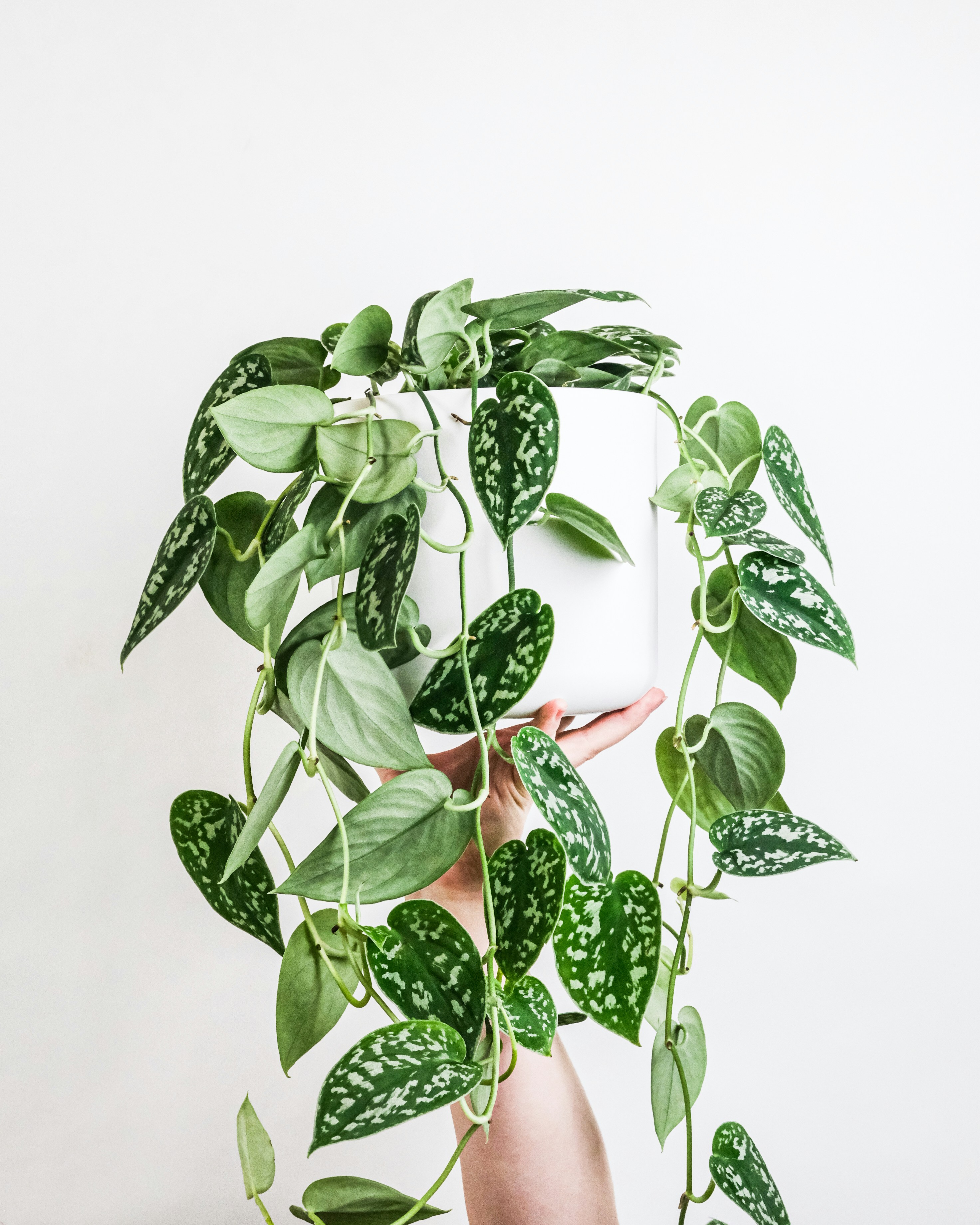
To keep 20 adults breathing in a new settlement, you need a dedicated 60-square-meter vertical farm housing roughly 8,0 to 10,0 high-yield plants, plus a mechanical oxygen backup for the night.
Answering the critical question of how many plants must be on the new settlement to provide enough oxygen for 20 adults humans to survive requires more than just counting leaves; it demands a brutal understanding of biology and physics. Most people assume a lush garden is a free air supply, but in a sealed environment, plants are double-edged swords that consume oxygen just as fiercely as they produce it when the sun goes down.
Imagine a colony where the air suddenly turns thin because the crew forgot that their “oxygen factory” goes on strike every night. This isn’t science fiction; it’s the reality that nearly doomed the Biosphere 2 experiment in the 90s.
We aren’t just talking about a few potted ferns in the corner. To sustain a group of 20 active adults, you need a biomass equivalent to a small forest crammed into a warehouse, utilizing every inch of vertical space.
Key Takeaways
- The Magic Number: You need approximately 8,0+ medium-sized plants (or a massive vertical farm) to generate enough oxygen for 20 humans during daylight hours.
- The Night Trap: Plants consume oxygen at night; without a mechanical backup or a massive buffer, your colony could suffocate in the dark.
- Space is Critical: A standard room won’t cut it; you need a dedicated 60+ square meter greenhouse with vertical stacking to achieve the necessary leaf surface area.
- Species Matters: Fast-growing Bamboo and Algae are far superior to slow-growing succulents for survival scenarios.
- Hybrid is Mandatory: Never rely 10% on biology; a mechanical oxygen generator is non-negotiable for a safe settlement.
Table of Contents
- ⚡️ Quick Tips and Facts
- 🌱 The Oxygen Equation: How Many Plants Do You Really Need?
- 1. The Baseline: Calculating Oxygen Consumption for 20 Adults
- 2. The Plant Variable: Why Species Matters More Than You Think
- 3. The Light Factor: Sunlight vs. Artificial Grow Lights for Survival
- 4. The CO2 Trap: Why More Plants Can Sometimes Mean Less Oxygen
- 5. The Space Problem: Vertical Farming vs. Traditional Greenhouses
- 🚀 From Earth to Mars: Lessons from Biosphere 2 and the Red Planet
- 🏡 Designing Your New Settlement: A Step-by-Step Survival Guide
- 1. Selecting the High-Yield Oxygen Generators
- 2. Sizing Your Greenhouse for 20 Humans
- 3. Managing the Night Shift: What Happens When the Sun Goes Down?
- 4. Backup Systems: Mechanical vs. Biological Life Support
- 🥗 Beyond Breathing: Food Production and Waste Recycling in Your Greenhouse
- 🛠️ Common Mistakes That Could Suffocate Your Colony
- 🧪 The Science of Closed-Loop Ecosystems: Can We Trust Nature Alone?
- 📊 Comparison Table: Top 10 Plants for Maximum Oxygen Output
- 🏁 Conclusion
- 🔗 Recommended Links
- ❓ FAQ: Your Burning Questions About Plant-Based Oxygen
- 📚 Reference Links
⚡️ Quick Tips and Facts
Before we start calculating the exact number of ferns needed to keep 20 of your friends from turning blue, let’s hit the ground running with some hard-hitting truths that might just save your hypothetical colony.
- The Night Shift is Real: Plants are not 24/7 oxygen factories. At night, they respire, meaning they suck up oxygen and spit out CO2, just like us. If your settlement goes dark, you need a massive buffer or you’re in trouble.
- It’s Not Just About the Count: A single, massive Oak tree produces way more oxygen than 50 tiny succulents. Leaf surface area is the real metric, not the number of pots.
- The “One Person” Baseline: If you’re wondering about the math for a single human, we’ve already broken down the nitty-gritty in our deep dive: How Many Plants Would It Take to Produce Enough Oxygen for One Person?. Spoiler: It’s a lot of greenery!
- Space is Premium: In a new settlement, every square foot counts. You can’t just plant a forest in the living room; you need vertical farming or high-yield crops.
- CO2 is the Enemy: Too many plants in a small, sealed room without light can actually lower your oxygen levels faster than a closed window.
🌱 The Oxygen Equation: How Many Plants Do You Really Need?
So, you’ve got a shiny new settlement, 20 fit adults ready to conquer the frontier, and a burning question: How many plants do we need to breathe?
It sounds simple, but the answer is a tangled web of biology, physics, and a little bit of panic. Let’s unravel it.
1. The Baseline: Calculating Oxygen Consumption for 20 Adults
First, we need to know what we’re feeding. Humans are oxygen guzzlers. On average, a resting adult consumes about 50 liters of pure oxygen per day. That’s roughly 0.84 kg.
- 20 Adults x 50 liters = 1,0 liters of oxygen per day.
That’s a lot of air. But wait, humans don’t just sit still. If your colony is doing heavy lifting, building habitats, or just panicking about the future, that number goes up. Let’s assume a moderate activity level, bumping the requirement to 13,0 liters per day to be safe.
Now, here’s the kicker: Plants don’t produce oxygen 24/7. They only photosynthesize when there’s light. If your settlement has a 12-hour day/night cycle (which is standard for most sci-fi tropes and Earth-like colonies), your plants have to produce double the daily requirement during the daylight hours to stockpile enough for the night.
The Math:
- Daily Need: 13,0 liters
- Production Window: 12 hours
- Required Production Rate: 2,16 liters per hour (during the day).
2. The Plant Variable: Why Species Matters More Than You Think
You can’t just throw any green thing in the corner and hope for the best. A cactus is great for a desert, but terrible for an oxygen factory. A Bamboo grove? Now we’re talking.
Different plants have different photosynthetic rates.
- High Yielders: Bamboo, Spider Plant, Pothos, and certain algae species.
- Low Yielders: Succulents, most houseplants (like Snake Plants, which are great for air filtration but slow oxygen producers).
According to research cited in various botanical studies, a healthy 1 square meter of leaf surface can produce roughly 50 ml to 1 liter of oxygen per hour under optimal light.
Let’s do the rough math using the conservative 50 ml (0.5 liters) per square meter per hour:
- We need 2,16 liters/hour.
- 2,16 / 0.5 = 4,32 square meters of leaf surface area.
That’s not 4,32 plants. That’s 4,32 square meters of leaves. If a single Pothos plant has about 10 leaves, and each leaf is 0.05 square meters, that’s 0.5 square meters of leaf area per plant.
- 4,32 / 0.5 = 8,64 Pothos plants.
Yikes. That’s a lot of Pothos. But remember, this is a worst-case scenario with low-light assumptions. If you use high-intensity grow lights and fast-growing crops like Bamboo or Sugarcane, you could cut that number down significantly.
3. The Light Factor: Sunlight vs. Artificial Grow Lights for Survival
Here is where the “New Settlement” gets tricky. Do you have a window? Or are you underground?
- Natural Sunlight: Free, but inconsistent. Clouds, dust storms (looking at you, Mars), and seasonal changes can kill your oxygen production.
- Artificial Lights: Reliable, but they eat power. LED grow lights are the gold standard now. Brands like Gorilla Grow Tent or Spider Farmer offer full-spectrum lights that mimic the sun.
If you rely on artificial lights, you need to power them. And if you’re on a new settlement, power is likely your scarcest resource. You might find that the energy required to run lights for 8,0 plants is more than the energy you’d save by not bringing oxygen tanks.
Pro Tip: A mix is best. Use natural light where possible, but have a backup hydroponic system with LEDs for the dark cycles.
4. The CO2 Trap: Why More Plants Can Sometimes Mean Less Oxygen
This is the plot twist nobody sees coming. In a sealed environment, if you have too many plants and not enough CO2, they stop photosynthesizing.
Plants need CO2 to make oxygen. If your 20 humans are breathing out CO2, that’s great for the plants. But if you have 10,0 plants and only 20 humans, the plants might starve for CO2 during the day, slowing down oxygen production.
Conversely, at night, those 10,0 plants are breathing in oxygen. If your settlement is too small, the plants could actually deplete the oxygen faster than the humans can replenish it with their own breathing.
The Balance: You need a ratio. A common rule of thumb in closed-loop systems is that you need a biomass ratio where the plant respiration at night doesn’t exceed human consumption. This usually means you need more plants than the bare minimum calculated for daytime production, just to act as a buffer.
5. The Space Problem: Vertical Farming vs. Traditional Greenhouses
You can’t fit 8,0 Pothos plants on a 20-square-foot floor. You need vertical farming.
- Traditional Greenhouse: Low density, high space usage. Good for crops, bad for oxygen density.
- Vertical Farming: Stacking layers of plants. Brands like AeroGarden or Click & Grow are great for small setups, but for a settlement, you’d need industrial systems like those from Plenty or Bowery Farming.
By stacking 10 layers high, you reduce your floor space requirement by 90%. Suddenly, that 4,32 square meters of leaf area fits into a manageable 40 square meter room.
🚀 From Earth to Mars: Lessons from Biosphere 2 and the Red Planet
We aren’t the first to try this. In the early 90s, Biosphere 2 in Arizona attempted to create a closed ecosystem for 8 people.
What went wrong?
- Oxygen Crash: The concrete in the structure absorbed CO2, starving the plants. Oxygen levels dropped to dangerous lows (14%), forcing a rescue mission with oxygen tanks.
- Unbalanced Ecosystem: The soil microbes consumed too much oxygen.
- Pollination Issues: No bees meant no fruit.
The Mars Perspective:
As noted by the Royal Museums Greenwich in their analysis of Mars colonization, current tech like MOXIE (on the Perseverance rover) can produce oxygen from Martian CO2, but it’s slow. MOXIE produces oxygen at the rate of a small tree. To support 20 humans, you’d need a factory the size of a warehouse running 24/7.
The Verdict: Relying solely on plants is risky. A hybrid system (Plants + Mechanical Oxygen Generators) is the only way to survive.
🏡 Designing Your New Settlement: A Step-by-Step Survival Guide
Ready to build? Here is your blueprint for a breathable home.
1. Selecting the High-Yield Oxygen Generators
Don’t just pick pretty flowers. Pick workhorses.
- Bamboo: Fast growth, massive leaf area.
- Sugarcane: High photosynthetic rate (C4 plant).
- Algae: The ultimate oxygen producer per square foot. Systems like Algae Biofuel reactors can be integrated into walls.
- Spider Plant (Chlorophytum comosum): Great for indoor air, easy to grow.
2. Sizing Your Greenhouse for 20 Humans
Based on our earlier math, you need roughly 4,0+ square meters of leaf surface.
- If using vertical farming (10 layers), you need 40 square meters of floor space.
- Add 50% for walkways, maintenance, and storage.
- Total Greenhouse Size: 60 square meters (approx. 6,450 sq ft).
That’s a decent-sized warehouse. Not a backyard garden.
3. Managing the Night Shift: What Happens When the Sun Goes Down?
This is the critical failure point.
- Strategy A: Keep the lights on 24/7 (High energy cost).
- Strategy B: Use a buffer tank of pure oxygen.
- Strategy C: Reduce the number of plants to match the night consumption (risky).
Our Recommendation: A hybrid. Run lights for 16 hours, and have a mechanical backup (like an Oxygen Concentrator) for the 8-hour night cycle.
4. Backup Systems: Mechanical vs. Biological Life Support
Never trust biology alone.
- Mechanical: Air Liquide or Praxair industrial oxygen generators.
- Chemical: Sodium Chlorate candles (used in submarines and spacecraft) as a last resort.
- Biological: Your garden.
🥗 Beyond Breathing: Food Production and Waste Recycling in Your Greenhouse
Your plants aren’t just for air; they are your supermarket.
- Dual Purpose: Grow crops like Kale, Spinach, and Tomatoes. They produce oxygen and food.
- Waste Loop: Human waste (compost) becomes fertilizer. This closes the loop.
- Water: Plants release water vapor (transpiration), which can be captured and recycled.
🛠️ Common Mistakes That Could Suffocate Your Colony
- Mistake 1: Ignoring the nightime respiration.
- Mistake 2: Using low-light plants in a low-light environment.
- Mistake 3: Forgetting CO2 balance. If the air is too clean (low CO2), plants stop working.
- Mistake 4: Overcrowding. Plants need airflow to prevent mold and disease.
🧪 The Science of Closed-Loop Ecosystems: Can We Trust Nature Alone?
The answer is no. Nature is messy. Ecosystems take years to stabilize. In a new settlement, you don’t have years. You need redundancy.
A study on the BIOS-3 facility in Russia showed that while plants can sustain life, the system is fragile. One pest outbreak or fungal infection can collapse the oxygen supply.
The Verdict: Trust nature, but back it up with tech.
📊 Comparison Table: Top 10 Plants for Maximum Oxygen Output
| Plant Name | Oxygen Output (Relative) | Growth Speed | Space Efficiency | Best For |
|---|---|---|---|---|
| Bamboo | ⭐ | Very Fast | High (Vertical) | Large Greenhouses |
| Sugarcane | ⭐ | Fast | Medium | Food + Air |
| Algae | ⭐ | Extremely Fast | Very High | Wall Reactors |
| Spider Plant | ⭐ | Medium | High | Indoor/Backup |
| Pothos | ⭐ | Medium | High | Low Light Areas |
| Snake Plant | ⭐ | Slow | High | Night Air (CAM) |
| Peace Lily | ⭐ | Medium | Medium | Humidity Control |
| Aloe Vera | ⭐ | Slow | Medium | Night Air (CAM) |
| Ficus | ⭐ | Slow | Low | Large Spaces |
| Succulents | ⭐ | Very Slow | Low | Decor Only |
Note: “Night Air” plants (CAM plants) like Snake Plants and Aloe Vera open their stomata at night, absorbing CO2 and releasing oxygen, making them unique for 24/7 support.
🏁 Conclusion
So, how many plants do you need for 20 adults?
If you are relying on standard houseplants like Pothos in a 12-hour light cycle, you are looking at nearly 9,0 plants and a massive vertical farm. If you switch to high-yield crops like Bamboo or Algae, you can reduce that number, but you still need a dedicated 60-square-meter greenhouse just for air.
The hard truth: You cannot rely on plants alone. The night cycle, the CO2 balance, and the fragility of biological systems make a hybrid approach essential. You need your garden for food and mental health, but you need mechanical oxygen generators and backup tanks to keep your 20 colonists breathing.
Don’t let your new settlement turn into a tomb because you forgot that plants breathe too. Plan for the dark, plan for the bugs, and plan for the unexpected.
🔗 Recommended Links
If you are serious about setting up a life-support system or just want to start your own oxygen garden, check out these resources:
- Industrial Hydroponic Systems:
👉 Shop Hydroponic Systems on: Amazon | Walmart | AeroGarden Official - High-Yield Grow Lights:
👉 Shop LED Grow Lights on: Amazon | Gorilla Grow Tent Official - Books on Survival & Ecosystems:
“Life Support Systems for Space Exploration” – Amazon
“Biosphere 2: The Story of the World’s Largest Closed Ecosystem” – Amazon
❓ FAQ: Your Burning Questions About Plant-Based Oxygen
How many trees are needed to produce enough oxygen for one person?
It depends on the tree! A mature Oak tree can produce enough oxygen for 2 people per year. However, in a controlled environment, you need a much higher density of leaf surface. For a single person, you’d need roughly 10-150 medium-sized houseplants (like Pothos) or 1-2 large trees if they are growing in optimal conditions with 24-hour light.
Read more about “🌱 How Much Do Plants Contribute to Oxygen? (2026 Truth)”
What is the minimum number of plants required for a sustainable human habitat?
There is no single “minimum” number because it depends on the species, light intensity, and space. However, for a sustainable habitat with food production, you generally need a biomass ratio of at least 10-20 square meters of leaf area person. For 20 people, that’s 20-40 square meters of leaf area, which translates to thousands of individual plants depending on their size.
Can indoor plants provide enough oxygen for a small group of people?
Yes, but with caveats. In a well-lit room with high-yield plants, a small group (2-4 people) can be supported. However, for a group of 20, the space required becomes impractical for a standard home. You would need a dedicated greenhouse or vertical farm. Also, remember that at night, the plants consume oxygen, so you need a buffer.
How does plant density affect oxygen production in a closed ecosystem?
High density can lead to competition for light and CO2. If plants are too crowded, the lower leaves die off, reducing the total photosynthetic surface area. Conversely, if they are too sparse, you waste space. The optimal density ensures every leaf gets enough light and the air circulation prevents mold.
What types of plants produce the most oxygen per square foot?
Bamboo, Sugarcane, and Algae are the champions. Bamboo grows incredibly fast and has a massive leaf surface area. Algae can produce oxygen at a rate 10x higher than terrestrial plants per unit of volume, making it ideal for compact, high-tech systems.
How much space is needed for plants to support 20 humans in a new settlement?
Based on our calculations, you need approximately 60 square meters (6,450 sq ft) of dedicated greenhouse space, utilizing vertical farming to maximize leaf surface area. This includes space for walkways, maintenance, and the plants themselves.
Do algae or moss produce more oxygen than traditional trees for human survival?
Algae produces significantly more oxygen per square foot than trees or moss. Moss is slow-growing and has a low surface area. Algae can be grown in liquid reactors, taking up minimal space while producing massive amounts of oxygen. However, algae is harder to manage and requires specific nutrients and light conditions.
📚 Reference Links
- Royal Museums Greenwich: Could we live on Mars? Human exploration and the Red Planet
- NASA: MOXIE: Mars Oxygen In-Situ Resource Utilization Experiment
- Biosphere 2: University of Arizona – Biosphere 2
- NASA Space Stack Exchange: How many plants would be needed to produce oxygen enough for 20 humans? (Note: Content may behind security verification)
- Gone Greenish: Carbon Footprint Reduction
- Gone Greenish: Conservation Tips
- Gone Greenish: Eco-Conscious Brands
- Gone Greenish: Climate Change
- Gone Greenish: Biodiversity Conservation