Support our educational content for free when you purchase through links on our site. Learn more
🌿 How Many Plants to Survive? The Shocking Truth (2026)

The hard truth is that you would need hundreds of plants or a specialized algae system to survive in a sealed room, as a typical houseplant simply cannot produce enough oxygen to offset human respiration. When you ask how many plants does a person need to survive, the answer isn’t a cozy dozen; it’s a dense, high-tech jungle requiring massive square footage and artificial light.
Most of us assume a few potted ferns in the corner will keep us breathing if the power goes out, but that is a dangerous myth. In reality, a single human exhales about 50 liters of oxygen daily, while a standard houseplant might only produce a fraction of that amount.
Remember the Biosphere 2 experiment? Even with acres of plants and a team of scientists, oxygen levels dropped so dangerously low that they had to pump in emergency oxygen from the outside.
If you are hoping to turn your bedroom into a self-sustaining bunker with just a few Snake Plants, you are in for a rude awakening. The scale required to support human life is far beyond what a normal home can accommodate without industrial-grade equipment.
Key Takeaways
- The Survival Number: You need hundreds of plants or a massive algae bioreactor to support one person in a sealed environment.
- The Night Shift: Most plants consume oxygen at night, meaning a few houseplants can actually worsen air quality in a sealed room after sunset.
- Space Matters: Survival requires roughly 85–10 square feet of dense, active leaf surface area person, not just a few pots on a windowsill.
- Real-World Reality: In a normal home with ventilation, plants are for air quality and wellness, not life support; never rely on them to replace fresh air exchange.
Table of Contents
- ⚡️ Quick Tips and Facts
- 🌱 The Green Math: How Many Plants Does a Human Actually Need to Survive?
- 1. The Oxygen Equation: Calculating Your Personal Plant Quota
- 2. The Carbon Dioxide Trap: Why One Houseplant Won’t Cut It
- 3. The Space Factor: Square Footage vs. Foliage Density
- 4. The Light Variable: Sunlight Requirements for Survival Breding
- 5. The Water Balance: Hydration Needs of Your Life-Support Garden
- 📜 From Eden to Biosphere 2: A History of Human-Plant Survival Experiments
- 🏠 Indoor Air Quality Myths: Can Houseplants Really Replace a Window?
- 🌿 The Ultimate Survival Garden: Top 15 High-Oxygen Plants for Small Spaces
- 1. Snake Plant (Sansevieria): The Night-Time Oxygen Hero
- 2. Aloe Vera: The Dual-Purpose Survivor
- 3. Spider Plant: The Air Purifying Workhorse
- 4. Peace Lily: The Moisture Lover’s Lifeline
- 5. Rubber Plant: The Heavy Hitter for CO2 Removal
- 6. English Ivy: The Mold and Allergen Fighter
- 7. Bamboo Palm: The Humidity Regulator
- 8. Golden Pothos: The Low-Light Resilient
- 9. ZZ Plant: The Unkillable Oxygen Source
- 10. Chinese Evergreen: The Colorful Air Cleaner
- 1. Dracaena: The Formaldehyde Filter
- 12. Ficus Lyrata: The Big Leaf Oxygen Producer
- 13. Jade Plant: The Succulent Oxygen Saver
- 14. Boston Fern: The Natural Humidifier
- 15. Areca Palm: The All-Rounder for Airflow
- 🧪 The Science of Photosynthesis: Why Your Bedroom Needs a Jungle, Not a Single Fern
- 🚫 The “Survival” Reality Check: Why You Can’t Live in a Sealed Room with Plants Alone
- 💡 Quick Tips and Facts: Maximizing Your Plant’s Oxygen Output
- 🏆 Conclusion: The Verdict on the Perfect Plant Count
- 🔗 Recommended Links
- ❓ FAQ: Your Burning Questions About Plants and Survival
- 📚 Reference Links
⚡️ Quick Tips and Facts
Before we dive headfirst into the murky waters of sealed rooms and suffocating CO2 levels, let’s get the myths straight. You’ve probably heard that a single potted fern in your corner is enough to keep you breathing while you sleep. Spoiler alert: That is a dangerous lie. 🚫
Here is the Gone Greenish™ reality check:
- The “One Plant” Myth: A standard houseplant produces a microscopic amount of oxygen compared to what a human exhales. You’d need a jungle, not a pot, to make a dent.
- The Night Shift: Most plants stop producing oxygen at night and actually consume a tiny bit of it (respiration). However, some, like the Snake Plant, flip the script and release oxygen 24/7. 🌙
- The Scale Problem: To support one human in a hermetically sealed room, you aren’t looking at 10 plants. We’re talking about hundreds of square feet of dense foliage or a specialized algae bioreactor.
- The CO2 Danger Zone: Humans start feeling grogy and confused when CO2 levels hit 2,0 ppm. In a sealed room without plants, that happens in minutes. With a few houseplants? It might take a few hours, but you’ll still pass out.
- The “Biosphere” Lesson: Remember the Biosphere 2 experiment? Even with a massive team of scientists and acres of plants, the oxygen levels dropped dangerously low, requiring emergency oxygen injections. If it failed there, it’s definitely not happening in your studio apartment.
For a deep dive into the math behind this, check out our related breakdown: How Many Plants Would It Take to Produce Enough Oxygen for One Person?.
🌱 The Green Math: How Many Plants Does a Human Actually Need to Survive?
Let’s get our calculators out. This isn’t just about aesthetics; it’s about biological math. The question “How many plants does a person need to survive?” sounds simple, but the answer depends entirely on the variables of your environment. Are we talking about a cozy bedroom with a window, or a hermetically sealed bunker?
1. The Oxygen Equation: Calculating Your Personal Plant Quota
An average human at rest consumes about 50 liters of pure oxygen per day. That’s roughly 0.5 cubic meters. Now, let’s look at the plant side of the ledger.
A typical, healthy houseplant (like a Ficus) might produce a few liters of oxygen a day under perfect conditions. Do the math:
- Human Need: ~50 Liters/day
- Average Plant Output: ~5-10 Liters/day (optimistic estimate)
- The Gap: You would need 5 to 10 plants just to break even, assuming they are all working at 10% capacity 24/7.
But here’s the kicker: Plants don’t work 24/7. Most plants switch to respiration at night, consuming oxygen. So, to truly survive in a sealed room, you need a surplus during the day to cover the deficit at night.
The Verdict: In a sealed environment, you aren’t looking at a dozen plants. You are looking at hundreds.
2. The Carbon Dioxide Trap: Why One Houseplant Won’t Cut It
Let’s talk about the silent killer: CO2. When you exhale, you are pumping carbon dioxide back into the room. If that CO2 isn’t scrubed out, it becomes toxic.
- Normal Air: ~40 ppm (parts per million)
- Sealed Room (No Plants): Reaches 2,0+ ppm in a few hours (drowsiness, headaches).
- Sealed Room (With 10 Plants): Still reaches dangerous levels within 24 hours.
The NASA Clean Air Study is often cited to claim plants clean the air. And they do! But that study was conducted in sealed chambers with high concentrations of toxins (like formaldehyde) and extreme plant density. In a normal home, the air exchange from HVAC systems or drafts does 9% of the work.
If you are truly sealed off from the outside world, a single plant is like trying to bail out a sinking ship with a teaspoon. 🥄🚢
3. The Space Factor: Square Footage vs. Foliage Density
It’s not just the number of plants; it’s the leaf surface area. A tiny succulent has less surface area than a massive Monstera.
- Low Density: A few scattered plants in a 20 sq ft room = Negligible impact on oxygen levels.
- High Density: A wall-to-wall carpet of plants = Significant impact, but still likely insufficient for total survival without artificial light.
To survive, you need a biomass density that mimics a forest floor. We’re talking about 8 to 10 square meters (approx. 85-10 sq ft) of dense, active plant life person, according to data from the BIOS-3 experiment in Siberia.
4. The Light Variable: Sunlight Requirements for Survival Breding
Photosynthesis requires light. No light = no oxygen.
- Natural Light: If your sealed room has a window, you have a fighting chance. But the light must be intense and direct.
- Artificial Light: If you are in a bunker, you need grow lights running 12-16 hours a day. This adds a massive energy load to your survival equation.
Without sufficient PAR (Photosynthetically Active Radiation), your plants will just sit there, breathing in oxygen and dying.
5. The Water Balance: Hydration Needs of Your Life-Support Garden
You can’t just water them once a week. In a high-density survival garden, water management is critical.
- Transpiration: Plants release water vapor. In a sealed room, humidity will skyrocket, leading to mold and respiratory issues.
- Water Source: Where does the water come from? You need a closed-loop system to recycle your own urine and sweat back into the soil. (Yes, it’s gross, but it’s survival.)
📜 From Eden to Biosphere 2: A History of Human-Plant Survival Experiments
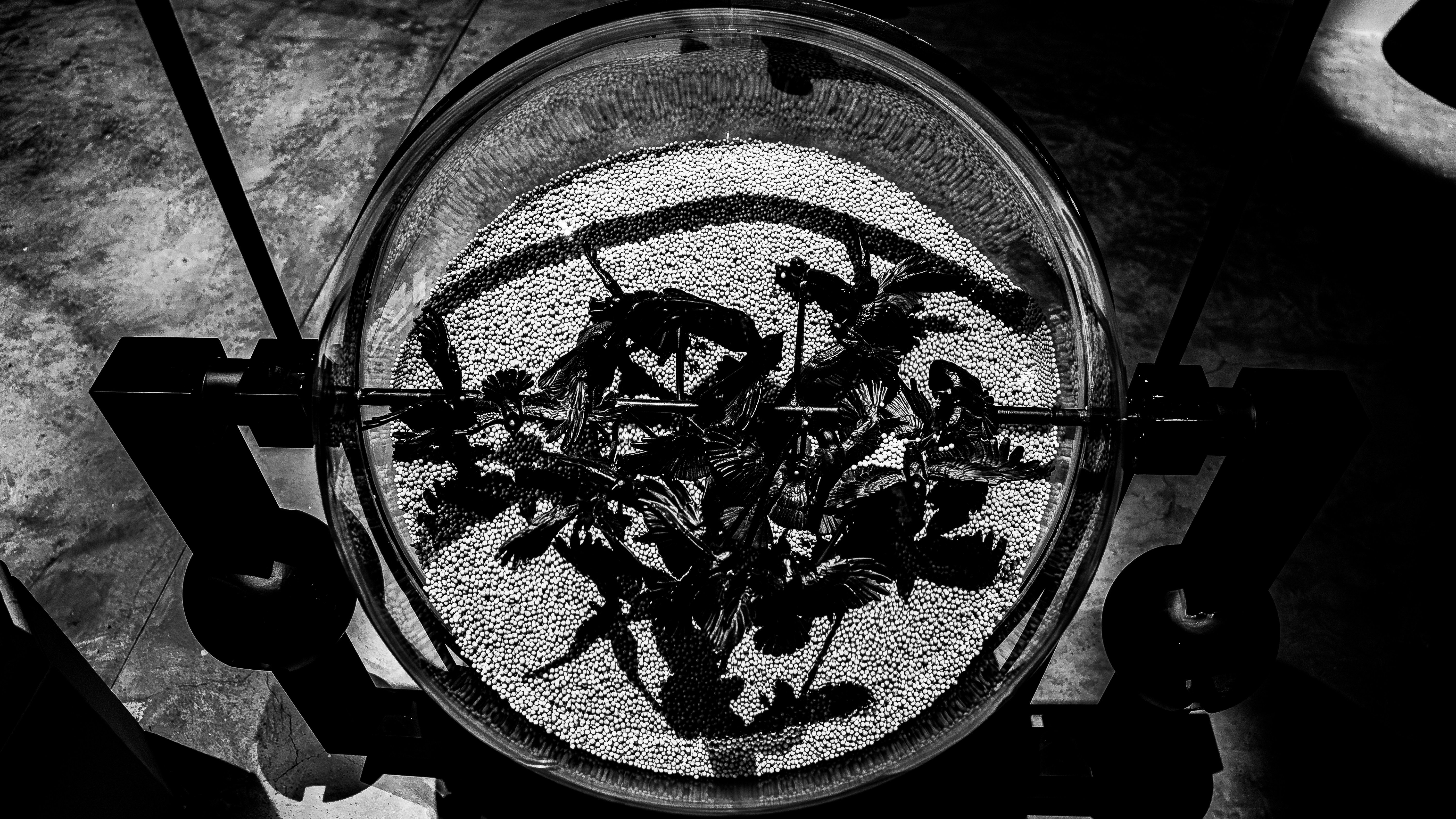
Humans have always dreamed of living in harmony with nature, but turning that dream into a closed ecosystem is a nightmare of engineering.
The Eden Myth vs. Reality
The biblical Garden of Eden suggests a self-sustaining paradise. In reality, nature is a dynamic balance involving soil microbes, insects, and weather cycles that we can’t easily replicate in a room.
The BIOS-3 Experiment (1970s)
In Siberia, scientists built BIOS-3, a sealed underground facility.
- The Setup: 315 cubic meters of space.
- The Crew: 3 men lived there for 6 months.
- The Plants: They used Chlorella algae (a single-celled organism) and wheat.
- The Result: The algae provided about 80% of the oxygen. The rest came from emergency tanks. The experiment proved that while plants can support life, the scale required is massive, and the system is incredibly fragile.
Biosphere 2 (190s)
The most famous (and infamous) attempt.
- The Goal: A self-sustaining ecosystem in Arizona.
- The Crew: 8 people.
- The Disaster: Oxygen levels dropped to 14% (equivalent to being at 17,0 feet). CO2 spiked. They had to pump in oxygen from the outside.
- The Lesson: Even with acres of plants, the soil microbes consumed more oxygen than the plants produced. Nature is messy, and unforeseen variables can kill you.
🏠 Indoor Air Quality Myths: Can Houseplants Really Replace a Window?
Let’s address the elephant in the room. You’ve seen the articles: “10 Plants That Clean Your Air!” 🌿✨
The Truth: Houseplants are great for psychological well-being and removing trace toxins (like benzene from your carpet), but they are terible at replacing ventilation.
The Myth of the “Air Purifier”
- Myth: A few plants will remove all CO2 and VOCs.
- Fact: You would need hundreds of plants to match the air exchange of opening a window for 10 minutes.
The “Sealed Room” Fallacy
If you seal your room to “save energy” or “survive a disaster,” you are creating a CO2 trap.
- Ventilation is Key: Even the best plant setup cannot compensate for a lack of fresh air exchange in a standard home.
- The Solution: Open a window, use an ERV (Energy Recovery Ventilator), or install a CO2 monitor to keep you safe.
🌿 The Ultimate Survival Garden: Top 15 High-Oxygen Plants for Small Spaces
If you are determined to maximize your oxygen output (or just want the best air-purifying plants for your home), here are the heavy hitters. We’ve ranked them by efficiency, resilience, and oxygen output.
Note: While these are the “best,” remember that none of them can sustain a human in a sealed room alone. They are part of a larger strategy.
1. Snake Plant (Sansevieria): The Night-Time Oxygen Hero
- Why it wins: It performs CAM photosynthesis, releasing oxygen at night when you sleep.
- Survival Rating: 9/10 (for indoor air quality).
- Care: Neglect it. It thrives on indifference.
2. Aloe Vera: The Dual-Purpose Survivor
- Why it wins: Also a CAM plant (night oxygen) + medical uses for burns.
- Survival Rating: 8/10.
- Care: Needs bright light, hates overwatering.
3. Spider Plant: The Air Purifying Workhorse
- Why it wins: Incredible at removing formaldehyde and xylene. Produces babies (pups) rapidly.
- Survival Rating: 7/10.
- Care: Easy. Likes indirect light.
4. Peace Lily: The Moisture Lover’s Lifeline
- Why it wins: High transpiration rate (adds humidity) and removes ammonia.
- Survival Rating: 7/10.
- Care: Needs water often. Drops dramatically when thirsty (great visual cue).
5. Rubber Plant: The Heavy Hitter for CO2 Removal
- Why it wins: Large leaves = more surface area for gas exchange.
- Survival Rating: 8/10.
- Care: Needs bright light and regular dusting.
6. English Ivy: The Mold and Allergen Fighter
- Why it wins: Proven to reduce airborne mold and fecal particles.
- Survival Rating: 6/10 (can be toxic to pets).
- Care: Needs humidity and support to climb.
7. Bamboo Palm: The Humidity Regulator
- Why it wins: Great for adding moisture and filtering benzene.
- Survival Rating: 7/10.
- Care: Likes consistent moisture and indirect light.
8. Golden Pothos: The Low-Light Resilient
- Why it wins: Grows fast, handles low light, removes VOCs.
- Survival Rating: 8/10.
- Care: Almost unkillable.
9. ZZ Plant: The Unkillable Oxygen Source
- Why it wins: Thrives in low light and drought.
- Survival Rating: 7/10.
- Care: Water once a month.
10. Chinese Evergreen: The Colorful Air Cleaner
- Why it wins: Beautiful, slow-growing, and effective at filtering toxins.
- Survival Rating: 6/10.
- Care: Low light, moderate water.
1. Dracaena: The Formaldehyde Filter
- Why it wins: Excellent at removing common household chemicals.
- Survival Rating: 7/10.
- Care: Avoid overwatering (root rot risk).
12. Ficus Lyrata: The Big Leaf Oxygen Producer
- Why it wins: Massive leaf surface area.
- Survival Rating: 6/10 (picky about location).
- Care: Needs stable temps and bright light.
13. Jade Plant: The Succulent Oxygen Saver
- Why it wins: CAM plant (night oxygen), very drought tolerant.
- Survival Rating: 7/10.
- Care: Bright light, infrequent water.
14. Boston Fern: The Natural Humidifier
- Why it wins: Incredible transpiration rate.
- Survival Rating: 5/10 (high maintenance).
- Care: Needs high humidity and constant moisture.
15. Areca Palm: The All-Rounder for Airflow
- Why it wins: Great for removing toxins and adding humidity.
- Survival Rating: 7/10.
- Care: Needs bright, indirect light and regular misting.
👉 Shop Top Survival Plants on:
- Snake Plant: Amazon | Walmart | The Sill Official
- Spider Plant: Amazon | Etsy | Blomscape
- Peace Lily: Amazon | Home Depot | Costa Farms
🧪 The Science of Photosynthesis: Why Your Bedroom Needs a Jungle, Not a Single Fern
Let’s get nerdy for a second. 🧬
Photosynthesis is the process where plants use light energy to convert CO2 and water into glucose and oxygen.
$$6CO_2 + 6H_2O + Light \rightarrow C_6H_{12}O_6 + 6O_2$$
The problem? Efficiency.
- Plants are not 10% efficient. Much of the energy is lost as heat.
- In low light (like a typical bedroom), the rate of photosynthesis drops significantly.
- At night, the process reverses (respiration), consuming oxygen.
To get enough oxygen for a human, you need a net positive production that exceeds your consumption. This requires:
- High Light Intensity: Full sun or powerful grow lights.
- High Biomass: A lot of leaves.
- Optimal Temperature: Not too hot, not too cold.
This is why a single fern in a dim corner is useless for survival. It’s a net zero or even net negative player in a sealed environment.
🚫 The “Survival” Reality Check: Why You Can’t Live in a Sealed Room with Plants Alone
We’ve danced around it, but it’s time to say it: You cannot survive in a sealed room with just plants.
The Video Evidence
In a popular experiment (often referenced in survival circles), a creator tested various setups in a sealed room.
- Test 1-3: 6 Snake Plants. Result: CO2 levels skyrocketed. The plants were overwhelmed.
- Test 4-7: Algae bioreactors in 5-gallon barrels. Result: Better, but still insufficient.
- Test 8-9: Larger algae systems. Result: Promising, but required massive energy and space.
The creator concluded: “The biggest hurdle is simply the scale required.”
The Missing Variables
Even if you had enough plants, you’d face:
- Nutrient Depletion: Plants need nitrogen, phosphorus, and potassium. Where do they come from?
- Pest Infestations: In a sealed room, pests have no natural predators.
- Humidity Control: Too much water vapor = mold. Too little = plants die.
- Temperature Swings: Plants can’t regulate the room temp like an HVAC system.
The Bottom Line: Plants are a suplement, not a substitute for fresh air.
💡 Quick Tips and Facts: Maximizing Your Plant’s Oxygen Output
Want to get the most out of your green friends? Here’s how to squeeze every drop of oxygen out of them.
- Clean the Leaves: Dust blocks sunlight. Wipe leaves with a damp cloth weekly. ✨
- Rotate Your Pots: Ensure all sides get light for even growth.
- Use Grow Lights: If natural light is low, invest in full-spectrum LED grow lights.
- Group Them: Plants create a microclimate that can boost humidity and efficiency.
- Avoid Overwatering: Root rot kills oxygen production faster than anything.
Recommended Tools:
- CO2 Monitor: Amazon | Temtop Official
- Grow Lights: Amazon | Hydrofarm
🏆 Conclusion: The Verdict on the Perfect Plant Count
So, how many plants does a person need to survive?
If you are in a sealed room with no airflow: Hundreds. You need a dense, high-tech jungle with artificial lighting and a closed-loop water system. It’s not a houseplant setup; it’s a life-support system.
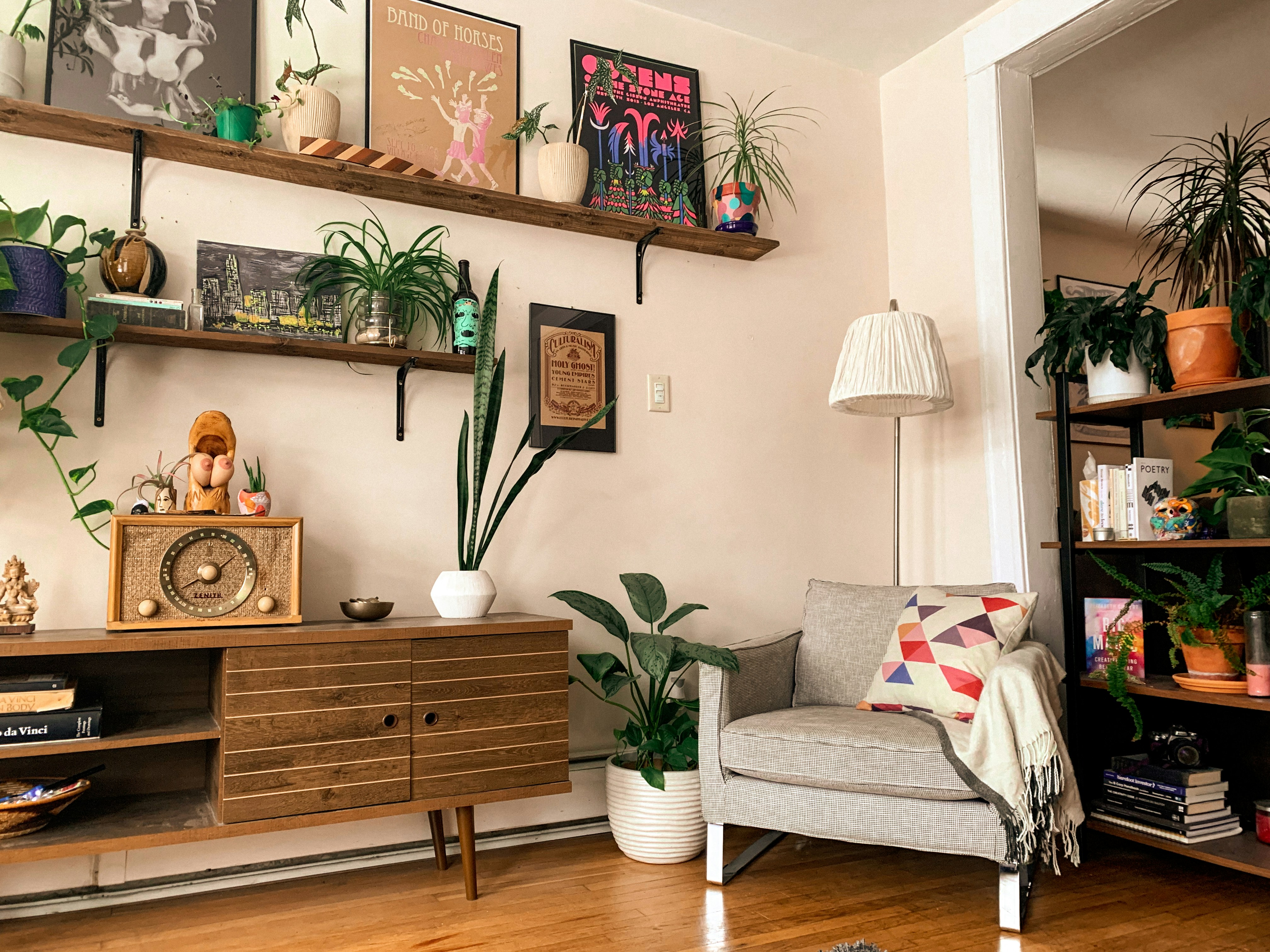
If you are in a normal home: Zero plants are strictly needed for survival (your lungs and the HVAC system handle that). However, having 10-20 high-quality plants (like Snake Plants, Spider Plants, and Peace Lilies) will significantly improve your indoor air quality, reduce stress, and make your home feel like a sanctuary.
The Gone Greenish™ Recommendation:
Don’t try to seal yourself in a room with plants. Instead, open a window, get a CO2 monitor, and fill your home with the Top 15 plants we listed. They won’t save you from a sealed room, but they will make your daily life healthier, happier, and grener. 🌿💚
Remember, the goal isn’t to replace nature’s systems, but to enhance them.
🔗 Recommended Links
Essential Gear for Your Green Sanctuary:
- CO2 Monitors: Amazon | Temtop Official
- Grow Lights: Amazon | Hydrofarm
- Smart Plant Sensors: Amazon | Parot Official
Books on Survival and Ecosystems:
- Biosphere 2: The Story of the World’s Most Famous Experiment by Amazon
- The Self-Sufficient Life and How to Live It by Amazon
❓ FAQ: Your Burning Questions About Plants and Survival
How many plants are needed to produce enough oxygen for one person?
In a sealed environment, you would need approximately 8 to 10 square meters (85-10 sq ft) of dense, active plant biomass, or hundreds of individual houseplants, to match the oxygen consumption of one human. In a normal home with ventilation, no specific number is required for survival, but 10-20 plants improve air quality.
Read more about “🌱 7 Hidden Downsides of a Plant-Based Diet (2026)”
What is the minimum number of plants required to survive in a sealed room?
There is no “minimum” that is practical for a human. The BIOS-3 experiment required massive algae tanks and wheat fields. For houseplants, you would need hundreds of them, plus artificial light and water recycling. A single plant or even a dozen is insufficient.
Read more about “🌿 160 Plants to Breathe? The Shocking Truth (2026)”
Can plants alone sustain human life in a closed ecosystem?
No. While plants produce oxygen, they also produce CO2 at night and require nutrients, water, and temperature control that humans cannot easily provide in a small sealed space without complex engineering. The Biosphere 2 failure proves that plants alone are not enough.
Read more about “How Much Algae to Produce Oxygen for One Person? 🌿 (2025)”
How many square feet of plants are needed to support one person?
Based on the BIOS-3 data, you need roughly 85-10 square feet of dense, active plant surface area (not just pot size, but leaf area) to support one person in a sealed environment.
Read more about “How Many Plants Per Person for CO2? 🌿 The Ultimate 7-Step Guide (2025)”
Which plants produce the most oxygen per square foot?
Algae (like Chlorella) and fast-growing vines (like Pothos) produce the most oxygen per unit of biomass. Among houseplants, the Snake Plant and Ruber Plant are top contenders due to their leaf density and efficiency.
Read more about “How Much Oxygen Does One Plant Produce Per Day? 🌿 (2025)”
How many plants do I need to improve indoor air quality for survival?
For survival (preventing CO2 buildup), you need hundreds. For improving air quality (removing toxins and adding freshness), 10-20 plants distributed throughout your home is the sweet spot.
What is the ideal plant-to-human ratio for a self-sustaining habitat?
In a theoretical self-sustaining habitat, the ratio is roughly 1 human to 8-10 square meters of plant biomass. This is far beyond what a typical home can accommodate.
Why do some sources say 6-8 Snake Plants are enough?
Some sources (like certain YouTube videos) claim 6-8 Snake Plants are enough because they focus on night-time oxygen production in a small, short-term scenario. However, this ignores the CO2 buildup during the day and the total daily oxygen demand. It’s a misleading simplification that doesn’t hold up in a real survival scenario.
📚 Reference Links
- NASA Clean Air Study: NASA.gov
- BIOS-3 Experiment Data: NASA Technical Reports
- Biosphere 2 Official Site: Biosphere2.org
- USFWS Monarch Status: National Wildlife Federation – Milkweed for Monarchs
- CO2 Health Effects: EPA Indoor Air Quality
- Plant Respiration Rates: University of Florida IFAS Extension