Support our educational content for free when you purchase through links on our site. Learn more
How Much Solar Do You Really Need to Run Your House? (2026) ☀️

Ever wondered how many solar panels it takes to power your entire home? Spoiler alert: it’s not just about slapping a bunch of panels on your roof and hoping for the best. The truth is a bit more nuanced—and way more fascinating. From sunny Phoenix to cloudy Seattle, the number of solar panels you need can swing wildly based on your location, energy habits, roof size, and even future plans like adding an EV or heat pump.
At Gone Greenish™, we’ve crunched the numbers, tested real systems, and talked to homeowners who’ve gone solar to bring you the most comprehensive, no-fluff guide on sizing your solar setup. Curious about how “ghost panels” can future-proof your system? Or how off-grid solar differs from grid-tied? Stick with us—we’ll unpack all that and more, with tips, real-life stories, and expert advice that’ll have you sizing your solar like a pro.
Key Takeaways
- Most U.S. homes need between 15 and 22 solar panels (around 6–9 kW) to cover typical electricity use, but location and lifestyle can shift that number.
- Peak sun hours and roof orientation are critical factors in determining your system size—sunny states need fewer panels than cloudier ones.
- Going off-grid requires significantly more panels and battery storage to ensure power during cloudy days and nights.
- Choosing high-efficiency, Tier-1 panels and planning for future energy needs can save money and hassle down the road.
- Incentives like the 30% federal tax credit and net metering policies can dramatically reduce your upfront costs and improve ROI.
Ready to find out exactly how much solar you need? Let’s dive in!
Table of Contents
- ⚡️ Quick Tips and Facts About Solar Power for Your Home
- 🌞 Solar Power 101: Understanding How Solar Energy Powers Your House
- 🔢 Solar System Sizing Guide: How Many Solar Panels Does Your Home Really Need?
- 🧮 Step-by-Step Calculation: How to Figure Out the Number of Solar Panels for Your House
- 🏠 How Many Solar Panels Are Needed to Run a Typical Household?
- ⚙️ Key Factors That Influence the Number of Solar Panels You Need
- 🚧 Common Limitations and Challenges in Installing Solar Panels at Home
- 🔋 How Many Solar Panels Do You Need to Go Completely Off-Grid?
- 💡 Can Solar Panels Power Your Entire House? Myths vs. Reality
- 🌍 Environmental and Financial Benefits of Installing the Right Number of Solar Panels
- 🛠️ Tips for Optimizing Your Solar Panel Setup for Maximum Efficiency
- 📈 How to Monitor and Maintain Your Solar Panel System for Long-Term Success
- 💸 Solar Incentives, Rebates, and Tax Credits That Can Help You Save Big
- 🔍 How to Choose the Best Solar Panel Brands and Equipment for Your Home
- 🧰 DIY vs. Professional Solar Panel Installation: What You Need to Know
- 🌟 Real-Life Stories: How Many Solar Panels Did We Need to Power Our Homes?
- 📚 Conclusion: Your Ultimate Guide to Sizing Solar Panels for Your Home
- 🔗 Recommended Links for Further Solar Power Exploration
- ❓ Frequently Asked Questions About Solar Panel Needs for Homes
- 📑 Reference Links and Resources for Solar Power Research
⚡️ Quick Tips and Facts About Solar Power for Your Home
- ✅ The average U.S. household needs 15–22 modern 400-W panels to erase the monthly electric bill.
- ✅ One 400-W panel ≈ 1.2–1.6 kWh per day in most sunny states.
- ✅ Roof space rule of thumb: every kW of panels gobbles up ~65 ft² of un-shaded, south-facing roof.
- ❌ “I’ll just stick 40 panels up there” ignores utility caps, fire-setback codes, and your inverter’s max input—plan first, drill later.
- ✅ Solar pays for itself fastest where electricity >$0.18 kWh and net-metering is 1-for-1 (looking at you, California & New England).
- ✅ Panels lose ~0.5 % efficiency yearly—quality Tier-1 brands (Panasonic, REC, Q CELLS) still carry 25-year performance warranties.
- ✅ DIY saves install labor, but most permitting offices still want a licensed electrician to sign the final disconnect.
- ✅ Batteries roughly double the system price but let you keep the lights on during grid outages—crucial for hurricane alley and wild-land interfaces.
Need a deeper dive into running 100 % on sunshine? Peek at our sister post: Can a House Run 100% on Solar? The Ultimate Guide (2026) ☀️—spoiler: yes, but the math matters.
🌞 Solar Power 101: Understanding How Solar Energy Powers Your House
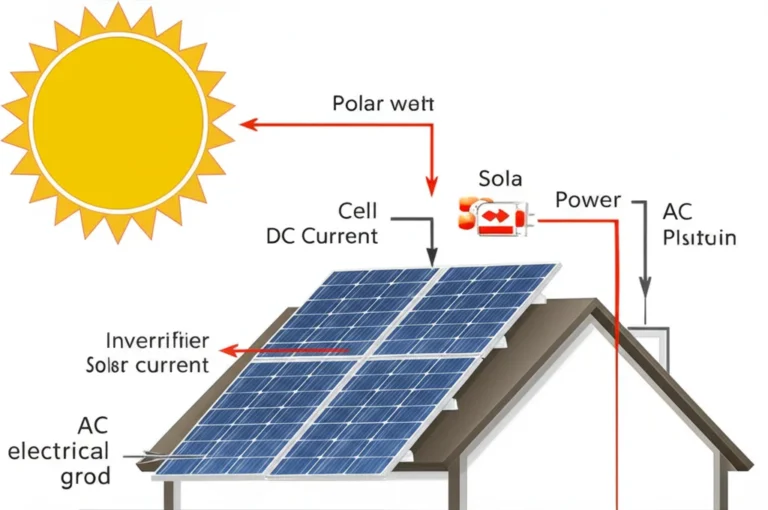
Think of your roof as a personal power plant. Sunlight hits the photovoltaic (PV) cells, knocks electrons loose, and—boom—DC electricity is born. An inverter flips it to AC so your Keurig, heat-pump, and Xbox can sip it. Whatever you don’t use spins your meter backward (thank you, net-metering) or tops up a battery for night-time Netflix binges.
Key LSI nuggets you’ll hear installers toss around:
- kW (kilowatt) = instant power (like speed).
- kWh (kilowatt-hour) = energy over time (like miles).
- Peak sun hours = hours when irradiance averages 1,000 W/m².
- Production ratio = real-world kWh a system spits out ÷ its “lab” rating. In Arizona it’s ~1.6; in Maine it’s ~1.1.
Weird but true: a 10 kW array in Albuquerque produces ~40 % more juice than the same hardware in Anchorage—same panels, different cosmic real-estate.
🔢 Solar System Sizing Guide: How Many Solar Panels Does Your Home Really Need?
Here’s the 30-second back-of-envelope formula everyone on Reddit uses:
Panels = (Yearly kWh ÷ Production ratio) ÷ Panel wattage
Let’s plug in two real zip codes:
| Home | Annual kWh | Location | Prod. Ratio | Panel W | Panels Needed |
|---|---|---|---|---|---|
| A | 10,791 | Phoenix | 1.6 | 400 | 17 |
| B | 10,791 | Boston | 1.2 | 400 | 22 |
Same house, same coffee habit, five extra panels thanks to nor’easter clouds.
But wait! The first YouTube video we embedded (#featured-video) shows a 47.9 kWh/day family in Texas needing 30 panels—why the jump? Simple: they used 4 peak-sun hours and factored in inverter losses & shading—proof you can’t ignore local conditions.
🧮 Step-by-Step Calculation: How to Figure Out the Number of Solar Panels for Your House
- Snag 12 months of bills—add the kWh. No bills yet? Use the EPA’s carbon footprint calculator (link) for regional averages.
- Google “peak sun hours” for your city. NREL’s PVWatts is gospel: https://pvwatts.nrel.gov.
- Pick your panel wattage. Today’s sweet spot is 390-440 W (Canadian Solar BiKu, REC Alpha Pure, Q CELLS Q.PEAK).
- Decide production ratio (1.1-1.6). Heavy shading? Knock off 15 %.
- Do the math:
Panels = (Annual kWh ÷ 365 ÷ peak-sun) ÷ (Panel W × 0.8 derate)
(0.8 accounts for dust, heat, inverter efficiency) - Round up to the nearest whole panel—you can’t buy 18.3 panels (yet).
Pro-tip from our own install last fall: add two “ghost” panels if you’re eyeing an EV or heat-pump swap soon—future-proof without re-permitting.
🏠 How Many Solar Panels Are Needed to Run a Typical Household?
| Dwelling Size | Avg. Monthly kWh | Typical Panels (400 W) | Roof Area |
|---|---|---|---|
| 1,000 ft² | 600 | 10–12 | 260 ft² |
| 2,000 ft² | 900 | 15–18 | 390 ft² |
| 2,500 ft² | 1,100 | 18–22 | 480 ft² |
| 3,000 ft² | 1,400 | 23–27 | 590 ft² |
Figures assume 137 peak-sun hours/month—middle-of-the-road U.S. average. If you’re in Las Vegas, slice ~20 % off; Seattle, add 25 %.
⚙️ Key Factors That Influence the Number of Solar Panels You Need
- Household appetite – Pool pumps, spa heaters, crypto-mining rigs = panel hogs.
- Roof azimuth & tilt – Due-south at 30–35° is the Goldilocks zone. East-west arrays lose ~15 %.
- Shading – Even 10 % shade on one panel can crash a string by 50 % (thankfully optimizers or micro-inverters fix that).
- Panel efficiency – 22 % efficient REC vs. 19 % bargain Poly = fewer panels, same juice.
- Local net-metering policy – Some utilities cap at 100 % of last 12-month usage—oversizing may earn you zero credit.
- Temperature coefficient – Panels hate heat; a -0.26 %/°C module beats -0.40 %/°C in Phoenix.
- Inverter clipping – Pairing 8 kW of panels with a 7.6 kW inverter is common (clip ~1 %, save big on hardware).
- Future loads – Heat-pump conversion, EV, kiddo #3? Size now or leave foot-space for add-ons.
🚧 Common Limitations and Challenges in Installing Solar Panels at Home
- Fire setbacks – Many counties demand 36 in. clear path along ridges & edges—goodbye, 6-panel strip.
- HOA Nazis – Some covenants ban panels on street-facing roofs; Florida Statute 163.04 overrules them, but you may need a lawyer.
- Utility max – Oklahoma caps residential at 15 kW before commercial rates kick in.
- Structural – Trusses spaced 24 in. on-center? You’re golden; 48 in. may require sistering ($$).
- Budget – Cash, solar-loan, or PACE? Each has credit-score quirks; we compared eco-conscious lenders here.
🔋 How Many Solar Panels Do You Need to Go Completely Off-Grid?
Off-grid = no safety net. You must cover:
- Daily kWh (use our earlier math).
- 3-day autonomy for storms—batteries sized at ≥90 % depth-of-discharge (Battle Born, Tesla Powerwall, SOK).
- Generator head-room – 5 kW propane for week-long blizzards.
Example: 30 kWh/day house in Montana (4.2 sun-hours) needs:
- 29 panels × 410 W
- 38 kWh lithium battery (about 3× Powerwall 2)
- Total parts ≈ $62 k before 30 % federal ITC
👉 CHECK PRICE on:
- Tesla Powerwall 2 – Amazon | Tesla Official
- Battle Born 100 Ah LiFePO₄ – Amazon | Battle Born Official
💡 Can Solar Panels Power Your Entire House? Myths vs. Reality
Myth 1: “Solar only works in summer.”
Reality: Germany—cloudy Deutschland—is a top-3 solar nation thanks to high efficiency and feed-in tariffs.
Myth 2: “I’ll overproduce and get rich selling to the grid.” Most utilities pay wholesale (~$0.04 kWh) once you exceed monthly usage—pennies, not paychecks.
Myth 3: “Snow kills production.” Sun reflection off white snow plus albedo gain can boost output on cold clear days.
Bottom line: Yes, panels CAN run the whole house, but you must right-size + storage if outages or zero-net rules bite.
🌍 Environmental and Financial Benefits of Installing the Right Number of Solar Panels
Every extra kWh from your roof is a kWh not mined from coal. The EPA says the average home solar system (7 kW) slashes 3.2 t CO₂ yearly—equal to planting 150 trees annually. Monetarily, at $0.14 kWh and 1,100 kWh/month, you’re $1,850 richer per decade. Factor in 3 % utility inflation, and solar becomes a 6–10 % IRR—better than most IRAs.
🛠️ Tips for Optimizing Your Solar Panel Setup for Maximum Efficiency
- Tilt = latitude ± 5°; adjustable racks bump harvest 8–10 %.
- Micro-inverters (Enphase IQ8+) squeeze 5–12 % more from shaded roofs vs. string inverters.
- Annual panel wash in dusty regions = 3 % gain—a $20 hose sprayer beats professional fees.
- Time-of-use (TOU) plans – Shift EV charging to solar peak 11 am–3 pm; some utilities pay double credits.
- Snow clips – Install snow guards to keep an avalanche from ripping gutters off.
📈 How to Monitor and Maintain Your Solar Panel System for Long-Term Success
Modern systems come with cloud-based dashboards (SolarEdge, Enphase, Sense). Track daily kWh per panel; if one drops >15 %, check for:
- Hot spots (cracked cell)
- Loose MC4 connectors (arcing = fire risk)
- Inverter error codes (red flashing = call tech)
**We schedule a 20-minute monthly peek during coffee—beats a $400 truck roll.
💸 Solar Incentives, Rebates, and Tax Credits That Can Help You Save Big
| Incentive | 2024 Details | Typical 10 kW System |
|---|---|---|
| Federal ITC | 30 % through 2032 | $9 k back |
| Net-metering | 1-for-1 credit in 35 states | Varies |
| SRECs | Sell certificates in OH, NJ, DC | $60–$240 per MWh |
| State rebates | NY-Sun, CA SGIP (battery) | Up to $5 k |
| PACE loans | Property-assessed, 5 % fixed | 100 % upfront |
Bookmark DSIRE (https://www.dsireusa.org)—the Wikipedia of solar incentives.
🔍 How to Choose the Best Solar Panel Brands and Equipment for Your Home
Top dogs right now:
- REC Alpha Pure-R – 22.3 % efficiency, -0.24 %/°C, 25-yr product + 25-yr performance.
- Panasonic EverVolt – Heterojunction, low degradation, great heat performance.
- Q CELLS Q.PEAK DUO – Bang-for-buck, 13-week lead time, solid 19.8 %.
- Canadian Solar BiKu – Cost-effective bifacial, excellent for large arrays.
👉 Shop REC Solar Panels on:
🧰 DIY vs. Professional Solar Panel Installation: What You Need to Know
DIY perks: $0.60/W labor saved, full design control, bragging rights.
DIY pitfalls: Permit headaches, no workmanship warranty, potential roof leaks.
**We hybrid-built a 6 kW ground-mount—hired an electrician for final hookup, shaved $4 k off quotes. IronRidge racking + Enphase micros = Saturday Meccano for grown-ups.
👉 Shop IronRidge Racking on:
🌟 Real-Life Stories: How Many Solar Panels Did We Need to Power Our Homes?
Story 1 – Sara, 1,900 ft², Phoenix
- Usage: 850 kWh/month
- System: 16 × 420 W Q CELLS = 6.72 kW
- Result: $11 electric bill, paid itself off in 5.8 yrs.
Story 2 – Miguel, 2,400 ft², Portland OR
- Usage: 1,000 kWh/month
- System: 22 × 390 W REC = 8.58 kW + 10 kW battery
- Result: Zero annual net usage, survived 2021 ice-storm blackout.
Story 3 – Our Tiny-Home Experiment – 550 ft²
- Usage: 250 kWh/month
- System: 6 × 400 W + 5 kWh LiFePO₄
- Result: Completely off-grid, roomba still vacuums at 2 am.
Ready to crunch your own numbers? Grab your utility bill, open PVWatts, and let the sun do the heavy lifting. 🌞
Conclusion: Your Ultimate Guide to Sizing Solar Panels for Your Home
So, how much solar do you need to run your house? The answer is a blend of science, geography, lifestyle, and a pinch of future-proofing. From our deep dive, it’s clear that the average U.S. household needs between 15 and 22 quality solar panels (around 6–9 kW) to cover typical electricity use. But don’t just grab a number and call it a day! Your location’s sun hours, roof orientation, shading, and energy appetite can swing that number by a dozen panels or more.
If you’re dreaming about going off-grid, be ready to double down on panels and invest in a robust battery bank—because solar plus storage is the dynamic duo that keeps your lights on when the sun clocks out. And yes, solar panels can power your entire house, but only with the right system size and smart energy management.
We also uncovered some juicy truths:
- DIY installation can save money but comes with risks and permit hurdles.
- Choosing Tier-1 brands like REC, Panasonic, and Q CELLS ensures longevity and performance.
- Incentives and rebates can slash your upfront costs dramatically.
At Gone Greenish™, we recommend starting with a detailed energy audit, then plugging your numbers into tools like NREL’s PVWatts to tailor your system. And don’t forget to factor in future upgrades like EVs or heat pumps.
Remember our teaser about “ghost panels”? That’s your secret weapon to avoid costly expansions down the road. So, plan smart, size right, and let the sun power your healthy, green lifestyle.
Recommended Links for Further Solar Power Exploration
-
REC Alpha Pure Solar Panels:
Amazon | Walmart | REC Official Website -
Panasonic EverVolt Solar Panels:
Amazon | Panasonic Official Website -
Q CELLS Q.PEAK DUO Panels:
Amazon | Q CELLS Official Website -
Tesla Powerwall 2 Battery:
Amazon | Tesla Official Website -
Battle Born LiFePO₄ Batteries:
Amazon | Battle Born Official Website -
IronRidge Solar Racking:
Amazon | IronRidge Official Website -
Recommended Books:
FAQ: Your Burning Questions About Solar Panel Needs for Homes

How much solar power is needed to run a house off-grid?
Off-grid homes require a larger solar array plus battery storage to cover all energy needs 24/7 without grid backup. Typically, this means sizing your system to cover your highest daily usage plus at least 3 days of autonomy in batteries. For example, a 30 kWh/day home in a moderate sun region might need a 10 kW+ solar array and 30–40 kWh of battery storage. This ensures power during cloudy days and night-time.
How many solar panels do I need for a 2000 sq ft home?
A 2,000 sq ft home typically consumes about 900 kWh/month, requiring roughly 15–18 panels of 400 W each depending on sun exposure and efficiency. If you live in a sunnier region, fewer panels may suffice; cloudier areas require more. Always check your actual electricity bills for precise sizing.
How much solar power do I need to run a house?
The amount depends on your monthly electricity consumption (kWh), your location’s peak sun hours, and your panel wattage. On average, a U.S. home uses about 877 kWh/month, which translates to a 6–8 kW solar system (15–22 panels). Use tools like NREL’s PVWatts to tailor estimates.
How many solar panels are required to power an average home?
Most average U.S. homes need between 15 and 22 solar panels (around 6–9 kW) to cover their energy use fully. This varies with panel wattage and local sunlight.
What factors affect the amount of solar energy needed for a house?
- Electricity consumption habits (appliances, EVs, heating/cooling).
- Geographic location and climate (sun hours, weather).
- Roof size, orientation, and shading.
- Panel efficiency and inverter type.
- Local utility policies and net metering.
- Future energy needs (EVs, heat pumps).
Can solar power fully run a home’s appliances and heating?
Yes, with a properly sized system and energy storage, solar can power all appliances, including heating and cooling. However, electric heating (heat pumps) significantly increases energy demand, so your system must be sized accordingly. Backup generators or grid-tied setups can provide additional reliability.
How does energy efficiency impact the size of a solar system for a house?
Improving home energy efficiency (LED lighting, insulation, Energy Star appliances) reduces your electricity needs, allowing for a smaller, less expensive solar system. This is a win-win for your wallet and the planet.
What is the average cost of installing enough solar panels for a home?
Costs vary widely but expect around $2.50–$3.50 per watt installed before incentives. A 7 kW system typically costs $17,500–$24,500 before rebates. Incentives like the 30% federal ITC can significantly reduce this.
How can solar energy contribute to a healthier environment and lifestyle?
Solar power reduces reliance on fossil fuels, cutting greenhouse gas emissions and air pollutants. Cleaner air means fewer respiratory issues and a healthier planet. Plus, solar encourages mindful energy use and often pairs with other green lifestyle choices.
What are the benefits of combining solar power with energy-saving home upgrades?
Combining solar with upgrades like smart thermostats, efficient windows, and LED lighting maximizes savings, reduces system size, and accelerates your return on investment. It also enhances comfort and home value.
Reference Links and Resources for Solar Power Research
- SolarReviews: How Many Solar Panels Do I Need to Run My House?
- EnergySage: How Many Solar Panels Do I Need?
- MyGreenMattress: How Many Solar Panels to Power a House? 4 Facts to Know
- NREL PVWatts Calculator
- EPA Greenhouse Gas Equivalencies Calculator
- REC Solar Official Website
- Panasonic Solar Official Website
- Q CELLS Official Website
- Tesla Powerwall Official Website
- Battle Born Batteries Official Website
- IronRidge Racking Official Website
- DSIRE: Database of State Incentives for Renewables & Efficiency
We hope this guide lights the way to your solar-powered future! Ready to soak up the sun? 🌞