Support our educational content for free when you purchase through links on our site. Learn more
How Is Solar Energy Converted into Electricity? ⚡️ (2026)

Ever wondered what really happens when sunlight hits those shiny panels on rooftops? It’s not just magic — it’s a fascinating dance of physics, engineering, and innovation that transforms invisible photons into the electricity powering your home. At Gone Greenish™, we’ve unpacked every step of this solar symphony, from the humble photovoltaic cell to the giant mirrors of concentrated solar power plants. Whether you’re a curious newbie or a green-energy enthusiast, this article shines a bright light on how solar energy becomes the clean, renewable electricity that’s reshaping our planet’s future.
Did you know that modern solar panels convert only about 15-22% of sunlight into electricity — but that efficiency is rapidly improving thanks to cutting-edge tech like bifacial panels and perovskite cells? Or that some solar power plants can store heat to keep the lights on even after sunset? Stick around, because we’ll also reveal insider tips on choosing the right solar system, troubleshooting common issues, and peek into the future of solar innovation. Ready to catch some rays and power your life sustainably? Let’s dive in!
Key Takeaways
- Solar energy conversion primarily happens through photovoltaic (PV) cells and concentrated solar power (CSP) systems, each with unique methods to turn sunlight into electricity.
- PV cells use the photovoltaic effect to generate direct current (DC) electricity, which is then converted to alternating current (AC) by inverters for home use.
- CSP systems concentrate sunlight to produce heat, driving turbines to generate electricity, often with thermal storage for power after dark.
- System components like panels, inverters, batteries, and mounting hardware work together to deliver clean, reliable solar power.
- Solar energy offers significant environmental benefits, including zero emissions during operation and reduced reliance on fossil fuels.
- Emerging technologies like perovskite solar cells and bifacial panels promise higher efficiencies and new applications in the near future.
- Choosing the right solar provider and understanding costs, maintenance, and integration options are key to maximizing your solar investment.
Curious about the best solar panels or batteries on the market? Check out our detailed recommendations later in the article to power your green journey with confidence!
Table of Contents
- ⚡️ Quick Tips and Facts About Solar Energy Conversion
- 🌞 The Bright History and Evolution of Solar Energy
- 🔋 Solar Energy 101: How Sunlight Becomes Electricity
- 🔍 Photovoltaic (PV) Cells: The Heart of Solar Conversion
- 🔥 Concentrated Solar Power (CSP): Harnessing Heat for Electricity
- ⚙️ Solar Power System Components and Their Roles
- 🔌 Integrating Solar Energy into the Grid and Homes
- 💰 Understanding Solar Energy Costs and Soft Expenses
- 🌍 Environmental and Economic Benefits of Solar Energy
- 🛠️ Troubleshooting and Optimizing Solar Energy Systems
- 🔎 Dive Deeper: Advanced Solar Energy Conversion Technologies
- 🌟 Going Solar: How to Choose and Install Your Solar System
- 📈 The Solar Industry Today and Future Trends
- 📝 Conclusion: Shining a Light on Solar Energy Conversion
- 🔗 Recommended Links for Solar Energy Enthusiasts
- ❓ Frequently Asked Questions (FAQ) About Solar Energy Conversion
- 📚 Reference Links and Further Reading
⚡️ Quick Tips and Facts About Solar Energy Conversion
Hey there, fellow green enthusiasts! 👋 At Gone Greenish™, we’re all about making sustainable living not just a choice, but an exciting adventure. And when it comes to powering our lives, few things spark as much joy (and clean energy!) as the sun. We’ve been diving deep into the world of solar, from rooftop installations to community solar projects, and let us tell you, the journey of sunlight to usable electricity is nothing short of magical.
Thinking about harnessing that glorious sunshine for your home or business? You’re in the right place! We often get asked, “Is solar worth it now?” and our answer is a resounding YES! In fact, we’ve got a whole article dedicated to that burning question: Is Solar Worth It Now? 10 Facts You Need to Know (2026) ☀️.
Here are some quick, electrifying facts to get your solar journey started:
- Direct Conversion: Most residential solar panels use photovoltaic (PV) cells to convert sunlight directly into electricity. No moving parts, just pure science!
- Heat Harnessing: Another cool kid on the block, Concentrating Solar Power (CSP), uses mirrors to focus sunlight and generate heat, which then drives turbines to produce electricity. Think giant magnifying glasses!
- DC to AC: Solar panels produce Direct Current (DC) electricity, but your home appliances run on Alternating Current (AC). That’s where the unsung hero, the inverter, steps in to bridge the gap.
- Efficiency Matters: Modern solar panels typically boast efficiency ratings between 15% and 20%, meaning they convert that percentage of sunlight into usable electricity. And guess what? It’s always improving!
- Soft Costs are Real: While panel prices have dropped, “soft costs” like permitting, installation, and customer acquisition can significantly impact your overall investment. It’s not just about the hardware!
- Cloudy Day Power: Don’t let a little overcast sky fool you! Solar panels can still generate electricity on cloudy days, albeit at a reduced capacity. They’re not fair-weather friends! ☁️
- Global Growth: Solar power is booming worldwide, with countries like China, the US, and Germany leading the charge in production. It’s a global green revolution!
Ready to peel back the layers and understand the incredible journey of a photon from the sun to your toaster? Let’s get glowing!
🌞 The Bright History and Evolution of Solar Energy
Before we dive into the nitty-gritty of how solar energy is converted into electricity, let’s take a quick trip down memory lane. You might think solar power is a modern marvel, but humans have been harnessing the sun’s rays for millennia! Our ancestors were pretty clever, even without the fancy silicon.
Did you know that people were using reflective surfaces to light fires as far back as the 7th century B.C.? Talk about ancient ingenuity! The Greeks and Romans even used mirrors to ignite torches in the 3rd century B.C., a testament to the timeless power of concentrated sunlight. It’s fascinating to think about these early forms of solar thermal energy – using the sun’s heat directly, long before anyone dreamed of generating electricity.
But the real game-changer for electricity came much later. Fast forward to 1839, when a brilliant 19-year-old French physicist named Edmond Becquerel made a groundbreaking discovery. He observed that certain materials produced an electric current when exposed to light – a phenomenon he dubbed the photovoltaic (PV) effect. This was the spark, pun intended, that ignited the modern solar revolution. As National Grid aptly puts it, “When this material is exposed to photons of sunlight… it releases electrons and produces an electric charge” [National Grid].
However, it took over a century for this scientific curiosity to become a practical reality. The true birth of the modern solar cell arrived in 1954, when scientists at Bell Labs developed the first practical silicon photovoltaic cell. This invention was a monumental leap, finally enabling the direct conversion of sunlight into usable electricity. From powering early satellites and spacecraft to eventually lighting up our homes, the silicon PV cell paved the way for the solar landscape we know today.
For us at Gone Greenish™, understanding this history isn’t just about trivia; it’s about appreciating the incredible journey of innovation that brought us to this point. It reminds us that sustainable solutions often have deep roots, evolving over centuries to meet our changing needs. It’s a powerful narrative of human ingenuity and our enduring connection to the sun’s life-giving energy.
🔋 Solar Energy 101: How Sunlight Becomes Electricity
Alright, let’s get to the core of it! You see those shimmering panels on rooftops or vast fields, soaking up the sun’s rays. But how exactly does that glorious sunshine transform into the juice that powers your blender or charges your phone? It’s not magic, folks, it’s science – and it’s incredibly cool!
At its heart, converting solar energy into electricity involves capturing photons (tiny packets of light energy) from the sun and coaxing them into creating an electric current. It’s like giving the sun a high-five, and in return, it powers your life!
What Is Solar Energy?
Simply put, solar energy is radiant light and heat from the sun that is harnessed using a range of ever-evolving technologies. It’s the ultimate renewable energy source, constantly replenished and available in abundance, unlike those fossil fuels that took millions of years to form and are rapidly depleting.
For us at Gone Greenish™, solar energy isn’t just about saving money on utility bills (though that’s a fantastic perk!). It’s about embracing a future where our energy consumption doesn’t come at the expense of our planet. It’s clean, it’s green, and it’s a vital step towards reducing our Carbon Footprint Reduction and combating Climate Change. As National Grid eloquently states, “Solar power is a renewable and infinite energy source that creates no harmful greenhouse gases” [National Grid]. We couldn’t agree more!
Types of Solar Energy Technologies
When we talk about converting solar energy into electricity, we’re primarily looking at two main technological pathways:
- Photovoltaic (PV) Systems: These are what most people picture when they think of solar panels. They convert sunlight directly into electricity using the photovoltaic effect. Think of them as the direct-to-consumer model of solar power.
- Concentrating Solar Power (CSP) Systems: These systems take a different approach, using mirrors to focus and concentrate sunlight, generating intense heat. This heat is then used to produce steam, which drives a turbine to generate electricity. It’s more like a traditional power plant, but with the sun as its fuel source.
While both ultimately deliver electricity, their methods are distinct. The U.S. Department of Energy highlights that “Solar energy technology doesn’t end with electricity generation by PV or CSP systems,” emphasizing the broader applications and integration possibilities [Energy.gov]. We’ll dive deep into each of these fascinating technologies next, so grab your metaphorical sunglasses – things are about to get bright!
🔍 Photovoltaic (PV) Cells: The Heart of Solar Conversion
If solar energy were a symphony, the photovoltaic (PV) cell would be the lead violinist, playing the most crucial part in transforming sunlight into electricity. These tiny, powerful semiconductors are the unsung heroes mounted on your roof, quietly working their magic day in and day out.
How Do PV Cells Work?
This is where the real science happens, and it’s surprisingly elegant! Imagine a solar cell as a sandwich made of two different layers of semiconductor material, usually silicon. One layer is “n-type” (negatively charged, with extra electrons), and the other is “p-type” (positively charged, with electron “holes”). When these two layers meet, they create an electric field.
Here’s the step-by-step breakdown of how a PV cell converts sunlight into electricity:
- Sunlight Strikes: Photons (particles of light) from the sun hit the surface of the solar panel.
- Electron Excitation: When these photons have enough energy, they knock electrons loose from the silicon atoms in the PV cell. This is the famous photovoltaic effect that Edmond Becquerel discovered! As CertainTeed explains, “The process involves exciting electrons in silicon cells to generate an electric current” [CertainTeed].
- Electric Field Action: The electric field between the n-type and p-type layers acts like a bouncer, pushing the freed electrons towards the n-type layer and the “holes” towards the p-type layer. This creates an imbalance, a potential difference.
- Current Flow: When an external circuit (like wires connecting to your home) is provided, these separated electrons want to get back to their “holes” on the other side. They take the path of least resistance – through the circuit! This flow of electrons is what we call Direct Current (DC) electricity.
- DC to AC Conversion: Your home appliances, however, run on Alternating Current (AC). So, the DC electricity generated by the panels flows to a crucial device called a solar inverter. This inverter is the translator, converting the DC into usable AC electricity for your household needs. The first YouTube video embedded in this article perfectly illustrates this, stating, “The electrons use the circuit to travel” from the upper layer back to the lower one, generating direct current (DC) electricity, and then “An inverter” converts this DC electricity into alternating current (AC) electricity, which is used by most household appliances.
It’s a continuous loop as long as the sun is shining! Any excess electricity can be stored in batteries or, if you’re grid-tied, fed back into the national grid. Pretty neat, right?
👉 Shop Solar Inverters on:
- Enphase IQ8 Microinverter: Amazon | Walmart | Enphase Official Website
- SolarEdge HD-Wave Inverter: Amazon | Walmart | SolarEdge Official Website
Materials Used in Solar Cells
While silicon is the reigning champion, the world of solar cell materials is constantly evolving.
- Crystalline Silicon: This is the most common type.
- Monocrystalline: Made from a single, pure silicon crystal. They’re typically darker, more efficient (often 18-22%), and more expensive. Think sleek, high-performance sports car.
- Polycrystalline: Made from multiple silicon crystals melted together. They have a slightly lower efficiency (15-17%) but are generally more affordable. The workhorse of the solar world.
- Thin-Film Solar Cells: These use extremely thin layers of semiconductor material, such as cadmium telluride (CdTe) or amorphous silicon (a-Si). They are flexible, lightweight, and perform well in low light, but generally have lower efficiency than crystalline silicon. They’re great for niche applications or building-integrated photovoltaics (BIPV).
- Emerging Materials: Scientists are always on the hunt for the next big thing! Perovskites are a hot topic right now, showing incredible promise for high efficiency and flexibility, but they’re still largely in the research and development phase. We’ll dive deeper into these exciting advancements later!
Efficiency Factors and Improvements
When we talk about solar panel efficiency, we’re referring to the percentage of sunlight energy that a panel can convert into usable electricity. As CertainTeed notes, “Solar panels have efficiency ratings typically between 15% and 20%” [CertainTeed]. But what influences this, and how are we making them better?
Factors Affecting Efficiency:
- Temperature: Ironically, while solar panels need sun, extreme heat can actually reduce their efficiency. They perform best in cool, sunny conditions.
- Shading: Even partial shading on a panel can significantly drop its output. Think of it like a kink in a garden hose – the whole system suffers.
- Panel Quality and Age: Higher quality panels from reputable brands like LG Solar, SunPower, or REC Solar will generally maintain their efficiency longer. Over time, all panels experience a slight degradation in performance (typically less than 1% per year).
- Angle and Orientation: Panels need to be optimally angled towards the sun to capture the most direct sunlight throughout the day.
- Dirt and Debris: Dust, pollen, bird droppings – anything that blocks sunlight from reaching the cells will reduce efficiency. A quick rinse can often work wonders!
Improvements and Innovations:
The solar industry is a hotbed of innovation! Manufacturers are constantly pushing the boundaries:
- PERC (Passivated Emitter Rear Cell) Technology: This adds a reflective layer to the back of the cell, allowing unabsorbed light to bounce back and generate more electrons, boosting efficiency.
- Half-Cut Cells: By cutting cells in half, resistance losses are reduced, leading to higher power output and better performance in shaded conditions.
- Bifacial Panels: These panels can capture sunlight from both their front and back sides, increasing energy yield, especially when installed over reflective surfaces. We’ll explore these more in our “Dive Deeper” section!
- Advanced Inverters: Smarter inverters with features like Maximum Power Point Tracking (MPPT) ensure that panels operate at their peak efficiency, even under varying conditions.
So, while a 20% efficiency might not sound like much compared to, say, a car engine, remember that the “fuel” (sunlight) is free and abundant! And with ongoing research and development, we’re seeing panels creep into the mid-20s and beyond, making solar an even more compelling choice for a greener future.
🔥 Concentrated Solar Power (CSP): Harnessing Heat for Electricity
While photovoltaic (PV) systems are the rockstars of residential solar, there’s another powerful player in the solar arena, especially for large-scale electricity generation: Concentrating Solar Power (CSP). If PV is about direct conversion, CSP is all about the heat! Think of it as the ultimate solar oven, but instead of baking cookies, it’s generating megawatts of clean electricity.
The U.S. Department of Energy explains that CSP systems “use mirrors to reflect and concentrate sunlight onto receivers” [Energy.gov]. This isn’t just a few mirrors; we’re talking about vast arrays of precisely angled mirrors, often stretching for miles across desert landscapes. It’s a truly awe-inspiring sight!
How CSP Systems Convert Solar Heat to Power
The fundamental principle behind CSP is elegantly simple: focus a massive amount of sunlight onto a small area to create intense heat. Here’s how it generally works:
- Mirror, Mirror, on the Field: Large mirrors (heliostats) track the sun throughout the day, reflecting and concentrating its rays onto a central receiver or a series of tubes.
- Heat Absorption: The receiver, often filled with a heat-transfer fluid (like synthetic oil, molten salt, or even water), absorbs this concentrated solar energy. The temperatures can reach hundreds, even thousands, of degrees Celsius! “Receivers collect solar energy and convert it into heat,” notes Energy.gov [Energy.gov].
- Steam Generation: This superheated fluid then flows through a heat exchanger, where it boils water to create high-pressure steam.
- Turbine Power: The steam drives a conventional turbine, which is connected to a generator, producing electricity. This is the same principle used in traditional coal or nuclear power plants, but without the harmful emissions!
- Cooling and Reuse: After passing through the turbine, the steam is cooled and condensed back into water, ready to be reheated and reused in a continuous cycle.
- Energy Storage (The CSP Superpower!): One of CSP’s most significant advantages is its ability to store thermal energy. Molten salt, for example, can retain heat for hours, even overnight. This means CSP plants can continue generating electricity long after the sun has set, providing a reliable, dispatchable source of renewable power. “The heat produced can be used directly to generate electricity or stored for later use,” highlights Energy.gov [Energy.gov]. This is a huge differentiator from PV, which typically requires separate battery storage for nighttime power.
Types of CSP Technologies
Just like there are different ways to make a great cup of coffee, there are several distinct technologies within the CSP family:
- Parabolic Trough Systems:
- How they work: These systems use long, U-shaped (parabolic) mirrors to focus sunlight onto a receiver tube running along the focal line of the trough. The heat-transfer fluid (often synthetic oil) flows through these tubes, gets heated, and then generates steam.
- Pros: Proven technology, relatively mature, and can incorporate thermal storage.
- Cons: Lower operating temperatures compared to solar towers, which can limit efficiency.
- Example: The SEGS (Solar Energy Generating Systems) plants in California, some of the oldest and largest parabolic trough facilities in the world.
- Solar Power Tower Systems (Central Receiver Systems):
- How they work: Thousands of flat, sun-tracking mirrors (heliostats) surround a central tower. These heliostats precisely reflect and concentrate sunlight onto a receiver at the top of the tower, heating a fluid (often molten salt) to extremely high temperatures.
- Pros: Achieve very high temperatures, leading to higher efficiency and excellent thermal storage capabilities.
- Cons: More complex control systems, higher initial investment.
- Example: The Ivanpah Solar Electric Generating System in California, a massive solar power tower facility.
- Dish-Engine Systems:
- How they work: A large, parabolic dish-shaped mirror focuses sunlight onto a receiver located at its focal point. This receiver is typically connected to a Stirling engine, which converts the heat directly into mechanical energy to drive a generator.
- Pros: Very high efficiency for individual units, modular.
- Cons: No inherent thermal storage, less common for large-scale utility applications.
- Example: Small, distributed power generation or remote applications.
- Linear Fresnel Reflector Systems:
- How they work: Similar to parabolic troughs but use long, flat or slightly curved mirrors arranged in rows to focus sunlight onto elevated receiver tubes.
- Pros: Simpler design, lower cost, and can be integrated into existing power plants.
- Cons: Generally lower efficiency than parabolic troughs or power towers.
While CSP systems are primarily used in “very large power plants” [Energy.gov], their ability to provide dispatchable, stored solar energy makes them a critical component of a diversified renewable energy portfolio, especially as we push for a grid that’s not just green, but also reliable around the clock.
⚙️ Solar Power System Components and Their Roles
Alright, you’ve got the basics of how sunlight gets converted into electricity. But what does a complete solar energy system actually look like? It’s more than just panels! Think of it like a well-oiled machine, or perhaps a perfectly blended smoothie – each ingredient plays a vital role in the final delicious (and powerful!) product.
From the sun-kissed panels on your roof to the smart devices managing the flow, every component works in harmony to bring clean energy into your home or business. Let’s break down the key players.
Solar Panels and Modules
These are the most recognizable faces of solar power, the frontline workers soaking up those glorious photons. As National Grid describes them, solar panels are “made from silicon or other semiconductors in metal frames with glass casings” [National Grid].
- The Anatomy: Each panel (or module) is an assembly of individual PV cells, typically 60 or 72 for residential use, encased in a durable frame with a protective glass front and a weatherproof backing. This robust construction is designed to withstand decades of sun, wind, rain, and even hail.
- Types Revisited:
- Monocrystalline Panels: Known for their sleek, dark appearance and higher efficiency, these are often the go-to for homeowners with limited roof space who want maximum power output. Brands like SunPower and LG Solar are renowned for their high-efficiency monocrystalline offerings.
- Polycrystalline Panels: These have a slightly mottled blue appearance and are a more budget-friendly option, offering good performance at a lower cost. Canadian Solar and Jinko Solar are popular manufacturers.
- Thin-Film Panels: While less common for residential rooftops due to lower efficiency, they are lightweight and flexible, making them suitable for specialized applications or large commercial installations where space isn’t a constraint. First Solar is a leader in CdTe thin-film technology.
Choosing the right panel depends on your budget, available space, and aesthetic preferences. We at Gone Greenish™ always recommend looking for panels with strong warranties (25+ years is standard for performance) and certifications from reputable bodies like the IEC (International Electrotechnical Commission).
Inverters: Converting DC to AC
If solar panels are the heart, the inverter is definitely the brain of your solar system. It performs the absolutely critical job of transforming the raw Direct Current (DC) electricity generated by your panels into Alternating Current (AC) electricity, which is what all your household appliances and the electrical grid use. Without an inverter, your solar power would be, well, pretty useless for your home!
As National Grid and the first YouTube video both emphasize, “An inverter converts DC to alternating current (AC) for household use” [National Grid]. It’s the essential translator in the solar conversation.
There are a few main types of inverters, each with its own advantages:
- String Inverters:
- How they work: Multiple solar panels are wired together in a “string,” and this string connects to a single central inverter.
- Pros: Generally the most cost-effective option for smaller, simple systems.
- Cons: If one panel in the string is shaded or underperforms, it can reduce the output of the entire string (the “Christmas light effect”).
- Best for: Homes with uniform sun exposure and minimal shading.
- Microinverters:
- How they work: Instead of one central inverter, each individual solar panel has its own small inverter attached to its back.
- Pros: Maximize power output from each panel independently, excellent performance in shaded conditions, easier monitoring at the panel level, and increased safety (lower DC voltage on the roof).
- Cons: Higher upfront cost, more components on the roof.
- Best for: Homes with complex rooflines, potential shading issues, or those wanting granular monitoring. Enphase Energy is a leading brand in microinverters.
- Power Optimizers (Hybrid Approach):
- How they work: These combine aspects of both string and microinverters. An optimizer is attached to each panel to condition the DC power and send it to a central string inverter.
- Pros: Mitigate shading losses, offer panel-level monitoring, and often more affordable than microinverters.
- Cons: Still rely on a central inverter, so if that fails, the whole system is down.
- Best for: A good middle-ground option, offering performance benefits without the full cost of microinverters. SolarEdge is the dominant player in power optimizers.
- Hybrid Inverters:
- How they work: These are designed to manage both solar production and battery storage, allowing seamless integration of batteries into your system.
- Pros: Ideal for homes looking to add battery backup or go partially off-grid.
- Cons: Can be more complex and expensive.
Choosing the right inverter is crucial for your system’s performance and longevity. We recommend discussing your specific needs and roof conditions with a qualified solar installer to determine the best fit.
👉 Shop Solar Inverters on:
- Enphase IQ8 Microinverter: Amazon | Walmart | Enphase Official Website
- SolarEdge HD-Wave Inverter: Amazon | Walmart | SolarEdge Official Website
- SMA Sunny Boy String Inverter: Amazon | SMA Official Website
Batteries and Energy Storage
While solar panels generate electricity during the day, what happens when the sun goes down, or during a power outage? That’s where energy storage systems, primarily batteries, come into play. They’re like your personal energy piggy bank, saving up excess solar power for when you need it most.
- Why Batteries?
- Backup Power: Provide electricity during grid outages, keeping essential appliances running.
- Self-Consumption: Store excess solar generated during peak sun hours to use later, reducing reliance on the grid and potentially lowering electricity bills, especially with time-of-use rates.
- Grid Services: In some areas, batteries can participate in grid services, earning you credits for providing stability to the local utility.
- Off-Grid Living: Essential for completely disconnecting from the utility grid.
- Common Battery Technologies:
- Lithium-ion: The most popular choice for residential solar, known for high energy density, long cycle life, and compact size. Brands like Tesla Powerwall, Enphase IQ Battery, and LG Chem RESU use this technology.
- Lead-Acid: Older, heavier, and less efficient, but still used in some off-grid or budget-conscious applications.
- Capacity and Power: When choosing a battery, you’ll look at its capacity (how much energy it can store, measured in kWh) and its power output (how much electricity it can deliver at once, measured in kW). A larger capacity means longer backup, while higher power means you can run more appliances simultaneously.
For us at Gone Greenish™, battery storage is a game-changer for true energy independence and resilience. My colleague, Sarah, recently installed a Tesla Powerwall with her solar system, and she raves about the peace of mind it provides during those unexpected summer storms. “Knowing my fridge and internet stay on, even when the neighborhood goes dark, is priceless,” she told us.
👉 Shop Solar Batteries on:
- Tesla Powerwall: Tesla Official Website
- Enphase IQ Battery: Amazon | Enphase Official Website
- LG Chem RESU: Amazon | LG Energy Solution Official Website
Mounting and Tracking Systems
How do those panels stay put on your roof, and how do they ensure they’re always facing the sun? Enter the mounting and tracking systems – the unsung structural engineers of your solar array.
- Mounting Systems: These secure your solar panels safely and effectively.
- Rooftop Mounts: The most common type for residential systems. Panels are typically mounted on rails that are attached to your roof rafters. Reputable brands like IronRidge and Unirac offer robust, code-compliant mounting hardware.
- Ground Mounts: If you have ample yard space or an unsuitable roof, panels can be installed on racks directly on the ground. This often allows for optimal tilt and orientation.
- Pole Mounts: Similar to ground mounts but elevate the panels on a single pole, useful for smaller arrays or areas needing clearance.
- Building-Integrated Photovoltaics (BIPV): This is where solar panels are the building material – integrated into roof tiles, facades, or even windows. It’s aesthetically pleasing but often more complex and expensive.
- Tracking Systems: While most residential systems use fixed mounts, larger ground-mounted arrays sometimes employ tracking systems to follow the sun’s path across the sky.
- Single-Axis Trackers: Rotate the panels from east to west, following the sun’s daily movement.
- Dual-Axis Trackers: Rotate both east-west and north-south, optimizing for seasonal changes in sun angle.
- Pros of Tracking: Can significantly increase energy production (up to 25-40% for dual-axis) compared to fixed mounts.
- Cons of Tracking: Higher upfront cost, more moving parts (meaning more potential for maintenance), and require more space.
For most homeowners, a well-designed fixed rooftop mount is the most practical and cost-effective solution. However, for large utility-scale projects, tracking systems are often employed to maximize energy yield and make the most of the available land.
🔌 Integrating Solar Energy into the Grid and Homes
So, you’ve got your solar panels soaking up rays and your inverter diligently converting DC to AC. Now what? How does all that glorious electricity actually get into your home, and what happens to the excess? This is where the concept of system integration comes into play – connecting your personal power plant to your life and, often, to the larger electrical grid.
As Energy.gov points out, “Solar energy systems are integrated into homes, businesses, and electrical grids” [Energy.gov]. It’s not just about generating power; it’s about making it work seamlessly with our existing infrastructure.
Grid-Tied vs Off-Grid Systems
When you decide to go solar, one of the first big decisions you’ll face is whether to stay connected to the utility grid or go completely independent.
- Grid-Tied Systems (On-Grid):
- How they work: These are the most common type of residential solar installation. Your solar system remains connected to your local utility company’s electrical grid. When your panels produce more electricity than your home needs, the excess is sent back to the grid. When your panels aren’t producing enough (e.g., at night or on very cloudy days), you draw electricity from the grid.
- Pros:
- ✅ Cost-Effective: Generally less expensive upfront as you don’t need large battery banks.
- ✅ Reliability: You have the grid as a backup, so you’re never without power (unless the grid itself goes down).
- ✅ Net Metering: You can often earn credits for the excess electricity you send to the grid (more on this below!).
- Cons:
- ❌ No Power During Outages: For safety reasons (to prevent backfeeding electricity to utility workers), most grid-tied systems automatically shut down during a grid outage, even if the sun is shining. If you want backup power, you’ll need batteries.
- Best for: Most homeowners looking to reduce electricity bills and their Carbon Footprint Reduction without the full commitment of off-grid living.
- Off-Grid Systems (Stand-Alone):
- How they work: These systems are completely independent of the utility grid. All electricity generated by your solar panels must be either used immediately or stored in a battery bank for later use. A backup generator is often included for extended periods of low solar production.
- Pros:
- ✅ Complete Energy Independence: You are your own utility company!
- ✅ Power During Outages: Your system continues to operate regardless of what the grid is doing.
- ✅ Ideal for Remote Locations: Perfect for cabins, RVs, or homes far from existing utility lines where extending the grid would be prohibitively expensive.
- Cons:
- ❌ Higher Upfront Cost: Requires a substantial battery bank, often a backup generator, and more complex charge controllers.
- ❌ Energy Management: You need to carefully monitor your energy consumption to ensure you don’t deplete your batteries.
- ❌ Maintenance: More components mean potentially more maintenance.
- Best for: Those seeking ultimate self-sufficiency, living in remote areas, or those committed to a truly independent, Conservation Tips lifestyle.
My colleague, Mark, lives in a beautifully renovated off-grid cabin in the mountains. He often jokes that his biggest energy challenge is remembering to turn off the lights when he leaves a room, because “every watt counts when you’re your own power company!” It’s a different mindset, but incredibly rewarding for those who embrace it.
Net Metering Explained
For grid-tied solar systems, net metering is a crucial policy that allows you to get credit for the excess electricity your solar panels generate and send back to the grid. Think of it as a two-way street for electricity.
Here’s how it typically works:
- Your Meter Runs Backwards (or Credits Accumulate): When your solar panels produce more electricity than your home is consuming, your electricity meter effectively runs backward, or your utility company credits your account for the surplus power.
- Drawing from the Grid: At night, or on very cloudy days when your panels aren’t producing enough, you draw electricity from the grid as usual.
- Net Billing: At the end of the billing cycle (usually monthly), you only pay for the “net” amount of electricity you’ve consumed from the grid (total drawn minus total sent back). If you’ve sent more than you’ve drawn, you might receive a credit on your bill or even a payout, depending on your utility’s specific net metering policy.
Why is Net Metering Important?
- Financial Incentive: It makes solar economically viable by ensuring you’re compensated for the clean energy you produce.
- Grid Stability: It helps integrate distributed renewable energy sources into the grid, reducing the need for large, centralized power plants.
- Reduced Bills: It can significantly lower or even eliminate your monthly electricity bill.
However, net metering policies vary widely by state and utility company, and they are constantly evolving. Some states offer full retail rate compensation, while others offer a lower wholesale rate or have caps on system size. It’s essential to research the specific policies in your area. The U.S. Department of Energy provides excellent resources on state-specific solar policies and incentives, which can be found on their website Energy.gov Solar Energy Technologies Office. Always check with your local utility and a reputable solar installer to understand the current net metering rules that apply to you.
💰 Understanding Solar Energy Costs and Soft Expenses
Let’s talk money, honey! Investing in solar energy is a significant decision, and naturally, cost is a major factor. While the price of solar panels themselves has plummeted over the past decade, the overall cost of a solar system involves more than just the hardware. This is where “soft costs” come into play, and they can be a real eye-opener for many prospective solar owners.
Energy.gov highlights that for rooftop systems, “soft costs (permitting, financing, installation, customer acquisition, supplier payments) significantly impact overall costs” and are often “the largest share of total expenses” [Energy.gov]. It’s like buying a car – the sticker price is one thing, but then you add on taxes, registration, insurance, and the dealership’s processing fees. Solar is similar, but with a green twist!
At Gone Greenish™, we believe in full transparency. Understanding these costs upfront helps you budget effectively and ensures you’re getting a fair deal.
Installation and Permitting
These two categories are often the biggest contributors to those “soft costs.” They’re the necessary steps that ensure your solar system is safe, compliant, and properly integrated.
- Installation Labor:
- This is the cost of the skilled professionals who design, install, and commission your solar system. It includes electricians, roofers, and general laborers.
- Factors influencing labor costs include the complexity of your roof (steep pitch, multiple angles), the type of mounting system, and the size of your array.
- A typical residential installation can take anywhere from a few days to a couple of weeks, depending on the crew size and system complexity.
- Permitting and Inspections:
- Before you can even think about installing panels, you need permission! This involves applying for permits from your local municipality (city or county). This process ensures your system meets local building codes, electrical codes, and safety standards.
- After installation, your system will undergo several inspections: electrical, structural, and sometimes a final utility inspection before it can be “turned on” (Permission to Operate, or PTO).
- These fees and processes can vary wildly by location. Some areas have streamlined processes, while others can be bureaucratic nightmares. This is where a good solar installer really earns their keep, navigating the paperwork for you.
- Customer Acquisition:
- This refers to the costs associated with sales, marketing, and overhead for solar companies. Think of it as the cost of getting you, the customer, from initial interest to signing a contract.
- While not directly charged to you as a line item, these costs are baked into the overall system price.
- Interconnection Fees:
- This is a fee charged by your utility company to connect your solar system to their grid. It covers their administrative costs and sometimes upgrades to their infrastructure.
- Financing Costs:
- If you’re taking out a loan to finance your solar system, the interest and any loan origination fees will add to your overall cost. This is why exploring various financing options, from cash purchases to solar loans and leases, is crucial.
My colleague, David, recounts his permitting experience: “I thought getting the panels was the hard part. Turns out, my city’s planning department had more questions than a toddler! Luckily, my installer handled it all, but it definitely added a few weeks to the timeline.” It’s a reminder that patience and a good installer are key!
Maintenance and Lifespan
Once your solar system is up and running, it’s largely a “set it and forget it” affair, but not entirely. Understanding the long-term aspects of maintenance and lifespan is crucial for a complete cost picture.
- Lifespan of Components:
- Solar Panels: These are incredibly durable and designed to last. Most manufacturers offer a 25-year performance warranty, guaranteeing that panels will still produce at least 80-85% of their original output after 25 years. Many panels continue to operate well beyond this timeframe.
- Inverters: These typically have a shorter lifespan than panels. String inverters usually last 10-15 years, while microinverters and power optimizers often come with 20-25 year warranties. You should budget for a potential inverter replacement during your system’s lifetime.
- Batteries: Lithium-ion solar batteries usually come with warranties of 10-15 years, guaranteeing a certain number of cycles or retained capacity.
- Maintenance Needs:
- Cleaning: Solar panels generally require minimal cleaning. Rain often does the job! However, in dusty areas or if you have significant bird droppings, an occasional rinse with a hose can improve performance. Avoid harsh chemicals or abrasive brushes.
- Monitoring: Most modern solar systems come with monitoring apps that allow you to track your system’s performance in real-time. This is your best tool for identifying any issues, like a shaded panel or an inverter malfunction.
- Inspections: It’s a good idea to have a professional inspect your system every few years to check wiring, mounting hardware, and overall condition.
- Tree Trimming: If trees grow and start to shade your panels, you might need to trim them to maintain optimal production.
The good news is that solar systems are remarkably low-maintenance compared to many other home improvements. The long lifespan of panels, coupled with decreasing costs and strong warranties, makes solar a sound long-term investment for your home and the planet.
🌍 Environmental and Economic Benefits of Solar Energy
At Gone Greenish™, we’re not just health nuts; we’re planet nuts! And when it comes to making a tangible difference for our Earth and our wallets, solar energy shines brighter than a supernova. The benefits extend far beyond simply powering your home; they ripple through our communities, our economy, and the very air we breathe.
A Breath of Fresh Air for the Planet 🌬️
This is where our “healthy planet” mantra truly comes alive. The environmental advantages of solar power are profound and undeniable:
- Zero Emissions During Operation: This is the big one! Unlike fossil fuels that release harmful greenhouse gases (like CO2, methane, and nitrous oxide) when burned, solar panels produce electricity without any air pollution or carbon emissions during operation. This directly contributes to Carbon Footprint Reduction and is a critical weapon in the fight against Climate Change. As National Grid proudly states, solar power “creates no harmful greenhouse gases” [National Grid].
- Reduced Reliance on Fossil Fuels: Every kilowatt-hour generated by solar means one less kilowatt-hour generated by coal, oil, or natural gas. This lessens our dependence on finite, polluting resources and reduces the environmental impact of their extraction and transportation.
- Water Conservation: Traditional power plants often require vast amounts of water for cooling. Photovoltaic solar panels, on the other hand, require very little water to operate (primarily for occasional cleaning). Concentrating Solar Power (CSP) systems do use water for steam generation, but often less than conventional thermal plants.
- Noise Pollution Reduction: Solar panels operate silently. No whirring turbines (unless it’s a CSP plant, but those are usually remote), no rumbling generators. Just quiet, clean power.
- Enhanced Air Quality: By displacing fossil fuel generation, solar power helps reduce smog, acid rain, and respiratory illnesses associated with air pollution. This is a direct benefit to public health, aligning perfectly with our “healthy you” mission!
Powering Prosperity: The Economic Upside 💰
Beyond the environmental wins, solar energy offers a compelling economic case, both for individual homeowners and the broader economy:
- Reduced Electricity Costs: For homeowners, this is often the primary driver. Once installed, the “fuel” (sunlight) is free! This can significantly lower or even eliminate your monthly electricity bills, providing long-term savings and protection against rising utility rates. Energy.gov lists “reduces electricity costs” as a key benefit [Energy.gov].
- Increased Home Value: Studies consistently show that homes with solar panels sell for more and often sell faster than comparable homes without solar. It’s an attractive upgrade for eco-conscious buyers.
- Job Creation: The solar industry is a significant job creator, from manufacturing and installation to sales, project development, and maintenance. Energy.gov notes that solar “creates jobs and stimulates economic growth” [Energy.gov]. This growth supports local economies and provides skilled employment opportunities.
- Energy Independence and Security: Relying on a domestic, renewable energy source reduces a nation’s vulnerability to volatile global energy markets and geopolitical instability. It strengthens energy security at both the national and individual levels.
- Grid Resilience: Distributed solar generation (like rooftop panels) can make the electrical grid more resilient by providing power closer to where it’s consumed, reducing strain on transmission lines. When paired with storage, solar can even provide backup power during outages, contributing to a “resilient electrical grid” [Energy.gov].
- Tax Credits and Incentives: Governments often offer generous incentives, such as the Federal Solar Investment Tax Credit (ITC) in the U.S., which can cover a significant portion of your system’s cost. State and local incentives can further sweeten the deal. These incentives make solar more accessible and accelerate its adoption.
For us at Gone Greenish™, the synergy between environmental responsibility and economic prosperity is what makes solar energy so exciting. It’s a win-win: you save money, reduce your carbon footprint, and contribute to a healthier, more sustainable future for everyone. It’s a smart investment that pays dividends for decades, both for your wallet and for our precious planet.
🛠️ Troubleshooting and Optimizing Solar Energy Systems
Even the most robust solar system can have an off day, just like us health nuts occasionally crave a cheat meal! While solar panels are incredibly reliable and require minimal maintenance, understanding common issues and how to optimize your system can ensure you’re always getting the most bang for your sunbeam. Think of this as your solar system’s wellness check-up.
Common Solar System Hiccups (and How to Spot Them)
Most modern solar systems come with monitoring apps, which are your first line of defense against underperformance. Keep an eye on your daily and monthly production data!
- Shading:
- The Problem: This is the most frequent culprit for reduced output. A new tree growth, a neighbor’s addition, or even a chimney can cast a shadow on your panels, significantly impacting production, especially with string inverters.
- The Fix: Regularly trim trees or vegetation that might be shading your panels. If the shading is unavoidable, microinverters or power optimizers can help mitigate the impact by allowing other panels to perform optimally.
- Gone Greenish™ Tip: Before installation, ask your installer for a detailed shade analysis. They can model how shading will affect your system throughout the year.
- Dirt and Debris:
- The Problem: Dust, pollen, leaves, and bird droppings can accumulate on your panels, blocking sunlight.
- The Fix: For most homeowners, rain is usually sufficient to keep panels clean. However, in very dusty areas or during long dry spells, a gentle rinse with a garden hose (early morning or late evening to avoid thermal shock) can help. Never use abrasive cleaners or high-pressure washers.
- Gone Greenish™ Tip: If you live in an area with heavy pollen or dust, consider a professional cleaning once a year.
- Inverter Issues:
- The Problem: Inverters are complex electronic devices and, as mentioned, typically have a shorter lifespan than panels. A fault with your inverter can bring your entire system (or a string of panels) to a halt.
- The Fix: Your monitoring system should alert you to inverter errors. Check the inverter’s display for error codes. Sometimes a simple reset (following manufacturer instructions) can resolve minor glitches. If not, contact your installer or the inverter manufacturer for warranty service.
- Gone Greenish™ Tip: Choose inverters from reputable brands with strong warranties, like Enphase, SolarEdge, or SMA.
- Wiring or Connection Problems:
- The Problem: Loose connections, damaged wiring, or even critter damage (squirrels love to chew!) can interrupt the flow of electricity.
- The Fix: This is definitely a job for a qualified solar professional. Do NOT attempt to fix electrical wiring yourself.
- Gone Greenish™ Tip: During installation, ensure your installer uses critter guards to protect wiring from pests.
- Panel Degradation:
- The Problem: All solar panels naturally degrade over time, losing a small percentage of their efficiency each year (typically 0.5-1%).
- The Fix: This is normal and accounted for in your system’s design and warranty. Your monitoring system will show a gradual, slight decrease in production over decades. If you see a sudden, significant drop not attributable to other factors, it’s worth investigating.
- Gone Greenish™ Tip: Review your panel’s performance warranty. If production falls below the guaranteed threshold within the warranty period, you may be eligible for a replacement or repair.
Optimizing Your System for Peak Performance
Beyond troubleshooting, there are ways to ensure your system is always running at its best:
- Regular Monitoring: Make it a habit to check your solar monitoring app weekly or monthly. Look for consistent production patterns and investigate any sudden dips.
- Keep Records: Track your energy production and consumption. This helps you understand your energy habits and identify opportunities for further Conservation Tips.
- Energy Efficiency Upgrades: The best way to optimize your solar system is to reduce your overall energy demand! Insulate your home, upgrade to energy-efficient appliances (like Energy Star rated products), and switch to LED lighting. The less energy you need, the smaller (and cheaper) your solar system can be, and the more self-sufficient you become.
- Consider Battery Storage: If you’re on a time-of-use (TOU) electricity plan, adding a battery can be a fantastic optimization. You can store solar power generated during cheap daytime rates and use it during expensive peak evening rates, maximizing your savings.
- Smart Home Integration: Devices like smart thermostats (Nest, Ecobee) and smart plugs can help you manage your energy consumption more intelligently, aligning it with your solar production.
By staying vigilant and proactive, you can ensure your solar energy system remains a reliable, high-performing asset for decades, continuously contributing to a healthier you and a healthier planet!
🔎 Dive Deeper: Advanced Solar Energy Conversion Technologies
Alright, you’ve mastered the basics of how solar energy is converted into electricity. But the world of solar innovation never sleeps! Scientists and engineers are constantly pushing the boundaries, developing exciting new technologies that promise even greater efficiency, versatility, and aesthetic appeal. At Gone Greenish™, we’re always on the lookout for the next big thing that can help us live even greener. Let’s peek into the future of solar!
Perovskite Solar Cells
If you haven’t heard of perovskites yet, get ready! These materials are generating serious buzz in the solar research community, and for good reason.
- What are Perovskites? Perovskites are a class of materials that have a specific crystal structure, first discovered in 1837. What makes them exciting for solar is their incredible ability to absorb light and convert it into electricity with very high efficiency, often rivaling or even surpassing traditional silicon in laboratory settings.
- The Advantages:
- ✅ High Efficiency: Perovskite cells have rapidly achieved efficiencies over 25% in labs, a pace of improvement far quicker than silicon.
- ✅ Low Cost Manufacturing: They can be manufactured using simpler, lower-temperature processes, potentially making them much cheaper to produce than silicon.
- ✅ Flexibility and Transparency: Perovskites can be made into thin, flexible films, opening up possibilities for solar cells on curved surfaces, clothing, or even transparent windows.
- ✅ Tunable Properties: Their optical and electronic properties can be easily tuned, allowing for customization for different applications.
- The Challenges:
- ❌ Stability: This is the biggest hurdle. Perovskite cells currently degrade quickly when exposed to moisture, oxygen, or heat, limiting their long-term performance and commercial viability.
- ❌ Lead Content: Many high-performing perovskites contain lead, raising environmental concerns for widespread adoption. Researchers are actively working on lead-free alternatives.
- Future Outlook: While not yet ready for prime time on your rooftop, perovskites hold immense promise. They could revolutionize solar power by enabling ultra-low-cost, flexible, and even transparent solar applications. Keep an eye on companies like Oxford PV and Saule Technologies, which are at the forefront of commercializing perovskite technology.
Bifacial Solar Panels
Why only capture sunlight from one side when you can capture it from two? That’s the ingenious idea behind bifacial solar panels.
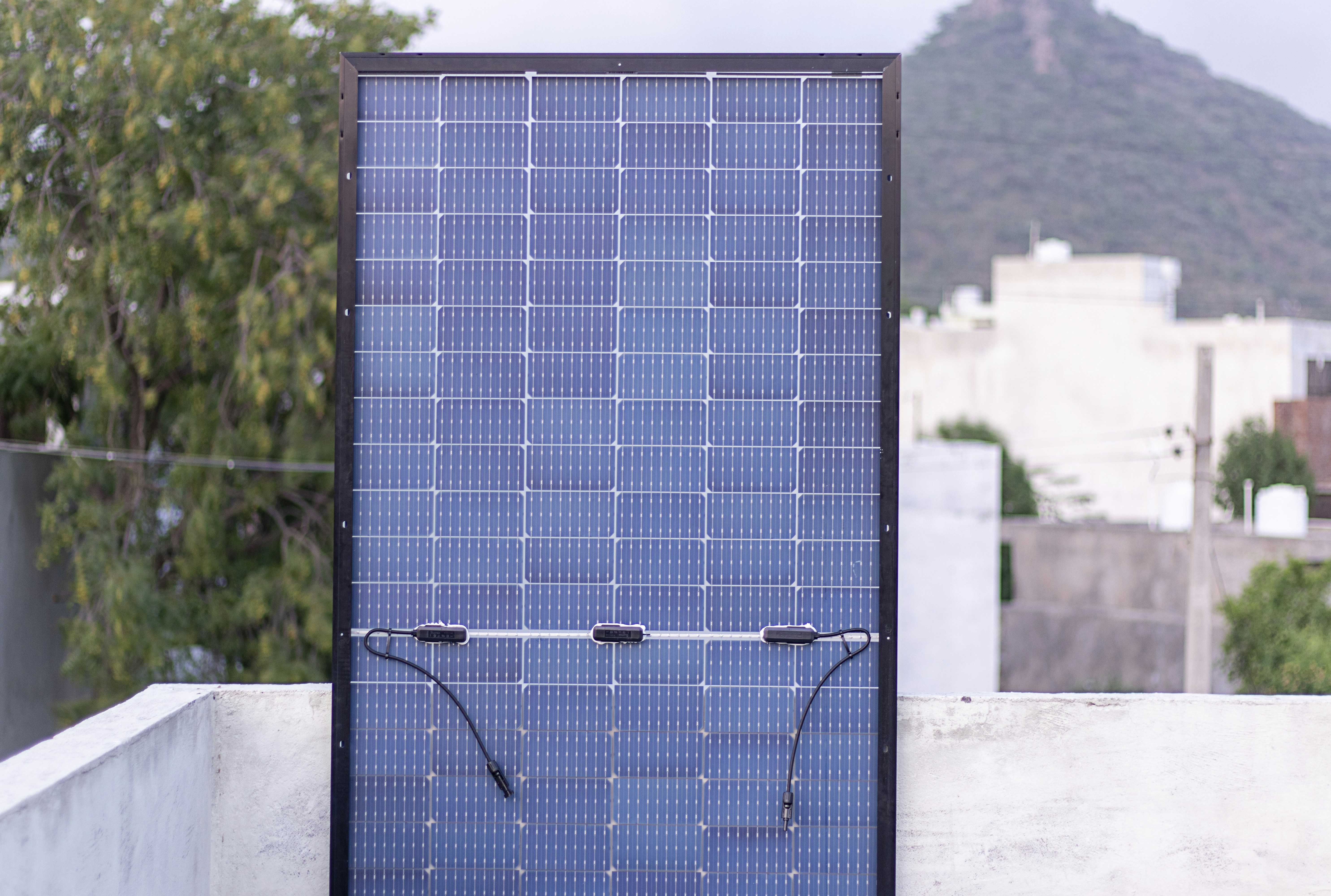
- How They Work: Unlike traditional (monofacial) panels that have an opaque backsheet, bifacial panels are designed with transparent backsheets or are frameless, allowing sunlight to be absorbed on both their front and rear surfaces. The light hitting the back of the panel is typically reflected light (albedo) from the ground, snow, or light-colored rooftops.
- The Benefits:
- ✅ Increased Energy Yield: Bifacial panels can produce significantly more electricity (typically 5-20% more, but sometimes up to 30% in ideal conditions) than monofacial panels of the same size, simply by capturing reflected light.
- ✅ Better Performance in Diffuse Light: They can perform well even on cloudy days or in low-light conditions by capturing scattered light.
- ✅ Durability: Often made with dual-glass construction, making them more robust and resistant to degradation.
- Considerations:
- Installation: To maximize the bifacial gain, they need to be installed with sufficient clearance from the mounting surface and over a highly reflective surface (e.g., light-colored gravel, white TPO roof, or even snow).
- Cost: Generally slightly more expensive than monofacial panels, but the increased energy yield often justifies the higher upfront cost.
- Future Outlook: Bifacial technology is already commercially available and gaining traction, especially in utility-scale solar farms and ground-mounted residential systems. Brands like Trina Solar, Jinko Solar, and LONGi Solar offer bifacial options. It’s a practical way to squeeze more power out of every square foot of solar real estate.
Solar Windows and Building-Integrated PV (BIPV)
Imagine your windows not just letting light in, but also generating electricity. Or your roof tiles being solar panels themselves. This is the world of Building-Integrated Photovoltaics (BIPV), where solar technology becomes an integral part of a building’s design and structure, rather than just an add-on.
- What is BIPV? BIPV products replace conventional building materials in parts of the building envelope, such as roofs, facades, skylights, and windows. They serve a dual purpose: providing building functionality (weather protection, insulation, aesthetics) and generating electricity.
- Solar Windows (Transparent PV):
- How they work: These use specialized transparent or semi-transparent PV materials (like thin-film or organic PV) that allow visible light to pass through while absorbing specific wavelengths of light (e.g., infrared or ultraviolet) to generate electricity.
- Pros:
- ✅ Aesthetics: Seamlessly integrate solar into building design, eliminating the need for visible panels.
- ✅ Space-Saving: Utilize existing building surfaces that would otherwise be inert.
- ✅ Energy Efficiency: Can also provide shading and insulation, reducing heating and cooling loads.
- Cons:
- ❌ Lower Efficiency: Currently, transparent PV cells have lower efficiencies compared to opaque panels.
- ❌ Cost: Generally more expensive than traditional windows or standard solar panels.
- Brands: Companies like ClearVue Technologies and Onyx Solar are developing and commercializing transparent solar glass.
- Solar Roof Tiles/Shingles:
- How they work: These are designed to look like conventional roofing materials but have integrated PV cells.
- Pros:
- ✅ Aesthetics: Blend seamlessly with the roof, maintaining architectural integrity.
- ✅ Durability: Often very robust and long-lasting.
- Cons:
- ❌ Higher Cost: Significantly more expensive than traditional asphalt shingles or even standard solar panels.
- ❌ Installation Complexity: Can be more complex to install.
- ❌ Lower Efficiency: Individual tiles may have lower efficiency than a full panel.
- Brands: Tesla Solar Roof is the most famous example, but others like GAF Energy (Timberline Solar) are also in the market.
- Future Outlook: BIPV is a growing segment, particularly for new construction and architectural projects where aesthetics are paramount. As efficiencies improve and costs come down, we expect to see more buildings that don’t just host solar, but are solar. This represents a huge step forward in making our built environment truly sustainable and contributing to a future of Eco-Conscious Brands and designs.
The future of solar energy conversion is bright, diverse, and full of exciting possibilities! These advanced technologies promise to make solar power even more accessible, efficient, and integrated into our daily lives.
🌟 Going Solar: How to Choose and Install Your Solar System
So, you’re convinced! You’ve learned how solar energy is converted into electricity, understood the components, and even peeked into the future of solar tech. Now, the big question: how do you actually get solar panels on your roof (or in your yard)? Going solar can seem daunting, but with the right approach, it’s an incredibly rewarding journey towards energy independence and a greener lifestyle.
At Gone Greenish™, we’ve guided countless friends and family through this process, and we’ve learned a thing or two. It’s not just about picking the cheapest option; it’s about finding the right fit for your home, your budget, and your long-term goals. This is where your Conservation Tips truly come to life!
Selecting the Right Solar Provider
Choosing a solar installer is arguably the most critical step in your solar journey. This is a long-term investment, and you want a partner you can trust. Think of it like choosing a doctor or a financial advisor – you want expertise, reliability, and good communication.
Here’s what we recommend looking for:
- Experience and Reputation:
- Longevity: How long have they been in business? A company that’s been around for a decade or more is a good sign of stability.
- Reviews: Check online reviews on platforms like Google, Yelp, and the Better Business Bureau. Look for consistent positive feedback regarding customer service, installation quality, and post-installation support.
- Local Presence: A local company often has a better understanding of regional permitting processes, utility regulations, and weather conditions.
- Certifications and Licensing:
- NABCEP Certification: Look for installers with NABCEP (North American Board of Certified Energy Practitioners) certification. This is the gold standard for solar professionals, demonstrating expertise and commitment to quality.
- State and Local Licenses: Ensure they are properly licensed and insured to perform electrical and construction work in your area.
- Product Offerings and Warranties:
- Panel and Inverter Brands: Do they offer reputable brands like SunPower, LG Solar, REC Solar, Enphase, or SolarEdge? Ask about the specific models they recommend and why.
- Warranties: Understand the different warranties:
- Product Warranty: Covers defects in the solar panels and inverters (typically 10-25 years).
- Performance Warranty: Guarantees a certain level of power output from your panels over 25 years.
- Workmanship Warranty: Covers the installation itself (typically 5-10 years, but some offer 25 years). A strong workmanship warranty is crucial!
- Transparent Quoting and Financing:
- Detailed Proposals: A good proposal should clearly outline all costs, system components, estimated energy production, and financial incentives.
- Multiple Financing Options: Do they offer cash purchase, solar loans, and leases/PPAs (Power Purchase Agreements)? Understand the pros and cons of each.
- No Pressure Sales: Be wary of high-pressure sales tactics or deals that seem too good to be true.
- Customer Service and Support:
- Communication: Are they responsive to your questions? Do they explain things clearly?
- Post-Installation Support: What kind of monitoring and maintenance support do they offer after the system is installed?
Gone Greenish™ Recommendation: Get at least three quotes from different installers. Compare not just the price, but the proposed equipment, warranties, and the overall feeling you get from the company. Don’t be afraid to ask tough questions!
DIY vs Professional Installation
This is a common dilemma for the handy homeowner. Can you really install solar panels yourself?
- Professional Installation (Recommended for Most):
- Pros:
- ✅ Expertise and Safety: Professionals have the training and experience to safely handle electrical work, roof mounting, and system design. This is crucial for avoiding costly mistakes or safety hazards.
- ✅ Permitting and Interconnection: They handle all the complex paperwork, permits, and utility interconnection agreements.
- ✅ Warranties: Your system will be covered by manufacturer warranties (panels, inverters) and a workmanship warranty from the installer.
- ✅ Optimized Performance: Professionals design systems for maximum efficiency and long-term performance.
- ✅ Time-Saving: They get the job done efficiently, saving you significant time and effort.
- Cons:
- ❌ Higher Upfront Cost: You’re paying for their labor and expertise.
- Best for: The vast majority of homeowners. The peace of mind, safety, and long-term reliability offered by professional installation are usually worth the investment.
- Pros:
- DIY Solar Installation:
- Pros:
- ✅ Lower Labor Costs: You save on installation labor, which can be a significant portion of the total cost.
- ✅ Learning Experience: A great way to learn about your system inside and out.
- Cons:
- ❌ Safety Risks: Working on roofs and with high-voltage electricity is dangerous.
- ❌ Complexity: System design, electrical wiring, and structural mounting require specialized knowledge.
- ❌ Permitting Headaches: You’ll be responsible for navigating all local permits and inspections, which can be challenging.
- ❌ Warranty Issues: Some manufacturers’ warranties may be voided if the system isn’t installed by a certified professional.
- ❌ Time and Effort: It’s a significant undertaking that requires considerable time, tools, and physical labor.
- ❌ Resale Value: Potential buyers might be wary of a DIY installation.
- Best for: Highly experienced electricians or contractors with a deep understanding of solar technology, electrical codes, and building codes, typically for smaller, simpler systems or off-grid cabins where regulations might be less stringent.
- Pros:
My colleague, Sarah, initially considered DIY for her system but quickly realized the complexity. “I’m pretty handy,” she admitted, “but when I saw the detailed electrical diagrams and the roof attachment requirements, I knew I needed the pros. My peace of mind is worth every penny.”
Ultimately, going solar is an investment in your future and the planet’s. By carefully choosing your provider and understanding the installation process, you’ll be well on your way to enjoying clean, renewable energy for decades to come!
📈 The Solar Industry Today and Future Trends
The solar industry isn’t just growing; it’s absolutely exploding! What was once a niche technology is now a global powerhouse, rapidly transforming our energy landscape. At Gone Greenish™, we’re thrilled to witness this green revolution firsthand, and the numbers speak for themselves.
Global Solar Power Production: A Snapshot
The growth of solar power worldwide is nothing short of phenomenal. Countries are racing to embrace this clean energy source, driven by environmental concerns, energy security, and economic opportunities.
- Leading the Charge: As of 2022, China stands as the undisputed global leader in solar power production, with massive utility-scale solar farms and a booming manufacturing sector. Following closely are the US, Japan, Germany, and India, all making significant strides in their solar capacity [National Grid].
- Rapid Expansion: The International Energy Agency (IEA) consistently reports that solar PV is the fastest-growing renewable energy technology, adding more capacity than any other source globally. This rapid expansion is fueled by decreasing costs, technological advancements, and supportive government policies.
- Decarbonization Goals: Solar power is central to global efforts to decarbonize electricity grids and achieve net-zero emissions targets. It’s a cornerstone of a sustainable energy future, directly impacting Climate Change mitigation.
US Solar Initiatives: Powering a Green Future
The United States is making ambitious moves to accelerate solar adoption and strengthen its domestic solar industry.
- Ambitious Targets: The U.S. Department of Energy (DOE) released a blueprint in 2021 aiming for 40% of electricity to be solar-powered by 2035 [National Grid]. This is a monumental goal that requires sustained investment and innovation.
- Boosting Domestic Manufacturing: In April 2023, the DOE announced an $82 million investment to boost domestic solar manufacturing and recycling [National Grid]. This initiative is crucial for creating jobs, reducing reliance on foreign supply chains, and ensuring a robust, circular economy for solar components. It’s a prime example of supporting Eco-Conscious Brands and practices right here at home.
- Investment Tax Credit (ITC): The federal ITC remains a powerful incentive, offering a significant tax credit for homeowners and businesses installing solar. This policy has been instrumental in driving solar growth across the country.
UK Solar Developments: A European Leader
The United Kingdom is also demonstrating strong commitment to solar energy, with impressive recent developments.
- First Transmission-Connected Solar Farm: In May 2023, the UK energized its first transmission-connected solar farm near Bristol. This large-scale project is expected to generate over 73,000 MWh annually, enough to power approximately 17,300 homes, and will displace 20,500 tons of CO2 annually [National Grid]. This is a significant step, allowing solar power to be “transported over greater distances” [National Grid], enhancing grid stability and energy distribution.
- Ambitious Capacity Goals: The UK aims for 70 GW of solar capacity by 2035, which would be enough to power around 20 million homes [National Grid]. These targets underscore the nation’s dedication to renewable energy and reducing its carbon footprint.
Future Trends: What’s Next for Solar?
The solar industry is a hotbed of innovation, and the future looks even brighter! Here are some key trends we’re excited about:
- Increased Efficiency and Lower Costs: Expect continued advancements in solar cell technology, leading to higher efficiency panels at even lower manufacturing costs. Perovskites and other emerging materials will play a crucial role here.
- Enhanced Energy Storage Integration: Batteries will become an even more integral part of solar systems, offering greater grid independence, resilience, and the ability to optimize energy use with time-of-use rates. We’ll see smarter, more affordable, and longer-lasting battery solutions.
- Smart Grid and AI Integration: Solar systems will become increasingly intelligent, communicating with the grid, smart home devices, and even electric vehicles. Artificial intelligence (AI) will optimize energy flow, predict production, and manage demand, creating a truly responsive and efficient energy ecosystem.
- Building-Integrated Photovoltaics (BIPV): As discussed, solar will become less of an add-on and more of an architectural element. Solar windows, roof tiles, and facade materials will blend seamlessly into buildings, making every structure a potential power generator.
- Community Solar and Microgrids: Beyond individual rooftops, we’ll see more community-scale solar projects and the development of local microgrids, enhancing energy resilience and access to clean power for more people.
- Advanced Recycling: As the first wave of solar panels reaches the end of its life, the industry is focusing heavily on developing efficient and sustainable recycling processes to recover valuable materials and minimize waste, ensuring a truly circular economy for solar.
The solar industry is not just about generating electricity; it’s about building a sustainable, resilient, and prosperous future. For us at Gone Greenish™, this dynamic growth and relentless innovation are incredibly inspiring, proving that we can power our lives while protecting our planet. The sun is an infinite resource, and we’re just beginning to unlock its full potential!
📝 Conclusion: Shining a Light on Solar Energy Conversion
Wow, what a journey! From ancient fire-lighting mirrors to cutting-edge perovskite solar cells, the story of how solar energy is converted into electricity is a brilliant tapestry of science, innovation, and sustainability. At Gone Greenish™, we hope this deep dive has illuminated the fascinating processes behind the panels on your roof or the vast solar farms powering cities.
To recap, solar energy conversion primarily happens through two main technologies: photovoltaic (PV) cells that directly convert sunlight into electricity via the photovoltaic effect, and concentrated solar power (CSP) systems that harness the sun’s heat to generate electricity through steam turbines. Each has its place, advantages, and exciting future developments.
We also explored the essential components of a solar system—from panels and inverters to batteries and mounting hardware—and how they work together to deliver clean, reliable power to your home or business. We tackled the economics, environmental benefits, and even troubleshooting tips to keep your system humming along efficiently.
Remember the question we teased at the start: Is solar worth it now? The answer is a confident YES. With improving technology, declining costs, and growing incentives, solar energy is more accessible and impactful than ever. It’s a powerful way to reduce your carbon footprint, save on energy bills, and contribute to a healthier planet.
Whether you’re a DIY enthusiast or prefer to leave it to the pros, going solar is a smart, forward-thinking choice. And as the industry continues to innovate—from bifacial panels to solar windows—the future of solar energy conversion looks brighter than ever.
So, are you ready to catch some rays and power your life sustainably? We sure are! 🌞
🔗 Recommended Links for Solar Energy Enthusiasts
👉 CHECK PRICE on:
- Enphase IQ8 Microinverter:
Amazon | Walmart | Enphase Official Website - SolarEdge HD-Wave Inverter:
Amazon | Walmart | SolarEdge Official Website - Tesla Powerwall Battery:
Tesla Official Website - LG Chem RESU Battery:
Amazon | LG Energy Solution Official Website - SunPower Solar Panels:
Amazon | SunPower Official Website - LG Solar Panels:
Amazon | LG Solar Official Website - REC Solar Panels:
Amazon | REC Solar Official Website
Books to deepen your solar knowledge:
- Solar Power Your Home For Dummies by Rik DeGunther
Amazon Link - The Solar Electricity Handbook by Michael Boxwell
Amazon Link - Photovoltaics: Design and Installation Manual by Solar Energy International
Amazon Link
❓ Frequently Asked Questions (FAQ) About Solar Energy Conversion
How much solar energy is converted into electricity?
Solar panels typically convert 15% to 22% of the sunlight they receive into usable electricity, depending on the technology and quality of the panels. High-efficiency panels like those from SunPower can reach efficiencies above 22%, while more affordable polycrystalline panels average around 15-17%. Emerging technologies like perovskite cells aim to push this even higher in the future. Keep in mind, efficiency is influenced by factors such as temperature, shading, and panel orientation.
How is electricity transferred from solar panels?
Solar panels generate Direct Current (DC) electricity when sunlight excites electrons in the photovoltaic cells. This DC electricity flows through wiring to an inverter, which converts it into Alternating Current (AC) electricity—the type used by household appliances and the electrical grid. From the inverter, electricity is routed to your home’s electrical panel and, if grid-tied, any excess power can be fed back to the utility grid.
How is solar energy converted into electricity step by step?
- Sunlight (photons) hits the solar panel.
- Photons excite electrons in the silicon PV cells, creating an electric current (DC).
- Electric current flows through wiring to the inverter.
- Inverter converts DC electricity to AC electricity.
- AC electricity powers your home or is sent to the grid.
- Excess electricity can be stored in batteries or credited via net metering.
This process is continuous during daylight hours, providing clean, renewable power.
What materials are used in solar panels to convert sunlight into electricity?
Most solar panels use silicon—either monocrystalline or polycrystalline—as the semiconductor material. Silicon’s atomic structure enables the photovoltaic effect, where photons knock electrons loose to generate electricity. Some panels use thin-film materials like cadmium telluride (CdTe) or amorphous silicon (a-Si). Emerging materials include perovskites, which promise higher efficiency and flexibility but are still in development.
How does the photovoltaic effect work in solar energy conversion?
The photovoltaic effect occurs when photons from sunlight strike a semiconductor material (like silicon), transferring energy to electrons and freeing them from their atomic bonds. This creates a flow of electrons—an electric current. The PV cell’s internal electric field directs these electrons into a usable current, which can then be harnessed as electricity. This effect was discovered by Edmond Becquerel in 1839 and is the fundamental principle behind solar panels.
Can solar energy help reduce carbon emissions and promote a healthy planet?
Absolutely! Solar energy produces zero greenhouse gas emissions during operation, unlike fossil fuels that release CO2 and other pollutants. By replacing coal, oil, or natural gas electricity generation, solar power significantly reduces carbon footprints and improves air quality, contributing to a healthier planet and mitigating climate change. It aligns perfectly with sustainable living and environmental stewardship.
What are the environmental benefits of using solar energy for electricity?
- Zero emissions during operation
- Reduced reliance on finite fossil fuels
- Minimal water use compared to conventional power plants
- Silent operation reducing noise pollution
- Improved air quality and public health
These benefits make solar a cornerstone of clean energy transitions worldwide.
How efficient are solar panels in converting sunlight to electrical power?
Current commercial solar panels typically convert 15-22% of sunlight into electricity. Efficiency depends on panel type, quality, temperature, shading, and installation. High-efficiency panels, like those from SunPower or LG Solar, push the upper limits. Research into new materials like perovskites promises even higher efficiencies in the future.
What role do solar inverters play in converting solar energy into usable electricity?
Solar inverters are essential devices that convert the Direct Current (DC) electricity generated by solar panels into Alternating Current (AC) electricity, which is compatible with household appliances and the electrical grid. Without inverters, solar-generated electricity would be unusable in most homes. Inverters also often include safety features, system monitoring, and power optimization.
How does solar energy contribute to sustainable living and a healthier environment?
Solar energy supports sustainable living by providing a clean, renewable source of power that reduces dependence on fossil fuels, lowers greenhouse gas emissions, and decreases environmental pollution. It empowers individuals and communities to reduce their carbon footprints, save money on energy bills, and promote energy independence. Solar is a practical and impactful way to protect the planet while enhancing quality of life.
Additional FAQs
What is net metering and how does it benefit solar users?
Net metering is a billing mechanism that credits solar energy system owners for the electricity they add to the grid. When your solar panels produce more electricity than you use, the excess flows back to the grid, spinning your meter backward or accumulating credits. This reduces your electricity bill and improves the economics of solar installations.
Can solar panels generate electricity on cloudy days?
Yes! While solar panels produce less electricity on cloudy or overcast days due to reduced sunlight intensity, they still generate power. Modern panels and inverters are designed to operate efficiently even in diffuse light conditions, ensuring you get some energy production almost every day.
How long do solar panels last?
Most solar panels come with a 25-year performance warranty, guaranteeing at least 80-85% of their original output after 25 years. Many panels continue to produce electricity well beyond this period, albeit at gradually reduced efficiency.
What maintenance do solar panels require?
Solar panels require minimal maintenance. Occasional cleaning to remove dust, pollen, or bird droppings can help maintain efficiency. Regular system monitoring and periodic professional inspections ensure optimal performance and longevity.
📚 Reference Links and Further Reading
- U.S. Department of Energy – How Does Solar Work?
https://www.energy.gov/eere/solar/how-does-solar-work - National Grid – How Does Solar Power Work?
https://www.nationalgrid.com/stories/energy-explained/how-does-solar-power-work - CertainTeed – Solar 101: How Solar Energy Works | CertainTeed
https://www.certainteed.com/inspiration/how-tos/solar-101-how-solar-energy-works-step-step - Enphase Energy Official Website
https://enphase.com/ - SolarEdge Official Website
https://www.solaredge.com/ - Tesla Powerwall Official Website
https://www.tesla.com/powerwall - SunPower Official Website
https://us.sunpower.com/ - LG Solar Official Website
https://www.lgenergy.com/solar - REC Solar Official Website
https://www.recgroup.com/en
For more on reducing your carbon footprint and eco-conscious living, visit our Carbon Footprint Reduction and Eco-Conscious Brands categories at Gone Greenish™.
Ready to power your life with the sun? Let’s get glowing! 🌞